

What is Red Clover? Understanding the Meadow Flower for Modern Menopause
In the quiet tapestry of British meadows, the humble red clover (Trifolium pratense) has long been a familiar sight, its gentle pinkish-purple blossoms nodding in the breeze. While often associated with pastoral landscapes and traditional farming, this resilient little plant holds a profound secret—a natural intelligence perfectly suited to supporting women through the transformative journey of menopause. It’s a botanical ally that has been woven into the fabric of European folk medicine for centuries, and today, it stands as a cornerstone of natural, plant-based wellness.
At its heart, red clover is a member of the legume family, the same family that gives us peas and beans. But its true power lies within its blossoms, which are a uniquely rich source of isoflavones. These remarkable plant compounds are the key to its effectiveness, offering a gentle, botanical approach to finding balance when the body’s own hormonal rhythms begin to shift. For the discerning woman in the UK seeking a sophisticated, natural alternative to synthetic options, red clover represents a return to a gentler, more intuitive form of care.
The Botanical Profile: More Than Just a Pretty Flower
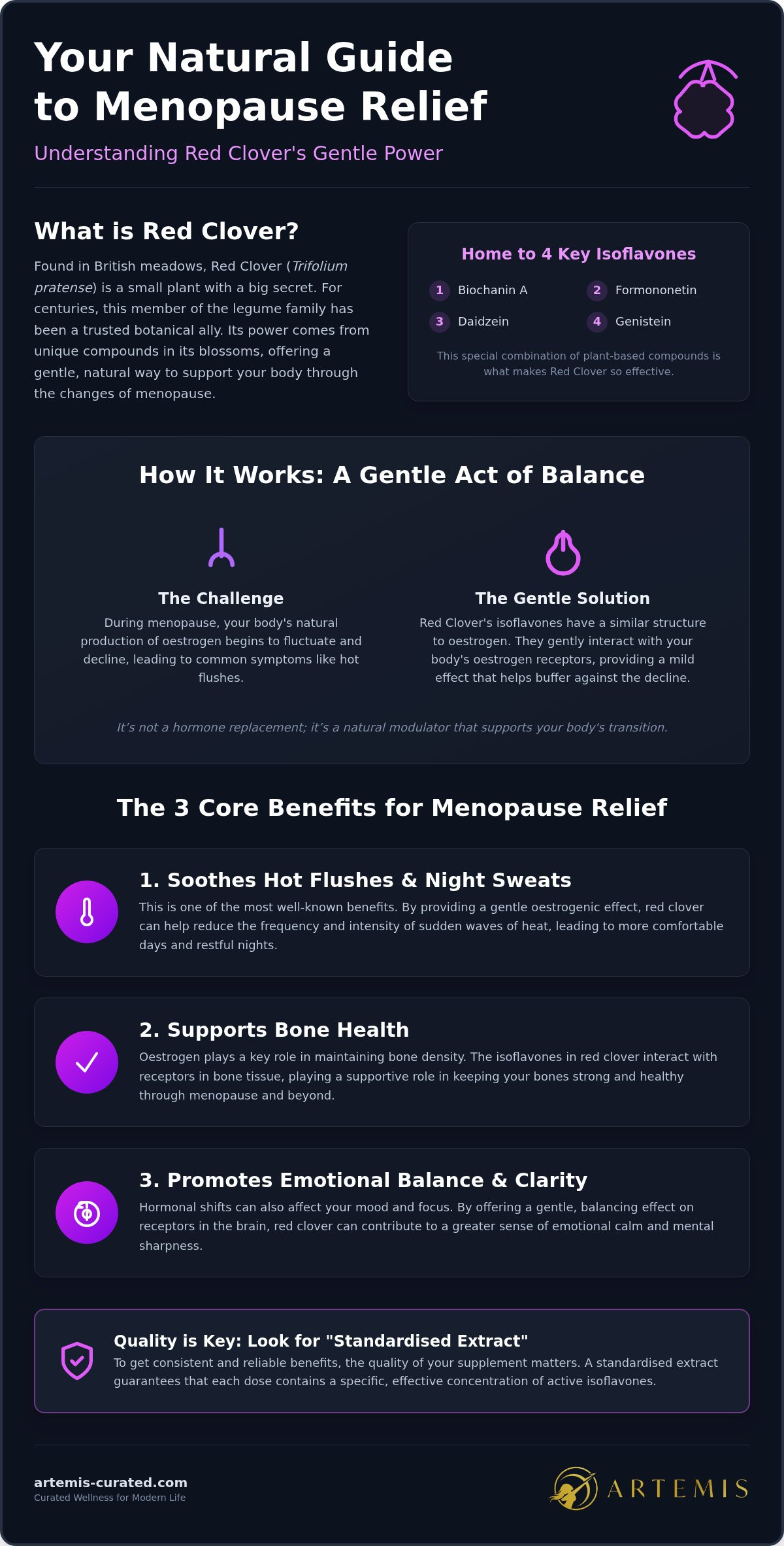
While its appearance is unassuming, the inner world of the red clover flower is complex and potent. The plant itself is a perennial herb, recognised by its distinctive trifoliate (three-lobed) leaves and dense flower heads. It’s these flower heads that are carefully harvested and used for their wellness properties. Inside, they contain a quartet of important isoflavones: biochanin A, formononetin, daidzein, and genistein. It is this unique combination that makes red clover so special.
For these compounds to deliver consistent benefits, the quality of the extract is paramount. This is why sourcing matters so deeply in botanical medicine. A high-quality, standardised extract ensures that each dose contains a reliable concentration of these active isoflavones, moving it from the realm of simple folk remedy to a precise and dependable form of natural support.
Why It’s Trending in 2026
The renewed interest in red clover is part of a larger cultural shift. As we move into 2026, there is a growing desire for wellness solutions that are both effective and aligned with the body's natural processes. Women are increasingly seeking a sense of agency over their health, looking for support that feels nurturing rather than invasive. Red clover fits this narrative perfectly.
It represents a beautiful synergy where modern science is validating centuries of traditional wisdom. Rigorous clinical studies are now exploring the very mechanisms that herbalists have long understood intuitively. This convergence of ancient knowledge and contemporary research has positioned red clover as an elegant and intelligent choice for women navigating menopause with grace and intention.
How Red Clover Works: The Science of Isoflavones and Oestrogen Balance
To truly appreciate the benefits of red clover, it’s essential to understand the quiet conversation it has with your body. Unlike some herbal remedies whose mechanisms are still a mystery, the science behind red clover is becoming increasingly clear, and it all comes down to its star compounds: isoflavones. These are a class of phytoestrogens, or plant-based oestrogens, that have a remarkable ability to interact with the body’s hormone receptors.
During perimenopause and menopause, the body's production of oestrogen begins to fluctuate and decline. This hormonal shift is what triggers the classic symptoms we associate with this transition, from sudden hot flushes to shifts in mood and sleep. The isoflavones in red clover possess a molecular structure that is strikingly similar to the body’s own oestrogen. This allows them to gently bind to oestrogen receptors, particularly a type known as beta-receptors, which are prevalent in the brain, bones, and cardiovascular system.
A Gentle Act of Hormonal Harmony
It is crucial to understand that red clover is not a hormone replacement. It doesn’t introduce high levels of oestrogen into your system. Instead, it acts as a gentle modulator. Think of it as a key that can fit into a lock but doesn't turn it with the same force as the original key. When your natural oestrogen levels are low, these isoflavones can provide a mild oestrogenic effect, helping to ease the deficiency that causes symptoms like hot flushes.
This subtle action is what makes it such a refined choice. It’s not about overriding the body’s natural transition but about supporting it, providing a gentle buffer against the more disruptive fluctuations. This is particularly significant for women seeking a path that honours their body's innate wisdom while still offering tangible relief from discomfort.
Beyond Oestrogen: Supporting Your Whole System
The influence of red clover’s isoflavones extends beyond just managing hot flushes. The beta-receptors they interact with play a vital role in maintaining the health of other body systems that are affected during menopause. For example, the decline in oestrogen is a known factor in the loss of bone density over time. By gently stimulating these receptors in bone tissue, isoflavones can play a supportive role in maintaining bone strength.
Similarly, these receptors are involved in regulating mood and cognitive function. By offering a gentle, balancing effect in the brain, red clover can contribute to a greater sense of emotional equilibrium and mental clarity. It’s a holistic action—a single botanical that offers a multifaceted approach to wellness during a time of profound change.
The 3 Core Benefits of Red Clover for Menopause Relief
While the science is fascinating, what truly matters is how this botanical can enhance your daily experience of menopause. Red clover offers a trio of core benefits that address some of the most common challenges of this transition, helping you move from simply managing symptoms to truly curating a life of vitality and balance.
The true power of this herb unfolds over time. It is not a quick fix but a gradual rebalancing. Committing to a consistent routine is the key to allowing its gentle intelligence to fully integrate with your body’s own rhythms, leading to a lasting sense of harmony and well-being.
1. Soothing Hot Flushes and Night Sweats
For many women, the most disruptive symptom of menopause is the sudden, intense heat of a hot flush or the discomfort of night sweats. These "vasomotor symptoms" occur when the brain's temperature-regulating centre, the hypothalamus, is affected by fluctuating oestrogen levels. Red clover is perhaps most celebrated for its ability to bring calm to this internal thermostat.
Studies have consistently shown that the isoflavones in red clover can significantly reduce both the frequency and severity of hot flushes. By providing a gentle oestrogenic effect, it helps to stabilise the signals being sent to the hypothalamus, resulting in fewer "power surges." This translates into more comfortable days, more confident social interactions, and, crucially, more restful nights. If you find yourself waking up frequently, our guide on how to manage night sweats without HRT offers further rituals to complement this botanical support.
2. Nurturing Bone Health for the Future
One of the silent challenges of menopause is the accelerated loss of bone density. Oestrogen plays a protective role in maintaining the strength and structure of our bones, and its decline can leave us more vulnerable to osteoporosis in later life. This is where red clover offers a profound and forward-thinking benefit.
The isoflavones, particularly genistein and daidzein, have been shown to support the body’s bone-building cells (osteoblasts) while discouraging the cells that break down bone (osteoclasts). This dual action helps to slow the rate of bone loss that typically occurs after menopause. Incorporating red clover into your wellness routine is an act of future-proofing your health, ensuring your body remains strong and resilient for the years to come. For a deeper dive into this topic, explore our curated guide on how to strengthen bones naturally after menopause.
3. Restoring Emotional Balance and Mental Clarity
The emotional landscape of menopause can often feel unpredictable. Irritability, low mood, and a sense of "brain fog" are incredibly common as hormone levels shift. The oestrogen receptors in our brain are closely linked to the production and regulation of mood-stabilising neurotransmitters like serotonin.
By interacting with these receptors, red clover can help to foster a more stable emotional foundation. It’s not about masking your feelings, but about softening the sharp edges of hormonal mood swings, allowing for a greater sense of calm and control. Many women report feeling more like themselves again—clearer, more focused, and emotionally resilient. If mood changes are a primary concern, you may find our article on supplements for menopause mood swings a valuable resource.
Safety and Selection: Navigating Quality and NICE Guidelines
Embarking on a journey with any botanical supplement requires a discerning eye and an informed approach. While red clover has a long history of safe use and is generally well-tolerated, understanding how to choose a high-quality product and when to exercise caution is essential for a positive and effective experience.
In the UK, the conversation around herbal remedies is often guided by organisations like NICE (National Institute for Health and Care Excellence). While NICE guidelines have historically been cautious about recommending specific herbal supplements due to variability in studies and product quality, they do acknowledge that many women seek them out. The key, therefore, lies in making an educated choice and prioritising purity and standardisation. This ensures you are using a product that is both safe and capable of delivering the benefits you seek.
What to Look For on the Label
Not all red clover supplements are created equal. The efficacy of a product is directly tied to its quality and composition. When selecting a supplement, look for a "standardised" extract. This means the manufacturer guarantees a specific, consistent amount of the active isoflavones in every dose. This is the difference between a simple herbal powder and a precise, reliable botanical formulation.
Beyond standardisation, pay attention to the purity of the ingredients. A premium supplement should be free from unnecessary fillers, binders, and artificial additives. The focus should be on the integrity of the botanical itself. The source and provenance of the herb also matter, as responsible farming and extraction methods contribute to a cleaner and more potent final product.
Consulting Your Healthcare Provider
Before introducing any new supplement into your routine, it is always wise to have a conversation with your GP or a qualified healthcare provider. This is particularly important with a phytoestrogenic herb like red clover. If you have a personal or family history of oestrogen-sensitive conditions, such as certain types of breast cancer, it is crucial to seek medical advice before use.
You should also discuss any potential interactions with other medications you may be taking. For example, because of its gentle effect on the body, red clover may interact with blood-thinning medications or hormone therapies. A simple conversation can provide peace of mind and ensure your wellness routine is both safe and synergistic. As a general guideline, many practitioners suggest using botanical supplements for a period of three to six months before taking a short break to reassess your body's needs.
Curating Your Menopause Journey: A Holistic Routine
A truly elegant approach to menopause wellness understands that a single supplement is not a magic bullet, but rather one thoughtfully chosen element in a much larger, more beautiful composition. Red clover works best when it is integrated into a lifestyle that honours and supports your body through this significant transition. It’s about moving beyond simply managing symptoms and into a practice of actively curating your own vitality.
This holistic view recognises the profound connection between our hormones, our stress levels, our diet, and our sleep. When you combine the gentle power of botanicals with intentional daily habits, you create a powerful synergy that nurtures your entire system, leading to a deeper and more sustainable sense of harmony.
Synergistic Botanicals and Nutrients for Harmony
Red clover pairs beautifully with other supportive herbs and nutrients that address different facets of the menopause experience. For instance, you might consider pairing it with Ashwagandha to help manage stress and support adrenal health, or with Magnesium, an essential mineral that aids in sleep, muscle relaxation, and nervous system function. Creating a well-rounded supplement programme can provide more comprehensive support.
This is the philosophy behind a curated collection like The Art of Harmony. It combines key botanicals and nutrients into a single, elegant formulation, taking the guesswork out of building your routine. To explore this concept further, our guide to holistic menopause supplements in the UK offers a broader perspective on creating your ideal wellness toolkit.
Mindful Habits for the Transition
The choices you make every day are just as important as the supplements you take. Creating a "sleep sanctuary" by keeping your bedroom cool, dark, and quiet can amplify the benefits of red clover for night sweats. Incorporating mindful practices like meditation or gentle evening yoga can help lower cortisol levels, which in turn helps to balance your hormones.
Nourishing your body with a diet rich in whole foods, healthy fats, and plant-based proteins provides the building blocks it needs to navigate this change with resilience. Think of stress management not as a luxury, but as an essential piece of the menopause puzzle. By embracing this phase as a time of personal evolution and self-care, you transform it from a challenge to be endured into an opportunity to connect more deeply with yourself and curate a life of renewed purpose and joy.
0 comments