

The magnesium with the boldest menopause claims isn’t necessarily the best choice. If you’re searching for the best magnesium for menopause UK, it helps to separate what magnesium does in the body from what’s actually known about menopause symptoms.
It’s understandable to want a clear answer, especially when labels use unfamiliar names and promise support for sleep, mood or energy. But evidence that magnesium reliably eases menopause symptoms is limited, and supplements aren’t a substitute for care. If symptoms are troubling you, speak with a GP about available options, including HRT.
This guide explains how to compare common magnesium forms, read the amount stated on a label and assess product claims. It also covers practical safety checks, including when health conditions or medicines mean it’s sensible to ask a pharmacist or clinician before starting a supplement. Begin with the evidence and your own circumstances, not the promise on the packaging.
Key Takeaways
- There’s no single best magnesium for menopause uk for everyone. First, clarify what you hope a supplement might support.
- Compare the amount of magnesium per serving, directions, other ingredients and how clearly the label explains them.
- Ask a pharmacist or clinician whether a supplement is suitable if you have a health condition or take medicines.
- Follow the product directions and check before combining supplements, so you can review your total intake.
- The art of harmony is Artemis Curated’s menopause-support supplement. Review its current product information and ingredients before deciding if it suits you.
Best magnesium for menopause in the UK: what can it realistically help with?
Broken nights, changes in mood or unfamiliar muscle discomfort can make a supplement seem worth exploring. But searching for the best magnesium for menopause uk can quickly lead from basic nutrition information to confident promises about symptom relief. Keep those two things separate: magnesium is an essential nutrient, but that alone doesn’t show that a supplement will ease menopause symptoms.
The NHS explains that the body needs magnesium for functions including releasing energy from food and maintaining healthy bones. It also plays a part in numerous processes in the body, as this overview of magnesium as an essential element in biological systems describes. Its general role in health doesn’t prove that taking extra magnesium will relieve a particular symptom.
Sleep changes, low mood and muscle symptoms can have different causes, including causes unrelated to menopause or magnesium intake. If symptoms are persistent, severe or concerning, seek advice from a GP or another qualified healthcare professional rather than relying on a supplement to identify or address the cause.
What does magnesium do in the body?
Magnesium supports normal functions such as energy metabolism, muscle function and the nervous system. Think of it first as a nutrient the body needs, not as a targeted menopause remedy. A supplement may be relevant if someone’s intake or health circumstances make it appropriate, but the body’s need for a nutrient doesn’t establish that extra amounts will improve a particular symptom.
Is magnesium specifically proven to help menopause symptoms?
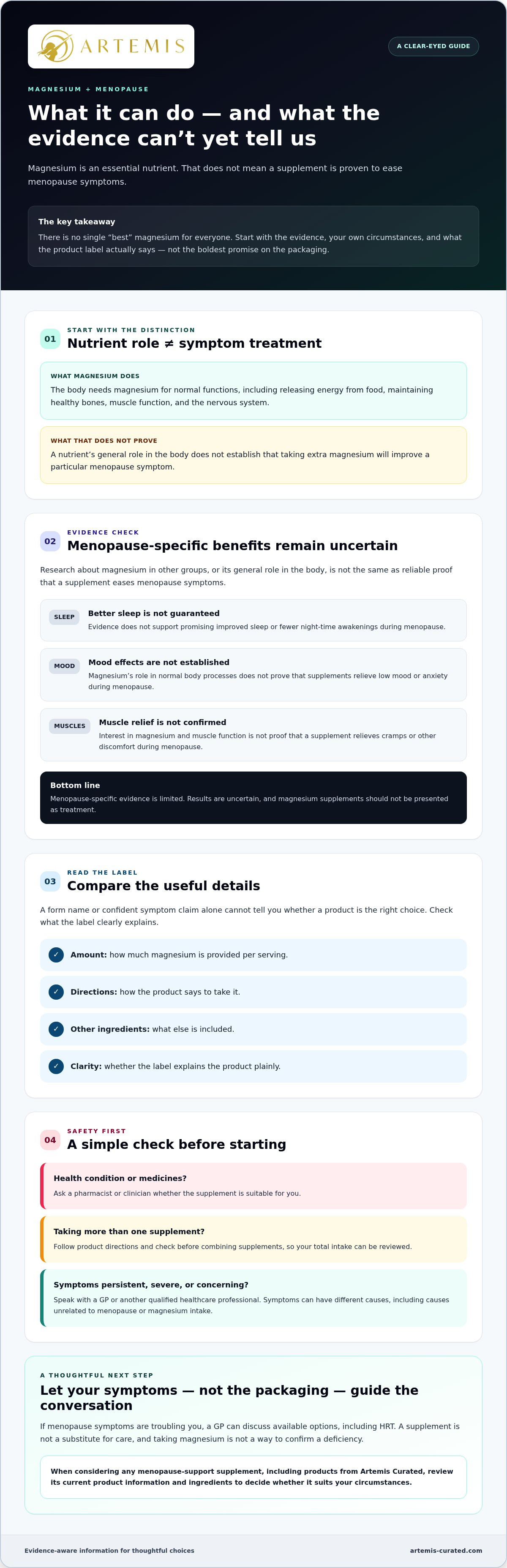
Magnesium supplements are often discussed in relation to sleep, mood and muscle discomfort. However, evidence about a nutrient’s general role, or research in groups other than menopausal women, can’t by itself confirm a benefit during menopause. Menopause-specific evidence remains limited, so conclusions about symptom relief are uncertain. Results aren’t guaranteed, and a supplement shouldn’t be presented as treatment.
Magnesium is essential for normal body function, but that doesn’t prove a magnesium supplement treats menopause symptoms.
Be wary of claims that promise to resolve several symptoms at once. Instead, consider what you’re experiencing, whether there may be other explanations and whether a supplement is suitable for you. A pharmacist or clinician can help you assess that, particularly if you have a health condition or take medicines.
Magnesium for menopause symptoms: what the evidence does and does not show
Claims about magnesium often connect it with sleep, mood and muscle comfort. The key question is whether evidence in one of these areas applies specifically to people going through menopause. It doesn’t automatically. Research in other groups, or a possible explanation for how a nutrient might work, is not the same as reliable proof that a supplement eases menopause symptoms.
The NIH’s Magnesium - Health Professional Fact Sheet discusses magnesium and health more broadly. It can help explain the mineral, but it shouldn’t be read as proof of menopause-specific benefits. Keep that distinction in mind when comparing product claims with what the evidence can actually show.
Does magnesium help with sleep during menopause?
Sleep research involving magnesium outside menopause may offer context, but it can’t establish that a supplement will improve sleep during this life stage. Menopause-specific evidence isn’t strong enough to promise better sleep or fewer night-time awakenings. Sleep disruption can have several causes, so ongoing problems are worth discussing with a healthcare professional rather than treating them as a magnesium issue by default.
Can magnesium help with mood or muscle symptoms?
Magnesium’s role in normal body processes has prompted interest in mood and muscle symptoms, but it doesn’t prove that supplements relieve low mood, anxiety, cramps or other discomfort during menopause. Symptoms can have different explanations, and taking magnesium isn’t a way to confirm a deficiency. Persistent, severe or worrying changes deserve professional advice.
Evidence supports magnesium’s role in normal body function; it doesn’t establish that a supplement reliably treats menopause-related sleep, mood or muscle symptoms.
The “best magnesium for menopause uk” isn’t simply the form with the most persuasive symptom claim. Start with the evidence for the intended use, your own circumstances and the product label, not a promise of a particular result. If symptoms are affecting daily life, a GP or pharmacist can help you consider whether assessment or another form of support is appropriate.
If you’re considering broader menopause support, Artemis Curated offers The art of harmony as a menopause-support supplement. Check its current product and ingredient information before deciding whether it suits you. Don’t assume its formulation includes magnesium.
Magnesium glycinate, citrate, and other forms: how to compare them
Names such as glycinate, citrate and oxide describe different magnesium compounds, but they don’t tell you which is best for menopause. The National Institutes of Health notes that the form can affect how well magnesium is absorbed. That doesn’t show that any form works better for menopause symptoms. Check claims about absorption or stomach tolerance against reliable evidence rather than relying on product marketing.
What is the difference between magnesium glycinate and citrate?
Magnesium citrate and magnesium glycinate are distinct forms, but don’t assume either guarantees better absorption or gentler digestion for you. Some sources distinguish the absorption of particular forms, such as citrate and oxide. That finding can’t be applied to every form or used to predict symptom relief. Choose based on clear label information and your own suitability, not claims that a form targets sleep, mood or another menopause concern.
Use these details to compare products:
- Magnesium amount: Find the amount of magnesium provided per serving, not only the weight of the named compound.
- Serving directions: Check how many tablets, capsules or other units make up a serving, and follow the product directions.
- Other ingredients: Look for added vitamins, minerals or other ingredients, especially if you already take supplements.
- Clear labelling: Prefer information that makes the form, amount and serving size easy to identify.
How do you read the magnesium amount on a label?
A label may name a compound, such as magnesium citrate, and separately state how much magnesium a serving provides. The compound’s total weight is not the same as the amount of magnesium it contains. Check the amount for the stated serving, then compare like with like. If the label doesn’t make the amount or serving size clear, ask a pharmacist or the manufacturer rather than guessing.
Don’t assume a large number on the front of a pack tells you how much magnesium you’ll take. For recommended intakes and safety advice, check current UK guidance and ask a pharmacist or clinician if you’re unsure what applies to you. This is especially sensible if you have a health condition, take medicines or are considering more than one supplement.
The best magnesium for menopause uk isn’t a form that promises a particular outcome. Look for a product you can assess clearly, with directions you understand and ingredients and amounts that make sense for your circumstances. If you’re considering broader menopause support from Artemis Curated, review the current product and ingredient information. Don’t assume a product contains magnesium unless its label confirms it.
How to choose and use a magnesium supplement safely in the UK
A clear label and a little care matter more than a bold menopause claim. Use this checklist to make a considered choice, and speak with a pharmacist or clinician if you’re unsure whether magnesium is suitable for you.
- Clarify your goal. Be specific about what you hope to address, while remembering that evidence for menopause symptom relief is uncertain. New or troubling symptoms may need assessment rather than self-treatment.
- Read the full label. Check the magnesium form, amount per serving, serving directions and complete ingredient list. Look for clear manufacturer details, and be cautious of promises to treat menopause symptoms or testimonials presented as proof.
- Review suitability. If you have a health condition or take regular medicines, ask a pharmacist or clinician before starting. Magnesium may interact with some medicines, including certain antibiotics, diuretics and bisphosphonates. Share the product label and a list of your medicines when asking for advice.
- Use as directed, then reassess. Follow the product directions and don’t combine supplements containing magnesium without checking your total intake with a professional. If you notice unwanted effects or have concerns, stop and seek advice.
What should you check before buying magnesium?
Compare products using information you can verify, not claims that one form is automatically best for menopause. Check that the serving size and magnesium amount are easy to understand, and note any added vitamins, minerals or other ingredients. If key details are missing or the product makes strong treatment promises, pause and ask a pharmacist before buying.
Who should ask a healthcare professional first?
Get advice before taking magnesium if you have kidney disease or another ongoing health condition, use regular medicines or are already taking supplements. A pharmacist can help check for possible interactions; a clinician can assess symptoms and discuss whether further investigation is needed. Seek prompt medical advice for symptoms that are new, severe, persistent or unexplained.
There’s no single formula that suits everyone. Choosing magnesium for menopause means weighing up a clear label, your personal circumstances and realistic expectations. For broader menopause support, you can explore Artemis Curated’s supplements and review current product information and ingredients. Don’t assume any product contains magnesium unless its label confirms it.
Choosing menopause support thoughtfully: where Artemis Curated fits
Magnesium may be one consideration when reviewing nutrition, but it isn’t a universal answer to menopause symptoms. The evidence doesn’t establish that a particular magnesium supplement will reliably ease sleep changes, mood concerns or muscle discomfort. A useful choice starts with your needs and the information available, not a promise on a label.
How to assess a menopause-support supplement
Before adding any supplement, consider how it fits with your current care and what you’re hoping it might support. Read the full ingredient list, serving directions and product information rather than relying on the product name or a headline claim. If an ingredient is unfamiliar, or you’re unsure whether it’s suitable alongside your medicines or health conditions, ask a pharmacist or clinician.
Keep appropriate healthcare support in the picture. A supplement shouldn’t replace an assessment or treatment discussion for symptoms that are persistent, severe or affecting daily life. When comparing menopause resources, use trusted health guidance alongside product information.
Explore Artemis Curated’s current supplement range
Artemis Curated offers The art of harmony as a menopause-support supplement. Check its current ingredients and product details rather than assuming it provides magnesium or a particular effect.
Apply the same care to any product you’re considering: review every listed ingredient, serving information and suitability for your circumstances. If anything is unclear, pause and ask a healthcare professional before deciding. That’s a grounded way to assess whether a supplement belongs alongside your existing care.
If you’d like to review the range, explore Artemis Curated’s supplements and read the current product information before making a choice. The search for the best magnesium for menopause uk needn’t lead to a rushed decision. Look for clear details, keep expectations realistic and choose only when the product makes sense for you.
Choose your next step with confidence
Magnesium is essential for normal body function, but current evidence doesn’t show that a particular form reliably relieves menopause symptoms. Compare supplements by their stated magnesium amount, directions and full ingredient list. Ask a pharmacist or clinician if you have health conditions, take medicines or aren’t sure what’s suitable.
There’s no universal answer to the search for the best magnesium for menopause uk. A thoughtful choice starts with realistic expectations and clear product information. Supplements are one consideration, not a substitute for care or a guaranteed solution.
Artemis Curated offers The art of harmony as a menopause-support supplement, alongside individual supplements and the Full Curated collection. Don’t assume its formulation includes magnesium. Review current product details and ingredients before deciding whether it suits you.
Explore Artemis Curated’s supplement range and review the product information to find the support that fits your needs.
Frequently Asked Questions
What is the best type of magnesium for menopause?
There’s no one form proven to be best for menopause symptoms. Magnesium glycinate, citrate and other forms contain magnesium in different compounds, but product claims about absorption or stomach tolerance don’t establish that a form will ease symptoms. Compare the amount of magnesium per serving, directions and full ingredient list. Approach the search for the “best magnesium for menopause uk” by checking evidence and suitability, rather than choosing based on symptom claims.
Does magnesium help with menopause symptoms?
It’s not established that magnesium supplements reliably relieve menopause symptoms. Magnesium is needed for normal body functions, but that doesn’t prove a supplement will help with changes in sleep, mood or muscle comfort. Research about magnesium in other groups also can’t confirm a menopause-specific benefit. If symptoms are persistent, severe or worrying, speak with a healthcare professional about possible causes and support rather than relying on a supplement alone.
Can magnesium help you sleep during menopause?
There isn’t enough reliable menopause-specific evidence to promise that magnesium will improve sleep or reduce night-time waking. Findings from general sleep research don’t necessarily apply to people going through menopause, and sleep disruption can have different causes. If poor sleep continues or affects daily life, consider discussing it with a GP or pharmacist. They can help you think through what may be contributing and which options are suitable for you.
How much magnesium should I take during menopause?
There isn’t a separate magnesium supplement dose established for menopause. The UK Reference Nutrient Intake for women aged 19 and over is 270 mg a day, but this is a daily nutrient reference, not a recommended supplement dose. Check the amount per serving and follow the product directions. If you’re considering supplements or taking more than one, ask a pharmacist or clinician to help you check what’s appropriate.
Is magnesium safe to take with HRT?
Don’t assume a supplement is suitable alongside HRT without checking your medicines and health circumstances. The information here doesn’t establish whether a specific magnesium product is suitable for every HRT user. Show a pharmacist or clinician the supplement label and tell them what medicines you take, including HRT. They can check for relevant interactions and advise you. Magnesium supplements shouldn’t be used as a replacement for prescribed treatment.
What should I check on a magnesium supplement label?
Check which magnesium form is listed, how much magnesium a serving provides, the serving directions and the full ingredient list. The weight of a magnesium compound isn’t necessarily the same as the amount of magnesium it supplies. Look for clear manufacturer details, and be wary of unsupported promises to treat menopause symptoms. If the amount or directions aren’t clear, ask a pharmacist or the manufacturer before using the product.
When should I speak to a healthcare professional about menopause symptoms?
Speak with a GP or another healthcare professional if symptoms are new, severe, persistent, unexplained or affecting your daily life. Don’t rely on magnesium to identify the cause or manage symptoms that need assessment. A pharmacist can also advise whether a supplement may be suitable, particularly if you have a health condition or take regular medicines. Share the product label and your medication list so they can give advice based on your circumstances.
0 comments