

The clock strikes 3 AM. While the rest of the world remains tucked under heavy duvets, you're wide awake. Your mind is racing through a list of tomorrow’s errands while your body feels heavy with a fatigue that sleep simply won't touch. It’s a common story for the 13 million women in the UK currently navigating menopause. That "wired but tired" feeling is often the result of shifting hormones and cortisol spikes that disrupt your natural rhythm. When you're searching for supplements for menopause insomnia UK, the sheer number of options can feel overwhelming rather than helpful.
We understand that your home should be a sanctuary, and your rest is the foundation of that peace. You deserve to wake up feeling refreshed, with a mind that's clear and a body that's restored. In this guide, we'll demystify the different types of magnesium and identify which specific forms actually work to quiet the nervous system. You’ll learn how to select high-quality ingredients that meet the latest 2026 purity standards and how to integrate them into a soothing evening ritual. We’re moving away from the noise of mass-produced solutions to help you curate a sleep practice that feels intentional and deeply restorative.
Key Takeaways
- Understand the biological link between declining oestrogen and nighttime cortisol spikes to better manage your sleep-wake cycle.
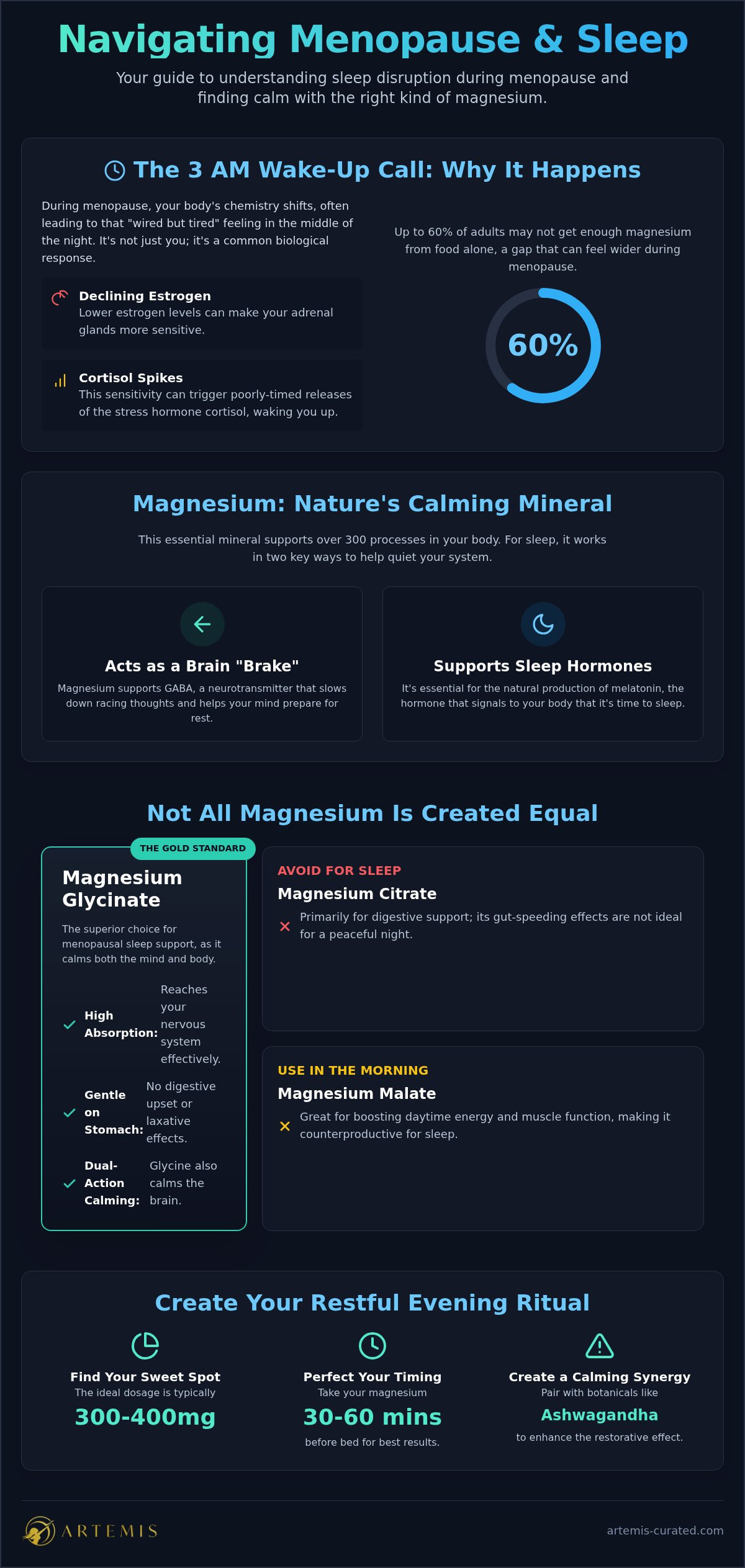
- Learn why magnesium glycinate is the gold standard when choosing supplements for menopause insomnia UK, offering superior absorption without digestive upset.
- Discover the ideal "sweet spot" dosage of 300-400mg and why timing your intake 30-60 minutes before bed is most effective.
- Explore how to pair magnesium with calming botanicals like Ashwagandha to create a synergistic effect for deeper, more restorative rest.
- Find out how to transition from feeling "wired but tired" to a state of calm by integrating magnesium into a dedicated evening ritual.
Why Menopause Disrupts Sleep and How Magnesium Helps
Transitioning through menopause involves a profound shift in your internal chemistry. It’s more than just a series of symptoms; it’s a total recalibration of your nervous system. As oestrogen levels begin to decline, the delicate balance of your hormones changes. This often triggers nighttime cortisol spikes that leave you staring at the ceiling. Because of this, many women find themselves looking for supplements for menopause insomnia to help restore their natural rhythm. Magnesium is often the missing piece. It acts as a master mineral that supports over 300 biochemical reactions in the body, ranging from muscle relaxation to mood regulation.
While we often try to get everything we need from our plates, a diet-only approach can fall short during this transition. Research from 2025 suggests that up to 60% of adults may not be getting enough magnesium from their food. When your body is under the physical stress of hormonal shifts, its demand for this mineral increases. It’s not about just eating more spinach; it’s about understanding that your body requires more support to maintain its equilibrium during this storied chapter of life.
The Cortisol Connection: Why You Wake Up at 3 AM
It’s a common story: you fall asleep easily enough, but then you’re wide awake in the early hours. This "wired but tired" feeling is usually a sign of a hormonal rhythm disruption. When oestrogen drops, your adrenal glands can become more sensitive, leading to poorly timed cortisol releases. Magnesium helps regulate your adrenal response to stress. It acts like a buffer, keeping your nervous system from staying in a state of high alert. By fostering this inner harmony, you can help your body stay in a restorative sleep state for longer.
Magnesium’s Role in Melatonin and GABA Production
To fall asleep, your brain needs to feel quiet. Magnesium supports this by interacting with GABA, which is a neurotransmitter that acts as the brain’s braking system. It helps slow down racing thoughts and prepares your mind for rest. Additionally, magnesium is essential for the natural secretion of melatonin, the hormone that tells your body it's night. Unlike heavy sedatives, this mineral works with your body's existing pathways. It offers a gentler way to find peace. You can explore our intentional formulations in our online shop, where we focus on quality and specific needs for the menopause transition.
Choosing the Right Form: Why Magnesium Glycinate Wins for Sleep
When you begin your search for supplements for menopause insomnia UK, the sheer variety on the shelves can feel more like a puzzle than a solution. It’s easy to assume that a higher dose equals better results, but the truth is more nuanced. While a high milligram count on a label might seem impressive, the true value lies in how gracefully your body welcomes the mineral. This is known as bioavailability. If the form you choose isn't easily absorbed, it won't reach the systems that need it most. Instead, it often lingers in the digestive tract, leading to unwanted side effects rather than the deep rest you're seeking.
Understanding Why Menopause Disrupts Sleep is the first step toward choosing the right support. Declining hormones often leave the nervous system in a state of high alert. To counter this, you need a form of magnesium that can cross into your system effectively and work in harmony with your brain's natural chemistry. As of August 2026, new UK regulations have set even stricter purity standards for specific magnesium compounds, making it a great time to be more selective about what you bring into your home.
The Science of Magnesium Glycinate
Magnesium Glycinate, also known as bisglycinate, is the gold standard for those dealing with nighttime anxiety and restless thoughts. In this form, the magnesium is bound to glycine, an amino acid that has its own calming effect on the brain. This bond makes the mineral incredibly stable and highly absorbable. It’s also famously gentle on the stomach, meaning you won’t experience the laxative effect common with cheaper alternatives. Magnesium glycinate is the superior choice for menopausal women because it targets both the physical tension of the body and the restless noise of the mind.
Other Forms to Consider and Those to Avoid
Not every magnesium belongs in your evening ritual. Magnesium Citrate is popular for its digestive benefits, but its tendency to speed up the gut makes it less than ideal for a peaceful night. Similarly, Magnesium Malate is wonderful for boosting daytime energy and supporting muscle recovery, so it’s best kept for your morning routine. You should generally avoid Magnesium Oxide; while it’s inexpensive, its absorption rate is very low, often serving as little more than a filler in mass-produced products. For those also focused on heart health, Magnesium Taurate is a gentle, sophisticated option that supports both the cardiovascular system and a sense of calm.
When you’re reading labels, look past the marketing and find the "elemental magnesium" dose to understand exactly what you’re getting. If you’re ready to build a more intentional bedtime, you might find what you need in the Full Curated collection, where each ingredient is selected for its quality and purpose. Choosing with intention is the key to moving from a state of exhaustion to one of true, soulful rest.
Beyond Magnesium: Managing Hormonal Rhythms for Rest
While magnesium is a cornerstone of rest, it works best when woven into a wider tapestry of support. In our collection, we view this as "The art of harmony". It’s about more than just a single pill; it's about how different elements work together to support your body's changing needs. For instance, your Understanding Oestrogen is vital because this hormone acts as a regulator for how your body retains minerals. As levels dip during menopause, your kidneys may excrete more magnesium, making it harder to maintain the levels needed for a quiet mind. Supplementing isn't just about adding something new; it's about replacing what the transition takes away.
To truly address the "wired but tired" feeling, many women find success by combining minerals with calming botanicals. Ingredients like Ashwagandha and L-Theanine act as perfect partners for magnesium. They help lower cortisol and quiet the mind, creating a synergistic effect that one ingredient alone might not achieve. When looking for magnesium glycinate for sleep during menopause, consider how it interacts with these other natural supports to create a more profound sense of ease. This layered approach is often what makes the difference between a restless night and a restorative one.
The Rhythm of Inner Harmony
Your nighttime rest is often decided by how you curate your day. One of the biggest disruptors of sleep is fluctuating blood sugar. If your levels crash in the middle of the night, your body releases cortisol to bring them back up, which wakes you up instantly. By focusing on Curating the Rhythm of Inner Harmony through balanced meals and stress management, you provide a stable foundation for your evening supplements to work. This holistic view ensures you aren't just masking symptoms but supporting your body's natural wisdom and daily rhythms.
When to Seek Further Support
Sometimes, even the most carefully selected supplements for menopause insomnia UK need to be backed by data. If you find that your sleep remains elusive despite a consistent ritual, it might be time for a deeper look. Blood testing can identify specific mineral deficiencies or hormonal imbalances that require a more tailored approach. We recommend exploring A Guide to Blood Tests for Women to understand which markers are most relevant to your vitality. Knowledge is a powerful tool in reclaiming your rest and ensuring your sanctuary remains a place of true peace.
How to Build a Restful Evening Ritual with Magnesium
Rest is not merely the absence of activity; it is a slow, intentional descent into stillness. To truly address the disruption of your nights, you must look beyond the act of swallowing a capsule. When you choose supplements for menopause insomnia UK, you’re making an investment in your daily wellbeing. This requires a dedicated window of time to allow the mineral to settle into your system. Ideally, you should take your magnesium 30 to 60 minutes before you intend to sleep. This gives the "master mineral" enough time to signal to your nervous system that the day’s work is done.
Step-by-Step: The Artemis Evening Ritual
- Step 1: Disconnect from digital noise at least one hour before bed. This lowers evening cortisol and allows your natural melatonin to rise without interference.
- Step 2: Prepare a warm, caffeine-free infusion. The simple act of holding a warm cup can be a powerful psychological signal for relaxation.
- Step 3: Take The art of sleep. This intentional selection is designed to act as a final anchor for your evening, grounding your body in readiness for deep, restorative rest.
Common Mistakes to Avoid
One of the most frequent hurdles is simple impatience. Magnesium is not a heavy sedative; it is a nutritional support that often needs 2 to 4 weeks of consistent use to build up in your system and show its full potential. If you have a particularly sensitive digestive tract, try taking your supplement with a light evening snack rather than on a completely empty stomach. Finally, remember that even the highest quality supplements can be overridden by the blue light of a smartphone. Protecting your "circadian sanctuary" from screens is just as vital as the mineral support itself.
Browse our curated solutions in The Full Curated collection to find your path to rest and reclaim the quiet of your nights.
Curating Your Menopause Support with Artemis
Reclaiming your rest is a journey of intentionality. It's about moving away from the loud, generic promises of high-street brands toward something more considered. At Artemis, we believe the rituals you bring into your home should have a story and a purpose. This is why we created The art of harmony. It serves as our foundational collection, designed to support the complex shifts of the menopause transition with grace. When you’re looking for the best supplements for menopause insomnia UK, finding a brand that values quality over quantity makes all the difference to your daily wellbeing.
Our approach is rooted in the philosophy of selection. We don't believe in the mass-produced; we believe in the meaningful. This is why you can Shop the Full Curated Collection to find exactly what your body is asking for. Each formulation is a result of careful craftsmanship. We ensure that you aren't just taking a supplement, but participating in a ritual of self-care that respects your body's natural wisdom.
The Art of Sleep: Deep Rest for the Discerning Woman
Artemis began with a shared vision between our co-founders, Milly and Sarah. They wanted to create a space for women that values soul over fleeting trends. It’s a community for those who appreciate the finer details and the human element behind the products they use. We invite you to move beyond the frantic energy of traditional retail and join us in a more deliberate way of living well. Reclaiming your sleep is the first step toward a more harmonious life. To continue your journey, we encourage you to Explore our Menopause Support Guide for more insights into holistic harmony.
Reclaiming Your Rhythm of Rest
Finding the right path to sleep during menopause doesn't have to be an exhausting search through endless aisles. We've explored how the right form of magnesium, specifically glycinate, acts as a gentle anchor for a restless mind and body. By focusing on high-bioavailability ingredients rather than just high doses, you can support your nervous system without the digestive discomfort of lesser compounds. Integrating these into a consistent 30-minute evening ritual helps signal to your body that it's safe to let go of the day’s stress.
When you’re looking for supplements for menopause insomnia UK, it’s about choosing products designed with your specific hormonal rhythms in mind. Our co-founders, Milly and Sarah, have expertly curated our collections to ensure every ingredient serves a purpose in your journey toward vitality. You deserve to wake up feeling refreshed and ready for the day ahead. Take the first step toward a more restorative night by choosing support that matches the quality of your life.
Discover 'The Art of Sleep' and 'The Art of Harmony' collections
You have the power to transform your evenings into a true sanctuary of rest.
Frequently Asked Questions
What is the best time of day to take magnesium for menopause sleep?
Take magnesium 30 to 60 minutes before you plan to sleep. This timing allows the mineral to enter your bloodstream and begin its work of calming the nervous system. By integrating it into your evening ritual, you create a consistent signal for your body to wind down. It’s an intentional act that helps bridge the gap between the day's busy energy and the quiet stillness required for deep rest.
Can I take magnesium supplements if I am already on HRT?
You can usually take magnesium alongside Hormone Replacement Therapy, though it’s always wise to consult your GP first. While we don't offer clinical consultations or HRT ourselves, we know many women find that magnesium provides additional support for the nervous system. It helps fill the mineral gaps that can sometimes persist even when hormones are balanced. Think of it as a companion to your existing wellness plan rather than a replacement.
How long does it take for magnesium to start helping with insomnia?
Most women notice a difference within 2 to 4 weeks of consistent use. Magnesium isn't a quick-fix sedative; it's a mineral that needs time to build up in your system. When searching for supplements for menopause insomnia UK, remember that patience is part of the process. Your body is undergoing a major transition, and it takes a little while to restore the internal balance needed for a truly restorative night.
Will magnesium help with menopause night sweats as well as sleep?
Magnesium can certainly help manage the intensity of night sweats. Since an estimated 75% to 85% of women experience these vasomotor symptoms, finding a way to quiet the body’s internal thermostat is essential. By supporting the nervous system and adrenal response, magnesium helps reduce the cortisol spikes that often trigger these sudden bursts of heat. This leads to fewer interruptions and a much cooler, more peaceful environment for sleep.
Are there any side effects of taking magnesium glycinate every night?
Magnesium glycinate is widely regarded as the gentlest form on the digestive system, so side effects are rare. Some people might experience very mild loose stools if the dose is too high for their specific needs. However, unlike other forms like citrate, glycinate is unlikely to cause a laxative effect. It’s designed for nightly use to support your body's long-term health without causing any disruption to your digestive comfort or daily routine.
Can I take magnesium with other sleep aids like valerian or melatonin?
Yes, magnesium often works in beautiful synergy with other natural sleep aids. Botanicals like valerian or L-Theanine can enhance the calming effect on the brain’s GABA receptors. When looking for effective supplements for menopause insomnia UK, you'll find that many curated formulas, like our own collections, blend these ingredients intentionally. This combined approach addresses both the physical tension in your muscles and the mental noise that often keeps you awake at night.
How much magnesium should a woman in menopause take daily?
The "sweet spot" for most women in menopause is between 300 and 400mg of elemental magnesium daily. It’s important to check your supplement labels specifically for the "elemental" amount, as this reflects the actual magnesium your body can absorb. Taking this amount consistently helps maintain over 300 biochemical reactions in the body. It provides the foundational support your nervous system requires to navigate the hormonal shifts of this life stage with greater ease.
0 comments