

What if menopause fatigue isn’t something you can simply power through with another coffee? Waking tired after a full night’s sleep and losing your train of thought at work can make even ordinary days feel demanding. If you’re searching for supplements for menopause fatigue uk, the sheer number of choices can add to the strain.
There isn’t one supplement that suits everyone, and evidence for menopause products can vary. A considered approach starts with understanding what may be affecting your energy, then choosing nutrients with care rather than adding a long list to your day. This guide explores options available in the UK, what to look for, and when it’s sensible to speak with a GP or pharmacist, particularly if you take medication.
You’ll also find a clearer way to think about a manageable routine, including how menopause support such as The art of harmony and sleep support such as The art of sleep may fit into the picture. The aim is steady, sustainable support and greater clarity, without turning self-care into another chore.
Key Takeaways
- Learn why menopause fatigue can have several contributing factors, including changes in sleep and stress, rather than one simple cause.
- See how to assess supplements for menopause fatigue uk by checking ingredients, claims and suitability for your needs.
- Discover why a thoughtful combination of nutrients may be more useful to explore than adding vitamins at random.
- Find practical pointers for reading UK supplement labels and weighing claims about ingredient quality and absorption.
- Explore how The art of harmony and The art of sleep may fit into a considered menopause support routine.
Understanding the True Nature of Menopause Fatigue
Menopause fatigue can feel like more than an ordinary need for rest. You might wake unrefreshed, struggle to find the right word in a meeting, or feel as though your limbs are heavy before the day has properly begun. These experiences are real, and they can affect confidence as well as energy. Fatigue may have several contributing factors, including disrupted sleep, night sweats, mood changes and other health issues. The common symptoms of menopause can include both physical and cognitive changes, though persistent or unusual fatigue is worth discussing with a GP.
Oestrogen has roles in many parts of the body, including processes involved in how cells use energy. Its levels fluctuate during perimenopause and decline after menopause. It’s tempting to explain tiredness as a simple effect on mitochondria, the structures that help cells produce energy, but fatigue is complex and can’t be pinned on one mechanism alone. Brain fog and “heavy limbs” describe how the experience can feel; they don’t, by themselves, identify its cause. The aim is to understand the whole picture and work towards a steadier sense of inner harmony.
Why Traditional Energy Boosters Often Fail
Coffee or a sugary snack may offer a short lift, but that boost doesn’t necessarily address what’s behind low energy. If caffeine makes you feel more alert yet unsettles your sleep or leaves you feeling wired, the next day can be harder. Try noticing how timing and amount affect you rather than automatically reaching for more.
And “pushing through” isn’t a reliable long-term plan. It can leave less room for rest and recovery, especially after poor sleep. The phrase “adrenal reserves” is sometimes used to explain this, but it can give a misleading impression that the adrenal glands are simply used up. Temporary stimulation and sustained vitality aren’t the same thing.
The Role of Hormonal Flux in Your Daily Vitality
Oestrogen and progesterone change across the menopausal transition, and those shifts may affect sleep, temperature regulation and mood, all of which can influence how rested you feel. A “tired but wired” evening, or waking in the night alert despite feeling exhausted, can be frustrating. It isn’t proof of a particular hormone or cortisol problem, and experiences differ from person to person.
For a wider overview of menopause and holistic support, see Navigating Menopause: A Curated Guide to Holistic Harmony. As you consider supplements for menopause fatigue uk, keep the focus on thoughtful support rather than a quick fix. If fatigue is persistent, worsening or affecting daily life, speak with a GP to explore possible causes before relying on supplements alone.
Essential Nutrients for Restoring Your Inner Rhythm
It’s easy to see a nutrient on a label and assume it’s the answer. But energy depends on many processes working together, and a supplement is most useful when it addresses a genuine need. Magnesium, B vitamins, iron and vitamin D each have different roles; taking more isn’t automatically better, and supplements can interact with medicines or duplicate nutrients already in your routine.
A curated approach starts with food, symptoms and, where appropriate, a conversation with a GP or pharmacist. It can help reduce “supplement fatigue”, the confusion and inconvenience of taking a growing stack of pills. Look beyond phrases such as “high quality” or “bioavailable”: check the nutrient form and amount, and ask a health professional whether it’s suitable for you. Purposeful selection is a steadier step from simply getting through the day towards feeling more supported.
Magnesium: Supporting Calm and Energy
Magnesium is involved in more than 300 enzyme systems, including those linked to energy production and normal muscle and nerve function. Different forms have different properties. Magnesium citrate may loosen stools, while glycinate is often chosen by people looking for a gentler option, though responses vary. Neither form should be treated as a guaranteed fix for night-time restlessness or “tired but wired” feelings. Check the label and ask a pharmacist if you’re unsure.
B Vitamins: Supporting Cellular Vitality
Vitamin B6, B12 and folate contribute to normal energy-yielding metabolism, while B12 and folate also support normal psychological function and the formation of red blood cells. Low B12 can cause tiredness and cognitive symptoms that may overlap with menopause experiences, but symptoms alone can’t confirm a deficiency. Risk can be higher with some diets or health conditions. Rather than assuming you need a B-complex, discuss persistent fatigue or possible deficiency with a GP.
Iron and Vitamin D: Consider Your Individual Needs
Iron deficiency can contribute to tiredness, and heavy periods may increase the risk before menopause. But fatigue alone doesn’t tell you whether your iron stores are low, and taking iron without a clear reason may be unsuitable. A clinician can advise whether testing is appropriate. For broader context, read this guide to blood tests for women.
Vitamin D supports normal muscle function. The NHS advises adults to consider 10 micrograms daily during autumn and winter, from October to March. It’s one practical seasonal point to keep in mind, not a promise of an energy boost. The RCOG treatment options leaflet offers further information on managing menopause symptoms.
For a simpler starting point, browse Artemis Curated’s supplement collections and consider what fits your needs, rather than adding several products at once. The best routine is one you understand and can follow comfortably.
The Cortisol Connection: Why Stress Management is Vital for Energy
Stress can make menopause symptoms feel harder to manage, but the link isn’t as simple as “high cortisol causes fatigue”. Cortisol is a normal hormone that helps regulate the body’s response to stress and follows a daily rhythm. Hormone changes, worries and disrupted sleep can overlap, affecting how rested and resilient you feel. That doesn’t mean cortisol is “stealing” the building blocks of other hormones, or that a particular cortisol level explains every difficult night.
Waking at 3 am can feel like a sudden surge of alertness, but the time alone doesn’t prove there’s been a cortisol spike. Night sweats and hot flushes can interrupt sleep; repeated waking may leave you tired and less focused the next day. If night-time symptoms or fatigue are persistent, consider discussing them with a GP rather than assuming stress is the only cause.
Curating a Rhythm of Inner Peace
Small, repeatable pauses can help create a gentler transition between a busy day and bedtime. Try a short walk, a few minutes of slow breathing, or writing down tomorrow’s priorities before you get into bed. These habits won’t “reset” hormones, but they may make it easier to wind down. For a wider look at stress, cortisol and wellbeing, read Cortisol: Curating the Rhythm of Inner Harmony and Vitality.
Think of stress care as support for your overall wellbeing, alongside any nutrients that are appropriate for you. Supplements for menopause fatigue uk can’t make up for repeated sleep disruption, and no single routine suits everyone. Keep the changes manageable, then notice what helps over time.
Rest as a Foundation for Vitality
A few practical adjustments may make your sleep space more comfortable. Keep the room cool if you’re waking hot, choose breathable bedding, and follow a calming evening routine. A weighted blanket may feel soothing to some people, but it isn’t essential and may feel too warm or restrictive, particularly if night sweats are an issue. Choose comfort over rules.
For support specifically centred on deep sleep, Artemis Curated offers The art of sleep. It may sit alongside a steady wind-down routine, rather than replace one or act as a guaranteed answer to fatigue. Explore the sleep support collection as one option to consider. Rest matters, but if poor sleep continues to affect daily life, seek advice from a health professional.
Choosing Quality: Navigating the UK Supplement Market
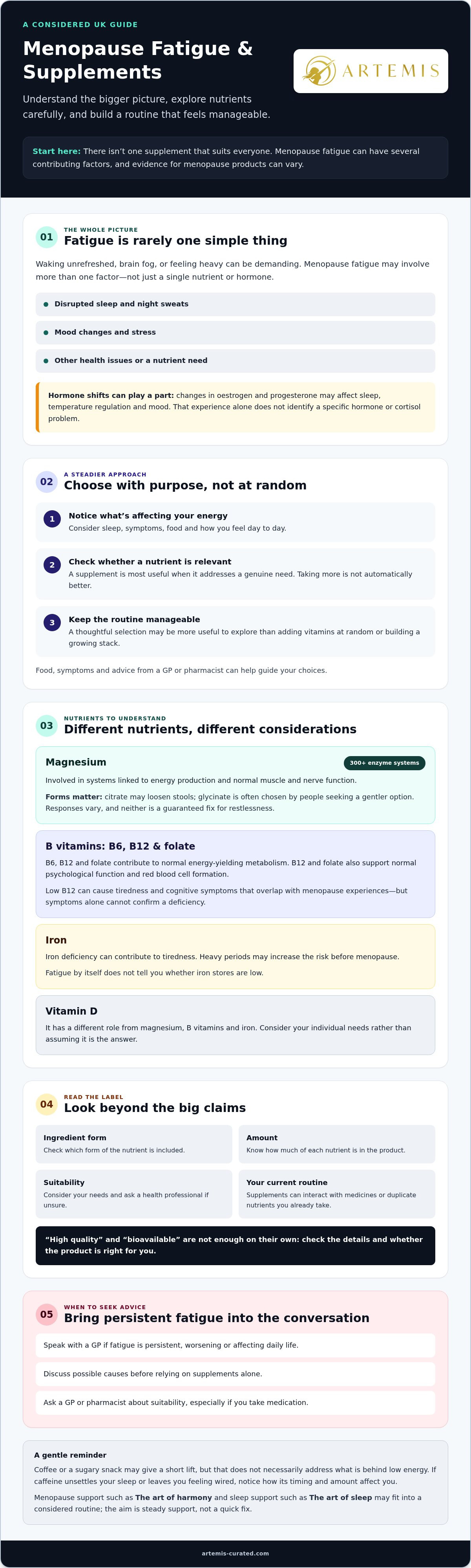
A well-designed label should help you understand what you’re taking, not leave you guessing. Check the amount of each nutrient per daily serving, its form, the suggested use and the full ingredient list. In the UK, food supplements are regulated as food, not as medicines, so they aren’t intended to diagnose, treat, cure or prevent disease. Be cautious of bold promises that suggest otherwise.
“Food-state” usually describes nutrients combined with food-derived ingredients, while isolates are individual nutrients. Neither term alone proves that a supplement is better absorbed or more effective. Look for clear ingredient amounts and forms, and ask a pharmacist or GP if you’re unsure how a product fits with your diet, health or medication.
What to Avoid in Your Wellness Selection
Fillers, binders and colourings can serve practical purposes, such as helping a tablet hold its shape or giving it colour. Their presence doesn’t automatically make a product unsafe, but the label should make clear what’s included. Take extra care with “proprietary blends”: if individual quantities aren’t listed, you can’t easily compare doses or see how much of each ingredient you’d take. A “clean” label is a marketing phrase, not a guarantee of quality.
The Full Curated collection brings together Artemis Curated’s products. The brand’s approach is purposeful selection, but you should still check the label of any supplement you’re considering for its ingredients, amounts and directions.
Matching Supplements to Your Specific Needs
Fatigue can have several causes, and it’s difficult to tell from symptoms alone whether hormones, a nutrient deficiency, disrupted sleep or stress is playing the main role. Note when tiredness occurs and any other symptoms, then discuss persistent or worsening fatigue with a GP. They can help decide whether assessment or a blood test is appropriate. A targeted supplement may make more sense than a generic all-in-one, but only if it suits your needs and doesn’t duplicate nutrients you already take.
Choosing supplements for menopause fatigue uk is less about collecting every popular ingredient and more about asking clear questions: What’s in it? How much does it provide? Is there a reason I might need it? A smaller, considered routine can be easier to understand and maintain.
For a broader overview of women’s wellness supplements, see this curated guide to supplements for women. If you’d like to explore Artemis Curated’s range, view the supplement collections and review each product’s information before deciding.
The Art of Harmony: A Sophisticated Approach to Menopause Support
Menopause fatigue rarely has a single explanation, so a useful support routine should leave room for the whole picture: changing symptoms, sleep, stress, diet and individual health needs. The art of harmony is the cornerstone of Artemis Curated’s menopause range, offering a considered option for women looking for menopause support. It isn’t a treatment for fatigue or a promise to balance hormones. The value of a thoughtful collection is in making selection feel more intentional, not in claiming one product can do everything.
That approach may appeal if you’re tired of trying to piece together a routine from a long list of separate bottles. The story behind a supplement matters, too: who it’s intended to support, what its label says, and whether it fits your needs. Read the ingredients and directions carefully, and ask a GP or pharmacist for advice if you have a health condition, take medication or aren’t sure whether a supplement is right for you.
Beyond Energy: A Considered Kind of Menopause Support
Perimenopause can bring a mix of changes, from interrupted sleep to shifts in mood and concentration. Supporting your wellbeing means recognising those experiences without assuming that one supplement will resolve them all. Artemis Curated’s range reflects Milly and Sarah’s focus on purposeful selection. The art of harmony is positioned for menopause support, with an approach that values considered choices over an ever-growing supplement routine. Check the product information to understand exactly what it offers.
Your Journey to Restored Vitality
If you choose to try a supplement, make it easy to remember: pair it with an existing morning habit, follow the label directions, and give yourself time to notice how you feel. Consistency can help you keep track of your routine, but it can’t guarantee a particular result. If fatigue is ongoing or affecting daily life, speak with a GP rather than relying on supplements alone.
Your menopause journey is personal. You can make choices at your own pace, keeping what feels relevant and setting aside what doesn’t. For an intentional place to begin, explore The art of harmony in the Artemis Curated shop. A thoughtful approach to supplements for menopause fatigue uk starts with clear information, realistic expectations and support that fits your life.
Choose a Steadier Way Forward
Menopause fatigue can have several overlapping causes, from disrupted sleep to changing hormone levels or a nutrient deficiency. The most helpful next step is not necessarily another bottle. Look at the wider picture, check supplement labels carefully, and seek advice from a GP if fatigue persists or affects daily life.
When exploring supplements for menopause fatigue uk, favour a considered routine over a crowded one. Choose nutrients with a clear purpose, and remember that supplements aren’t a substitute for investigating ongoing symptoms. Sleep and stress support matter, too. Small, realistic habits can make self-care feel more manageable.
Artemis Curated is a UK-based business focused on holistic wellbeing and menopause support. Its The art of harmony collection offers a purposeful option to explore, with product details available to help you decide whether it suits your needs. Discover The art of harmony in the Artemis Curated shop.
Your experience is your own. With clear information and thoughtful choices, you can shape a routine that feels supportive, sustainable and right for you.
Frequently Asked Questions
What are the best supplements for menopause fatigue in the UK?
There isn’t one supplement that’s best for everyone; the right choice depends on your diet, symptoms and health needs. Magnesium, B vitamins, iron or vitamin D may be relevant in specific circumstances, but taking them won’t necessarily relieve fatigue if you don’t need them. Check the amounts and forms on the label, and ask a GP or pharmacist about persistent tiredness or possible deficiencies before starting a supplement.
Can I take menopause supplements if I am not on HRT?
Yes, menopause supplements don’t generally require you to be taking HRT. They’re a separate option, but they aren’t a substitute for medical care or suitable for everyone. Check the ingredients and directions, especially if you take medication, have a health condition or are considering more than one product. A GP or pharmacist can help you check for possible interactions and whether a supplement is appropriate for you.
How long does it take for menopause vitamins to start working?
There’s no set timeframe, and some people may not notice a benefit at all. It depends on the nutrient, whether you had a deficiency, the reason for your fatigue and other factors such as sleep. Follow the product label rather than taking extra, and keep track of how you feel. If fatigue continues, worsens or affects daily life, speak with a GP instead of simply waiting longer.
Is magnesium or iron better for menopause tiredness?
Neither is automatically better; they have different roles, and the right choice depends on whether you need them. Iron may help if iron deficiency is contributing to tiredness, but fatigue alone can’t confirm low iron. Magnesium supports normal energy metabolism and muscle and nerve function, but it isn’t a guaranteed energy remedy. Ask a GP whether assessment or testing is appropriate before taking iron or adding supplements.
Can menopause fatigue be caused by high cortisol levels?
Stress and disrupted sleep can contribute to feeling tired, but fatigue alone doesn’t show that cortisol is high. Cortisol is a normal hormone with a daily rhythm, and waking at night doesn’t prove a cortisol spike. Menopause symptoms, stress, sleep changes and other health issues can overlap. If exhaustion is persistent or affecting your routine, talk with a GP rather than assuming cortisol is the cause.
What should I look for on a supplement label to ensure quality?
Look for a complete ingredient list, the amount of each nutrient per serving, its form, directions and any relevant warnings. Be cautious of proprietary blends that don’t disclose individual amounts, since they make comparison difficult. In the UK, supplements are regulated as food, not medicines, so they aren’t intended to treat or cure conditions. Clear labels help you make an informed choice, but don’t guarantee a product will suit you.
Are there any side effects to natural menopause energy supplements?
Yes. “Natural” doesn’t always mean risk-free. Supplements can cause unwanted effects or interact with medicines, and the risks depend on the ingredients and your health. For example, St John’s wort can interact with some medicines. Read the label, don’t exceed its directions, and check with a pharmacist or GP before starting a new supplement if you take medication, have a health condition or are unsure about safety.
Is it safe to combine “The art of harmony” with “The art of sleep”?
Check with a pharmacist or GP before combining them. The product names alone don’t show whether ingredients or nutrient amounts overlap, and the available information here doesn’t confirm the formulas. Read both labels and share them with a health professional, especially if you take medication or other supplements. Artemis Curated offers both menopause support and deep sleep support, but individual suitability depends on the ingredients and your circumstances.
0 comments