

Over 13 million women in the UK are currently navigating the shifts of perimenopause and menopause, representing a full third of the female population. It's a season of life that often brings unexpected changes, from skin that suddenly feels less firm to joints that ache after a simple morning walk. Finding the right collagen for menopause uk shouldn't feel like another chore on your list. Instead, it can be a serene addition to your day that helps you feel like yourself again.
It's completely natural to feel a bit overwhelmed by how quickly your body seems to be changing. You deserve a routine that offers genuine support rather than just loud claims. We've designed this guide to help you understand how targeted collagen can restore your skin's radiance and ease joint stiffness. We'll look at the vital link between your hormones and your body's natural proteins, giving you the clarity to choose a supplement that fits your life with ease and elegance.
Key Takeaways
- Understand how falling oestrogen levels directly signal your body to slow down collagen production, leading to sudden changes in skin firmness and joint comfort.
- Compare marine and bovine sources to see why smaller particles make certain types of collagen for menopause uk much easier for your body to absorb and use.
- Learn the "co-factor" checklist, including why nutrients like Vitamin C and Zinc are essential partners that help your collagen supplement actually work.
- Discover how to move beyond just taking a pill by creating a simple daily wellness ritual that supports your long-term vitality and natural glow.
Understanding Collagen Loss During the Menopause Transition
Collagen is the silent scaffolding of the body. It's often described as the "glue" that holds everything together, providing the essential strength and structure for our skin, bones, and connective tissues. For many women, the shift into midlife brings a sudden realization that this internal support system is changing. While we all age, the physiological shift of Understanding Menopause introduces a unique biological acceleration that goes far beyond simple chronology. It's a time when the body's natural rhythms begin to pivot, and the foundations we've relied on require a more intentional kind of care.
What exactly is collagen?
At its core, collagen is a robust protein built from specific amino acids, primarily glycine and proline. These molecules weave together to create incredibly strong, flexible fibres that act as the primary structural protein that maintains the integrity of our connective tissues. You'll find these fibres concentrated in the dermis, which is the deep layer of your skin responsible for firmness. They're also the main component of your tendons and the cartilage that cushions your joints. Without a steady supply of this protein, the body's physical architecture begins to lose its resilience and shape.
Why menopause changes the rules
When looking for collagen for menopause uk, it's helpful to distinguish between "beauty" collagen and "functional" collagen. While many products focus solely on surface-level aesthetics, a holistic approach considers how supplementation can support your overall vitality. You might notice visible signs like thinning skin or brittle nails, but the decline also impacts your internal comfort. Choosing to supplement is about more than just seeking a glow; it's about restoring a sense of harmony to a body that's navigating a major transition. You can explore options designed for this specific journey in our curated collection, where we focus on quality and intentionality for every stage of your wellness routine.
The Biological Link: How Oestrogen and Collagen Work Together
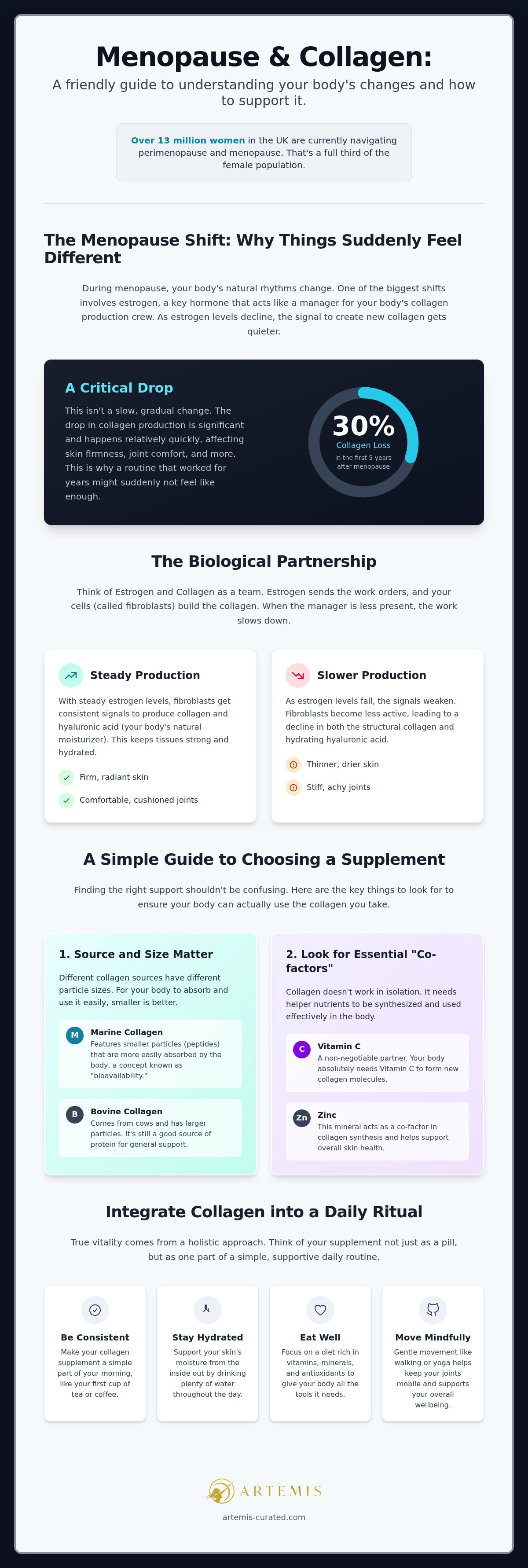
Oestrogen is much more than a reproductive hormone. It acts as a master messenger, with docking stations called receptors located in almost every part of your body. Some of the most important receptors are found on fibroblasts, which are the cells responsible for creating new collagen fibres. When oestrogen levels are steady, these cells work efficiently to keep your skin firm and your tissues resilient. However, as levels drop, the message to produce new protein becomes faint. This is the biological reality behind why so many women search for collagen for menopause uk to help bridge the gap.
This decline doesn't just affect the visible surface. Oestrogen also manages the production of hyaluronic acid, the natural substance that holds onto water in your tissues. Collagen provides the structure, while hyaluronic acid provides the moisture. They're a duo. When oestrogen fades, you lose both the scaffolding and the hydration. This often results in skin that feels thinner and more prone to dryness. Following dermatologist-recommended skin care advice usually means looking for ways to replenish these lost elements through both topical treatments and internal support.
Oestrogen as the master regulator
During perimenopause, the hormonal fluctuations can feel like a slow depletion of your body’s natural resources. It's helpful to view Oestrogen: Understanding the Architect of Female Vitality as the manager of your body's maintenance crew. When the manager is away, the repairs simply don't happen as quickly. This is why your usual routine might suddenly stop delivering the results you're used to seeing. Supplementing helps provide the workers with the tools they need to keep going.
Beyond the surface: Joints and bones
The impact of lower collagen levels reaches far into your skeletal system. Cartilage, the flexible tissue that cushions your joints, is made mostly of collagen. When your body stops making it efficiently, that cushioning can thin out. This often leads to the stiff, achy feeling that many women mistakenly attribute to just 'getting older.' It's actually a direct result of your body lacking the building blocks it needs to maintain your joints. This is why choosing a high-quality collagen for menopause uk can be so beneficial for your physical comfort.
Supporting your frame from the inside out is vital for long-term mobility. By providing your body with targeted supplements, you're offering it the raw materials it can no longer manufacture on its own. This isn't just about beauty; it's about maintaining the strength of your bones and the fluidity of your movement. If you're looking to bring some of that balance back into your life, you might find that exploring The art of harmony is a gentle way to start your journey.
Marine vs. Bovine: Which Collagen is Best for Menopause?
When you start looking for collagen for menopause uk, you'll likely find two main sources: marine and bovine. Each has its own story and its own specific strengths. Choosing between them isn't about finding one that's "better" in a general sense, but about selecting the one that aligns with your personal values and your body's current needs. Whether you're focused on restoring a lost glow or supporting your physical strength, understanding these differences helps you make a choice with real intentionality.
Marine collagen is sourced from fish scales or skin, while bovine comes from cows. For many women, the decision starts with dietary preferences. If you're a pescatarian, marine is the obvious path. Beyond diet, research on collagen and estrogen deficiency suggests that targeted supplementation can be a powerful way to manage the physical shifts of midlife. This scientific foundation gives us confidence that what we add to our daily routine has a meaningful purpose.
Marine collagen: The radiance specialist
If your primary goal is to address thinning skin or fine lines, marine collagen is often considered the gold standard. It's almost entirely Type I collagen, which is the exact type that makes up about 80% of our skin's structure. It's particularly prized for its bioavailability. Marine collagen is absorbed up to 1.5 times more efficiently than other types due to its low molecular weight. This means your body can put it to work much faster.
Sustainability is another reason many women choose high-quality marine sources. Often made from parts of the fish that would otherwise go to waste, it's a thoughtful choice for those who value an ethical approach to wellness. It's a gentle way to feed your skin the nutrients it's craving without over-complicating your lifestyle. You can find options that prioritize these clean, effective sources in our curated collection.
Bovine collagen: Support for the whole frame
Bovine collagen offers a different kind of support by providing both Type I and Type III collagen. Type III is found in your muscles, arteries, and organs, making it a great choice if you're looking for a more "all-rounder" approach. It's particularly helpful for those who want to support gut health alongside their skin and joints. If your menopause journey involves feeling a bit more physically depleted or if you're focused on maintaining muscle tone, bovine might be the better fit for your frame.
Deciding which to use often comes down to your most pressing symptoms. Some women even choose to rotate between the two or look for blends that offer a wider range of amino acids. For a deeper look at how these proteins interact with your vitality, our Collagen: A Guide to Supporting Your Body’s Natural Radiance provides a more detailed breakdown of the different types and their benefits. It's about finding the rhythm that feels right for you.
A Buyer’s Guide to Collagen Supplements in the UK
Selecting the right collagen for menopause uk can feel like a daunting task when you're faced with endless shelves of bright packaging and bold promises. It's helpful to approach this choice with the same intentionality you'd use for any other part of your home or wellness routine. The goal is to find a supplement that feels like a natural extension of your life, rather than just another pill to swallow. Understanding the small details on the label is the first step toward finding a product that truly resonates with your body's needs.
The first term to look for is "hydrolysed peptides." Raw collagen is a large, complex protein that your body finds difficult to break down and absorb. By choosing hydrolysed peptides, you're opting for collagen that has already been broken down into smaller, more manageable pieces. This process makes the nutrients much easier for your system to use. You should also be mindful of "nasties" like hidden sugars or artificial fillers. Many mass-produced powders use these to improve taste or texture, but they can detract from the purity of your wellness ritual.
Your body doesn't work in isolation, and neither does collagen. It needs "co-factors" to be effective. Vitamin C and Zinc are the essential partners that act as a spark for collagen synthesis. Without them, your body struggles to turn those peptides into the structural support your skin and joints need. In 2026, the consensus for dosage suggests that finding a "sweet spot" between 5g and 10g daily is often where women notice the most significant results in their skin’s firmness and joint comfort.
Purity and sourcing in the UK
UK supplement regulations are among the strictest in the world, but a "clean label" goes beyond basic compliance. It represents a commitment to transparency and quality. Premium brands often invest in third-party testing to ensure their products are free from heavy metals and contaminants. When you choose a curated collection over a bargain option, you're investing in the history and care that went into sourcing those ingredients. This level of detail ensures that what you're putting into your body is as pure as possible.
Formulating your ritual: Powder, liquid, or capsule?
The format you choose should fit seamlessly into your daily rhythm. Powders are incredibly versatile, allowing you to stir them into a morning coffee or a evening tea without changing the flavour. Liquids offer convenience for a busy UK lifestyle, while capsules are simple for those who prefer a quick addition to their routine. The secret ingredient to success is consistency. Finding a form you enjoy ensures you'll stick with it long enough to see the benefits. For more advice on building a balanced routine, you might enjoy our Best Supplements for Women in 2026 guide. If you're ready to start your journey today, you can explore the art of radiance in our shop.
Integrating Collagen into Your Daily Wellness Ritual
Adopting a new habit often feels like adding another item to an already long list. However, when you introduce collagen for menopause uk into your life, you have the opportunity to shift your mindset. Instead of viewing it as just taking a pill, try to see it as curating a moment of harmony within your day. It's a small, intentional act of self-care that acknowledges the transition your body is moving through. Whether you stir your supplement into a quiet morning coffee or a soothing evening tea, this ritual serves as a gentle reminder that your vitality is worth the investment.
Consistency is the quiet force behind any successful wellness journey. Because collagen works deep within the dermis and connective tissues, the changes won't happen overnight. It's a slow, steady process of rebuilding. Most women begin to notice a subtle shift in their skin’s hydration or joint comfort after about eight to twelve weeks of daily use. Managing your expectations is key. Think of it as a long-term conversation with your body, providing the support it needs to navigate this season with grace.
Beyond the supplement: A holistic approach
While high-quality supplements provide the necessary building blocks, they work best when supported by a thoughtful lifestyle. Preserving the collagen you already have is just as vital as adding more. This means being diligent with sun protection, as UV rays are one of the primary drivers of protein breakdown. You can also learn more about ethica skincare to find natural, plant-based topicals that complement your internal wellness ritual. Hydration also plays a starring role. Without enough water, even the best collagen for menopause uk can't fully support the "bounce" and elasticity we associate with radiant skin.
Stress management is another foundational piece of the puzzle. High levels of cortisol, the body's primary stress hormone, can actually accelerate the breakdown of collagen fibres. Finding ways to lower your daily stress helps protect your body's structural integrity from the inside out. For a deeper look at managing these various shifts, you might find our Navigating Menopause: A Curated Guide a helpful companion for your journey.
The Artemis Curated difference
At Artemis Curated, we believe in the power of intentionality. Our supplement, The art of radiance, was specifically designed to support the foundations of your skin, hair, and nails during the menopause transition. It isn't just about surface-level beauty; it's about providing high-quality nutrients that resonate with your body’s changing needs. We focus on purity and effectiveness, ensuring that every scoop or capsule contributes to your overall sense of well-being.
For those seeking a more comprehensive approach, The Full Curated collection offers a bundled path to total harmony. By pairing radiance with support for sleep and hormonal balance, you create a complete ecosystem of care. We encourage you to embrace this stage of life not as a loss, but as a powerful evolution. By choosing quality over quantity and ritual over routine, you can restore your radiance and move through the world with renewed confidence. You can explore our full range of support in our curated shop.
Step into Your New Rhythm with Grace
Navigating the shifts of midlife is about more than just managing symptoms; it's about reclaiming your sense of self. By understanding how your hormones and protein levels work together, you've taken the first step toward restoring your natural glow. Whether you choose marine collagen for its skin-focused benefits or bovine for its full-body support, the right collagen for menopause uk can become a cornerstone of your daily wellness. It's the small, consistent choices, like checking for hydrolysed peptides and essential co-factors, that make the most meaningful difference over time.
Founders Milly and Sarah have expertly selected every element of our range to ensure a truly holistic approach to women's wellness. We believe that your journey deserves more than just a generic pill; it deserves a thoughtfully curated experience. With free UK shipping on all our curated collections, starting your new ritual is simple and stress-free. Discover your path to inner and outer harmony with The Full Curated collection and move forward with the intentionality you deserve. You've got this.
Common Questions About Collagen and Menopause
Does collagen actually help with menopause symptoms?
Collagen doesn't treat hormonal symptoms like hot flushes or night sweats, but it does support the structural changes that happen when oestrogen drops. It's specifically effective for addressing thinning skin and joint discomfort. UK regulations are very clear that supplements shouldn't be marketed as a cure for menopausal symptoms; instead, think of it as a way to support your body's physical foundations during this transition.
How long does it take for collagen to work for menopause?
You'll typically need to wait about eight to twelve weeks before you notice visible changes in your skin or improvements in joint stiffness. Collagen is a slow-acting protein that works by rebuilding your body's internal scaffolding from the inside out. Consistency is the most important factor here, as your cells need a steady, daily supply of amino acids to start the repair process and show real results.
Can I take collagen alongside HRT in the UK?
Yes, you can safely take collagen alongside Hormone Replacement Therapy (HRT) in the UK. While HRT focuses on balancing your hormone levels, collagen provides the direct raw materials your body needs for its connective tissues. They act as a supportive duo, with one addressing the hormonal cause of depletion and the other helping to manage the physical impact on your skin and joints.
What is the best type of collagen for menopausal skin?
Type I marine collagen is widely considered the best choice for supporting skin radiance during the menopause transition. This specific type makes up the majority of your skin's structure, and marine sources are often favoured because they have a smaller particle size. This low molecular weight means your body can absorb the collagen for menopause uk more efficiently than other varieties, leading to better results for your complexion.
Are there any side effects of taking collagen during menopause?
Collagen is generally very well-tolerated, though some people might experience mild bloating or a feeling of fullness when they first start. These effects are usually temporary as your digestive system adjusts to the new protein intake. It's always a good idea to check the label for any added fillers or allergens, especially if you have known sensitivities to fish or shellfish when choosing marine sources.
Can I get enough collagen from my diet alone?
It's quite difficult to get enough collagen from modern diets alone, especially when oestrogen decline accelerates your natural loss so sharply. While bone broth and certain meats contain collagen, the protein molecules in food are often too large for your body to absorb easily. Supplements provide hydrolysed peptides that are already broken down, making it much simpler for your system to use them effectively for repair.
When is the best time of day to take a collagen supplement?
There isn't a single "perfect" time to take your supplement, so it's best to choose a moment that fits easily into your daily routine. Some women prefer taking it in the morning to start their day with an intentional wellness ritual, while others find an evening dose works better. The most important thing is taking it at roughly the same time every day to maintain steady levels in your system.
0 comments