

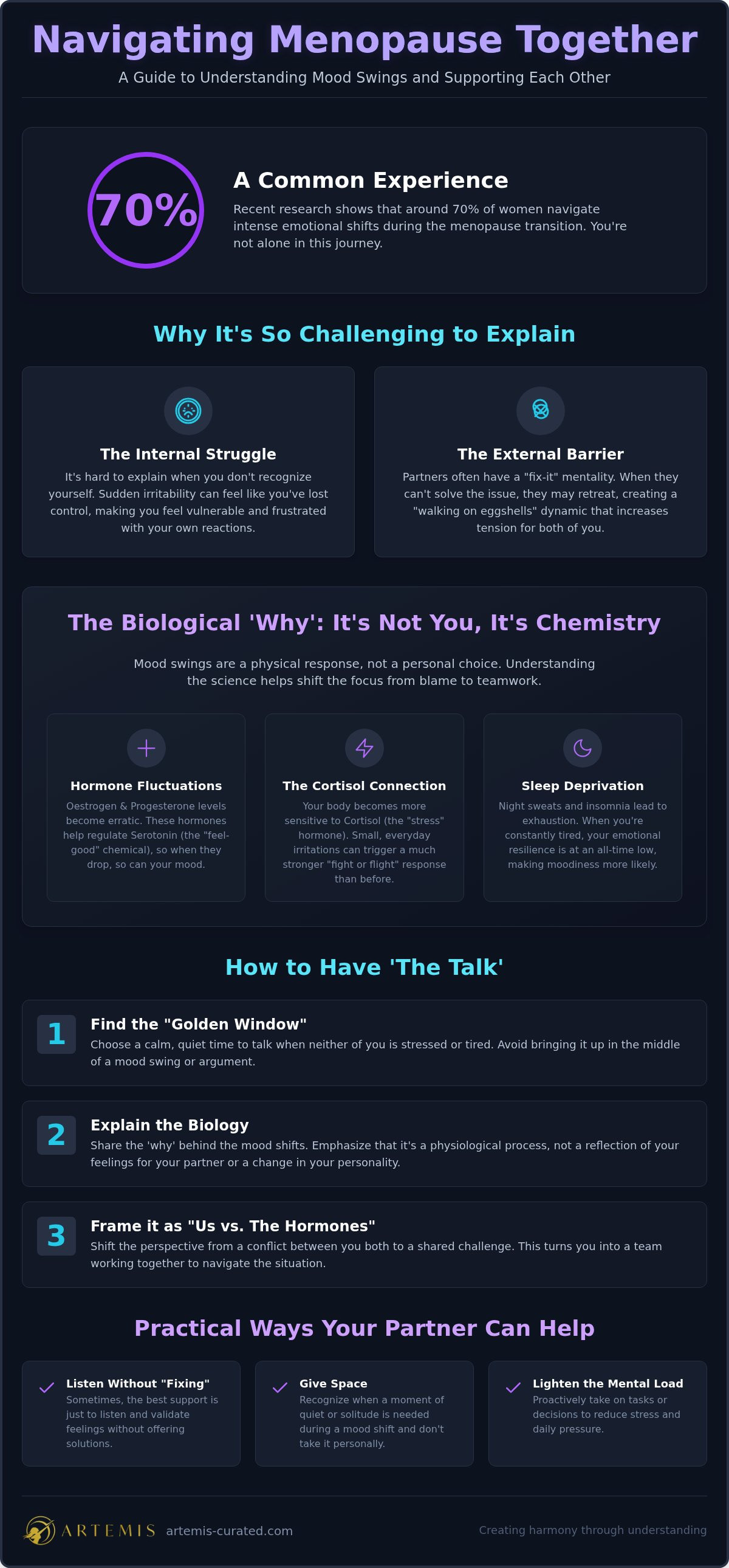
Imagine a quiet evening where the gentle glow of your home usually offers a sanctuary, yet suddenly, a simple question from your partner feels like an affront. You might find yourself reacting with a sharp word you don't really mean, followed quickly by a heavy sense of regret. It's a common story. Recent research shows that about 70% of women navigate these intense emotional shifts during their transition. The challenge often lies in explaining menopause mood swings to your partner without feeling as though you're making excuses for your own temperament.
It's deeply frustrating to feel out of control of your own reactions, and it's equally hard to watch your partner retreat into confusion or defensiveness. You both deserve a home that feels like a shared refuge rather than a place of tension. In this guide, you'll learn how to transform these confusing hormonal shifts into a shared journey of understanding and support. We will explore the biological roots of your irritability and sadness. We'll also share practical ways to manage these shifts together, restoring the sense of harmony you both value in your daily life.
Key Takeaways
- Understand why it feels so vulnerable to share these changes and how to break through the silence of the menopause taboo.
- Master the art of explaining menopause mood swings to your partner by highlighting the physical changes in hormones and brain chemistry.
- Learn to spot the "Golden Window," which is a calm time to talk that helps you avoid defensiveness and stay connected.
- Discover practical ways your partner can help, from giving you space during a mood shift to lightening your daily mental load.
- Explore how to create a supportive home environment that prioritises harmony and holistic wellness for you both.
Why Explaining Menopause Mood Swings Feels So Challenging
Opening up about your inner world is rarely easy. When that world feels like it's tilting on its axis, the task becomes even more daunting. Explaining menopause mood swings to your partner requires a level of vulnerability that can feel exposed and raw. You're essentially admitting that you don't always feel in control of your own reactions. This isn't a failure of character or a loss of love; it's a profound physiological shift. To understand the broader context of these changes, it's helpful to look at What is Menopause? and how it specifically impacts the nervous system.
For too long, a "Menopause Taboo" has lingered in our homes. It's a silence that suggests these changes are something to be endured in private, hidden away like a shameful secret. This silence often leads to emotions being dismissed as "just your age" or "being difficult." Such labels are deeply frustrating and inaccurate. They ignore the reality that your body is navigating a complex transition. By bringing these feelings into the light, you can stop the cycle of guilt and start a conversation based on biological facts rather than unfair assumptions.
The Internal Struggle: When You Do Not Recognise Yourself
Perimenopausal irritability often arrives without warning. One moment you're perfectly fine; the next, a misplaced tea towel or a loud television feels like a personal catastrophe. It's incredibly difficult to explain this to someone else when you're still trying to make sense of it yourself. This suddenness is often tied to the fluctuating levels of oestrogen, which acts as a biological architect for your mood. When the foundation shifts, the structure of your daily emotional life feels less stable and more reactive.
The External Barrier: Why Partners Often Retreat
Most partners have a natural "fix-it" mentality. They see a problem and want to provide an immediate solution. However, menopause isn't a broken shelf that needs mending. When they can't "fix" your sadness or anger, they might retreat, leading to a "walking on eggshells" dynamic at home. This distance isn't helpful for either of you. The goal is to shift the perspective. It's not "you versus me" in a series of arguments. Instead, it's "us versus the hormones." When you approach the situation as a team, you can begin to curate a calmer environment together. You might even look at tools for balance in our shop to help support this new phase of your journey.
The Biological 'Why': Bridging the Gap Between Hormones and Emotions
When you're explaining menopause mood swings to your partner, it helps to start with the biological reality. These shifts aren't a sign of a changing personality. They're a physiological response to the natural ebb and flow of your hormones. Think of your body as having a chemical thermostat that usually keeps your moods stable. During this transition, that thermostat is temporarily malfunctioning. It's a period of recalibration, not a permanent state of being. Explaining menopause mood swings to your partner becomes a shared mission once you both see the chemical roots of the issue.
Oestrogen and progesterone do more than manage your reproductive cycle. They also play a starring role in regulating serotonin, the chemical that helps you feel calm and happy. When these hormone levels fluctuate, your "feel-good" chemicals often drop along with them. Understanding the Menopausal Transition reveals how these shifts impact the brain's architecture. Perimenopause mood swings are a neurochemical shift rather than a psychological choice.
The Cortisol Connection: Why Stress Hits Harder Now
As hormone levels decline, your body often becomes much more sensitive to cortisol. This is the hormone responsible for your "fight or flight" response. Because of this change, small irritations that you once ignored can now feel like major crises. A misplaced set of keys or a loud noise might trigger an intense reaction. It's not that you're overreacting; your body is simply more attuned to stress than it used to be. Learning about cortisol management can provide deep insight into how to quiet these alarms.
Sleep Deprivation and the Emotional Tipping Point
Quality rest is the foundation of a calm home, yet it's often the first thing to go. Night sweats and insomnia can leave you in a state of profound, hormonal exhaustion. When you're perpetually tired, your emotional resilience wears thin. What might look like simple moodiness is often just your body crying out for rest. Prioritising sleep is a vital step toward restoring balance. To support this journey, you might consider how The art of harmony can help you and your partner navigate these changes together.
A Step-by-Step Guide to Having 'The Talk' with Your Partner
Success in explaining menopause mood swings to your partner often depends on timing. We call this the "Golden Window." It's that rare, quiet moment when the house is still and neither of you is rushed or stressed. Attempting this conversation during a heated disagreement is rarely productive. Instead, wait for a period of calm. This allows your words to land with the intention you truly feel. Finding the right words is the most important part of explaining menopause mood swings to your partner effectively.
Setting the Scene for Vulnerability
Choose a neutral space where you both feel at ease. A gentle walk in the park or a quiet evening at home can work beautifully. These environments encourage a sense of openness. Start the conversation by centering your own experience. A simple opening like, "I need to share something I am going through," signals that this is a moment for connection rather than conflict. It invites your partner to listen with empathy rather than defensiveness.
Using the "I" statement strategy is essential. Focus on how you feel rather than what they are doing wrong. Instead of saying "You make me angry," try "I feel overwhelmed by my internal shifts right now." This keeps the focus on the hormonal transition and avoids sounding accusatory. Ground your talk in reality by sharing the facts you've learned about perimenopause. When you explain that your reactions are tied to shifting biology, it removes the weight of personal blame.
The Dialogue Script: What to Actually Say
Try using clear, simple phrases to describe your internal state. You might say: "When I seem irritable, it's often my hormones reacting, not a reflection of how I feel about you." This distinction is vital. Use everyday terms to describe the more abstract symptoms. Explain "brain fog" as a sudden, thick mist that makes it hard to find words. Describe "anxiety" as a low-level hum of electricity that you can't quite switch off. Be honest about the physical toll, mentioning how a lack of sleep affects your emotional fuse.
Finally, define your goal. Do you need them to just listen while you vent? Or are you looking for them to help with specific tasks? Being clear about whether you want "listening" or "fixing" prevents future frustration. It allows your partner to succeed in supporting you. If you're looking for tools to help restore this balance, exploring The art of harmony together can be a meaningful next step in your shared journey.
Practical Ways Your Partner Can Support Your Harmony
Partners often feel a sense of helplessness when watching someone they love struggle. They want to be helpful, but they don't always know where to start. Once you've finished explaining menopause mood swings to your partner, the focus should shift toward practical, everyday actions. These small gestures help restore the sense of your home as a sanctuary. It turns a period of individual struggle into a shared effort for harmony. When both people are active participants in the solution, the weight of the transition feels much lighter.
One of the most effective tools is the power of the "pause." When a mood shift occurs, a partner's immediate reaction can either calm the situation or escalate it. By waiting just a few seconds before responding, they allow space for the initial wave of irritability to pass. It's about choosing connection over the need to be right. At the same time, reducing the "mental load" is a direct way to help. When a partner takes over specific household chores, like the weekly food shop or managing the laundry, they help lower your cortisol levels. This creates a calmer internal environment for you both.
The Non-Verbal Support System
Sometimes, words aren't the answer. You might find it helpful to agree on a "safe word" for moments when you feel a mood swing starting. This neutral signal lets your partner know that you need a little extra grace without you having to explain yourself in the heat of the moment. We also recommend the "cup of tea" rule. This is the simple act of offering a small comfort, like a warm drink or a cool glass of water, without being asked. Often, your physical presence in the room matters much more than any verbal solution. It signals that you aren't alone in this journey. For a more visual way to express your state of mind with a bit of humor, sassholetshirts.com offers cheeky graphic apparel that can help you and your partner find a reason to smile even on difficult days.
Supporting Your Wellness Routine
A partner can be a wonderful ally in maintaining your daily wellness. They can help you stay consistent with your menopause support routine by ensuring you have the time and space you need for yourself. It's vital that they encourage rest without making you feel "lazy" or "unproductive." Your body is doing heavy work right now, and rest is a productive choice. Celebrating small wins, like a night of better sleep or a particularly calm afternoon, helps reinforce the progress you're making together.
If you are ready to curate a more balanced environment, you can explore the full collection of menopause support tools designed for your journey.
Curating a Supportive Environment for Your Menopause Journey
Creating a home that truly supports you is about more than just aesthetics. It's about the invisible rhythm of your daily life. A holistic approach to menopause wellness acknowledges that your environment, your nutrition, and your relationships are all deeply connected. Explaining menopause mood swings to your partner is a vital part of this process. It transforms your living space into a sanctuary where you feel safe to be "in progress." You don't have to have all the answers right away. You simply need a space that allows you to breathe and recalibrate without judgment.
We believe that balance is something you curate with care. "The art of harmony" is a foundational element in this journey, offering a curated blend for those seeking emotional steadiness. It acts as a quiet anchor during the more turbulent days of the menopausal transition. This natural support doesn't work in isolation; it complements the communication work you're doing with your partner. When your body feels more balanced, it's easier to find the patience and clarity needed for honest conversation. To see how our other offerings can support your path, feel free to explore the Full Curated collection for total wellness.
Next Steps: From Explanation to Integration
Remember that explaining menopause mood swings to your partner is an ongoing practice, not a one-time event. We suggest a gentle "check-in" every few weeks. Use this time to see how the support systems you've put in place are working. Perhaps the "safe word" needs changing, or maybe you've discovered a new ritual that brings you both comfort. Menopause is a season, and like every season, it eventually changes. By facing it together, you ensure that this transition leads to a deeper, more resilient connection. For more depth on managing this phase of life, our Navigating Menopause guide provides a wealth of holistic insights to help you find your way.
Restoring Balance to Your Shared Sanctuary
Navigating this transition doesn't have to be a solitary effort. By focusing on the biological roots of your shifts and choosing the right moments for honest conversation, you can move away from conflict and toward a shared understanding. Explaining menopause mood swings to your partner is simply the first step in building a more resilient, empathetic relationship. When you both understand that these changes are a physical recalibration rather than a choice, the home once again becomes a place of refuge.
Support is a choice you make together. Our collection is curated by women for women, using natural, holistic ingredients designed to fit seamlessly into the modern sanctuary. Discover how The art of harmony can help restore your emotional rhythm and bring a sense of steady calm back to your daily life. You've already done the hard work of starting the conversation. Now, let's focus on the gentle integration of balance. You're entering a new season, and with the right tools, it can be your most harmonious one yet.
Frequently Asked Questions
How do I explain menopause mood swings without sounding like I am making excuses?
Focus on the biological reality rather than the emotional fallout. It's helpful to describe your feelings as a physical response to internal changes rather than a choice you're making. By explaining menopause mood swings to your partner as a shift in neurochemistry, you move the conversation away from blame. Frame it as a temporary recalibration of your system. This approach helps your partner see the situation as something you're navigating together.
Can my partner actually do anything to help my hormones?
While your partner cannot physically alter your hormone levels, they can significantly influence your cortisol, the stress hormone. By creating a calm environment and reducing your daily mental load, they help lower the external triggers that exacerbate mood shifts. Simple acts like managing the household admin or ensuring you have quiet time for your wellness routine provide the space your body needs to find its own rhythm and restore a sense of internal harmony.
What if my partner gets defensive when I try to talk about my mood?
Defensiveness often stems from a partner feeling responsible for your unhappiness. To prevent this, lead with reassurance that their actions aren't the cause of your hormonal shifts. Choose a time when you both feel relaxed and unhurried to have these conversations. If they react sharply, try to stay calm and remind them that you're sharing your experience to build a stronger connection. Clear, non-accusatory communication is the most effective tool for breaking down these defensive barriers.
Is it normal to feel angry at my partner for no reason during menopause?
Yes, sudden bouts of irritability or anger are very common. About 70% of women report experiencing at least one mood-related symptom during this transition. These feelings often arise without a specific external cause because your brain is reacting to fluctuating oestrogen levels. It's important to recognise that this anger is a physiological response. Acknowledging this reality to yourself and your partner helps prevent these temporary feelings from causing long-term damage to your relationship.
How long do menopause mood swings typically last?
The duration of these emotional shifts varies for every woman. Generally, they are most intense during perimenopause when hormone levels are at their most volatile. Once you've fully transitioned through menopause and your hormone levels reach a new, lower baseline, these specific mood swings typically begin to settle. Every woman's journey is unique; some find balance within a few years, while others may navigate these shifts for a longer period as their body recalibrates.
Should I show my partner my symptom tracker or medical info?
Sharing your symptom tracker can be incredibly helpful. It provides your partner with concrete, visual evidence of the patterns you're experiencing, making the abstract nature of mood swings feel more tangible. When they see the correlation between your sleep patterns, physical symptoms, and emotional state, it builds deeper empathy. This shared data allows you both to plan for more challenging days and celebrate the periods of calm and clarity that occur along the way.
What are the best natural ways to support my mood alongside communication?
A holistic approach often works best for managing emotional rhythm. Prioritising deep rest and maintaining a stable routine can lower stress levels significantly. Many women find that natural, targeted support helps bridge the gap while they work on communication. Options like The art of harmony are designed to provide foundational support for your system. When you combine these tools with a calm home environment, you create a comprehensive strategy for navigating the emotional complexities of this season.
Can menopause mood swings affect my relationship permanently?
While these shifts can certainly cause temporary strain, they don't have to result in permanent damage. In fact, successfully explaining menopause mood swings to your partner can lead to a deeper level of intimacy and trust. Facing a significant life transition as a team often strengthens the bond between couples. By being honest about your needs and working together to curate a supportive environment, you can emerge from this season with a more resilient and understanding partnership.
0 comments