

What if the most useful first step for menopause-related dizziness isn’t choosing an herb, but finding out what’s causing it? Herbal remedies for menopause-related dizziness can sound reassuring, yet dizziness has several possible causes, including menopause symptoms, medication effects or another health issue.
If you’ve felt unsteady, light-headed or suddenly off balance, it’s understandable to want a gentle way to feel better. But “natural” doesn’t always mean safe, and evidence for herbal remedies varies. A remedy that may help one symptom isn’t necessarily a treatment for dizziness itself.
This guide looks at possible links between menopause and dizziness, what’s known about herbs such as ginger, ginkgo and black cohosh, and how to think carefully about safety and medication interactions. It also explains when to speak with a health professional and which sudden or severe symptoms need urgent attention. The aim is to help you make a considered choice rather than assume menopause is the whole explanation.
Key Takeaways
- Notice whether dizziness feels like spinning, light-headedness, imbalance or feeling faint, and describe it clearly when seeking advice.
- Research on herbal remedies for menopause-related dizziness is limited. Findings about general menopause symptoms don’t prove that a herb treats dizziness.
- Before trying an herbal supplement, consider possible side effects and interactions with medicines, and discuss it with a healthcare professional.
- Keep a record of when dizziness happens, how long it lasts, possible triggers and any other symptoms, medicines or supplements.
- The art of harmony is menopause support, not a treatment for dizziness or a substitute for having unexplained symptoms assessed.
Menopause-related dizziness: what it can feel like and why the cause matters
Dizziness is an umbrella term, not one precise sensation. You might feel as though the room is spinning, feel light-headed, struggle to keep your balance or feel close to fainting. These experiences can have different causes, so describing exactly what happens is more useful than assuming menopause is responsible or reaching straight for herbal remedies for menopause-related dizziness.
Dizziness is a symptom, not a diagnosis. Hormonal changes around menopause may be part of the picture, but they don’t confirm why a particular episode is happening. Dehydration, changes in blood pressure, medication effects and inner-ear conditions can also cause dizziness. A health professional can consider these possibilities in context, including when symptoms began and what else is going on.
What do people mean when they say they feel dizzy?
Vertigo is a spinning sensation, sometimes felt even when you’re sitting still. Light-headedness can feel more like wooziness or being close to fainting; unsteadiness may make walking or standing difficult. Notice when the feeling starts, how long it lasts, what you were doing and whether anything else happens at the same time. A clear description can help a health professional assess your symptoms.
For example, dizziness that begins after standing is different information from a spinning sensation triggered by turning your head. This doesn’t identify the cause on its own, but details like these can help guide an assessment. If episodes recur, jotting down the pattern can make it easier to explain what’s happening without relying on memory.
Can menopause cause dizziness?
Menopause is one possible context for dizziness, not a confirmed explanation for every episode. Hormonal changes may occur alongside symptoms such as disrupted sleep, hot flushes or anxiety, which can affect how you feel day to day. That timing matters, but it isn’t proof of a direct cause. For a broader overview of menopause and its stages, see Menopause on Wikipedia.
Keep an open view of the possibilities, especially if dizziness is new, persistent, recurrent or getting worse. Mention any medicines or supplements you take, as well as related symptoms, when discussing it with a health professional. Menopause support may be part of your wider wellbeing, but a supplement shouldn’t replace assessment of unexplained dizziness.
What evidence says about herbal remedies for menopause-related dizziness
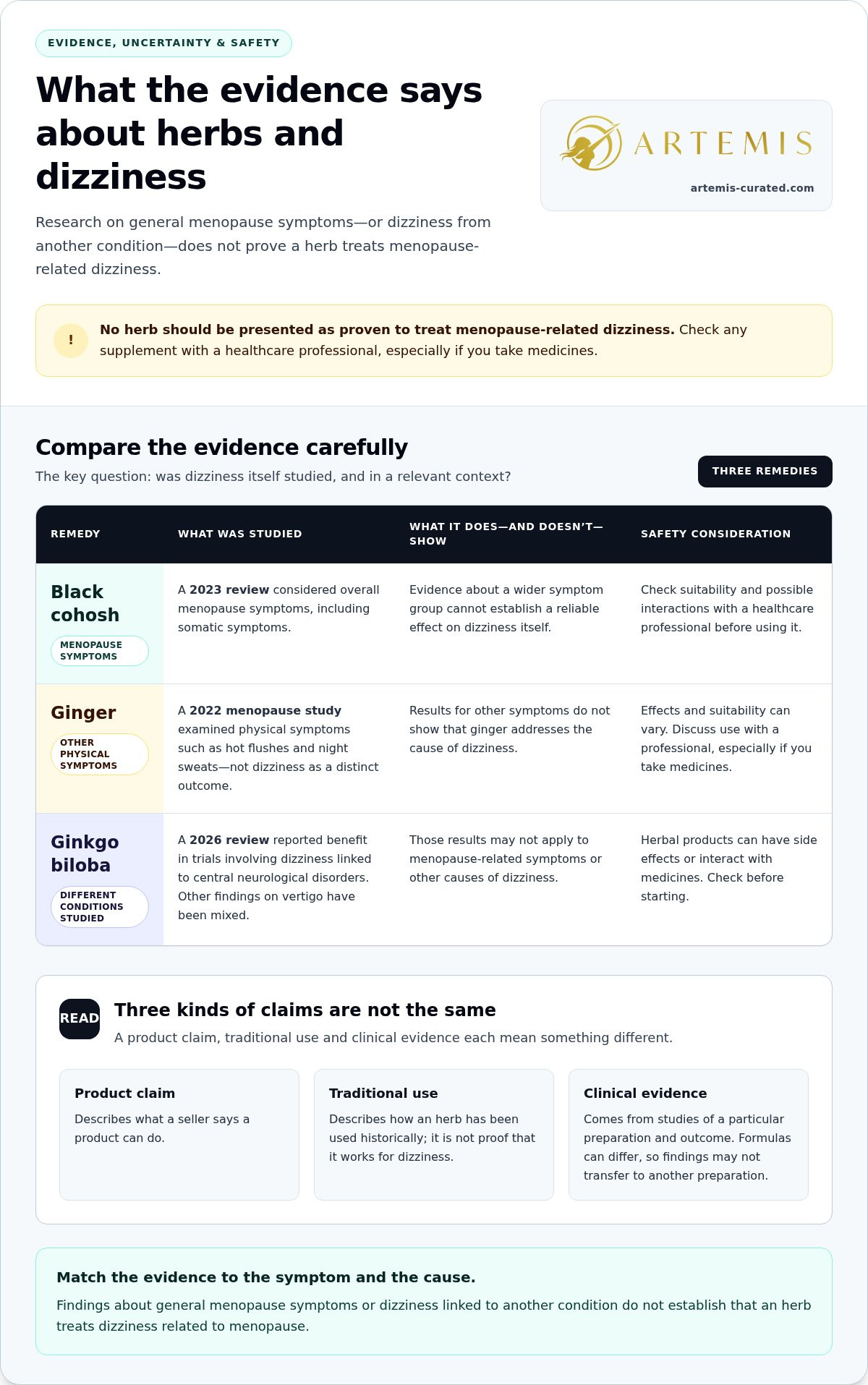
Evidence needs to match the symptom. Research suggesting an herb may help with general menopause symptoms doesn’t show that it treats dizziness. Findings from people with other conditions may not apply to menopause either. At present, no herb should be presented as proven to treat menopause-related dizziness.
Traditional use can explain why a herb is tried; it isn’t proof that it works for dizziness. Look for studies that assess dizziness itself in people with a relevant cause, rather than relying on broad claims about balance, circulation or menopause.
| Remedy or claim | Evidence for dizziness | Key uncertainty | Safety consideration |
|---|---|---|---|
| Black cohosh | A 2023 review considered overall menopause symptoms, including somatic symptoms. This isn’t proof that black cohosh treats dizziness specifically. | Evidence about a wider symptom group can’t establish a reliable effect on dizziness itself. | Check suitability and possible interactions with a healthcare professional before using it. |
| Ginger | A 2022 menopause study examined physical symptoms such as hot flushes and night sweats, not dizziness as a distinct outcome. | Results for other symptoms don’t show that ginger addresses the cause of dizziness. | Effects and suitability can vary; discuss use with a professional, especially if you take medicines. |
| Ginkgo biloba | A 2026 review reported benefit in trials involving dizziness linked to central neurological disorders, not menopause. Other findings on vertigo have been mixed. | Those results may not apply to menopause-related symptoms or other causes of dizziness. | Herbal products can have side effects or interact with medicines, so check before starting. |
Do herbs studied for menopause symptoms also help dizziness?
Not necessarily. Black cohosh, for example, has been studied for overall menopause symptoms, but that doesn’t make it a dizziness treatment. To assess the evidence, ask what symptom was measured, who took part and whether the study looked at the same type of dizziness you’re experiencing. The NHS information on menopause symptoms can help put common symptoms in context.
Why herbal claims need careful reading
A product claim describes what a seller says; traditional use describes how an herb has been used historically; clinical evidence comes from studies of a particular preparation and outcome. These aren’t interchangeable. Formulas can differ, so don’t assume evidence for one preparation applies to another or infer an ingredient or dose from a general claim. Artemis Curated’s menopause support range is intended for menopause support, not as a treatment for dizziness. Check any supplement with a healthcare professional, particularly if you take medicines.
Herbal remedies versus other explanations: how to weigh the options safely
Trying an herbal supplement on your own may feel like a straightforward first step, but it won’t tell you why you’re dizzy. If symptoms are caused by dehydration, a medicine or an inner-ear problem, a menopause supplement may not address the cause. Getting symptoms assessed isn’t a guaranteed cure, but it can help identify what needs attention and guide safer next steps. Herbal remedies for menopause-related dizziness shouldn’t replace assessment when the cause is unclear.
What should you check before trying an herbal supplement?
Read the full ingredient list, directions and warnings, and note the product’s source. Don’t assume that “natural” means safe or that two products with similar claims have the same formula. If you take medicines or use other supplements, discuss the complete list with a pharmacist or clinician before starting something new. They can help check for possible interactions and whether the product is suitable for you.
Black cohosh is one example where it’s sensible to check current safety advice rather than rely on general online claims. Ask a pharmacist or clinician about relevant NHS or Medicines and Healthcare products Regulatory Agency (MHRA) guidance, particularly if you take medicines or have an existing health condition. Don’t stop prescribed medicine or change its dose to make room for a supplement without professional advice.
When might dizziness need medical attention?
Arrange professional advice if dizziness is new and unexplained, keeps returning, lasts or is getting worse. It’s also worth seeking advice if it affects everyday activities or comes with other symptoms. You don’t need to work out the cause yourself before asking for help.
Seek urgent help for sudden, severe symptoms. Call 999 if dizziness occurs with possible stroke signs, such as a sudden drooping face, weakness or numbness in an arm, or difficulty speaking. For urgent advice that isn’t an emergency, use NHS 111 where available or your local urgent-care service. If you’re unsure which route is right, NHS 111 can help direct you.
While waiting for advice, sit or lie down somewhere safe if you feel unsteady, and avoid driving or activities where a sudden spell could put you or someone else at risk. Keep the supplement packaging and a list of medicines to hand if you speak to a health professional. A clear record can help them understand what you’ve taken and what you’ve experienced.
A practical plan for tracking dizziness and discussing it with a clinician
A short, factual record can make it easier to describe what’s happening and when. It won’t identify the cause by itself, but it can help a clinician consider the pattern alongside your health, medicines and any menopause symptoms.
Keep a simple dizziness diary
After an episode, note what you felt in your own words. Was it spinning, light-headedness, unsteadiness or feeling faint? Record when it began, how long it lasted and what you were doing just beforehand. Add any symptoms that came with it, such as nausea, a headache, a hot flush or changes in hearing.
Keep the notes brief and factual. Include relevant recent changes to medicines or supplements, and whether you’d eaten or had anything to drink if that seems relevant. A diary supports a conversation; it doesn’t diagnose the cause.
Prepare for a health appointment
Bring your notes and a complete list of medicines, herbal products and other supplements you take. You might write down questions such as: “What could be contributing to this?”, “Could any of my medicines or supplements be involved?” and “Is this herbal product suitable for me?” A clinician may consider several possible causes and decide whether further assessment or investigation is appropriate. No particular test or diagnosis can be assumed in advance.
A practical plan:
- First, stay safe. Sit or lie down if you feel unsteady. Don’t drive while dizzy.
- Next, record the episode. Note the sensation, timing, duration, possible triggers and accompanying symptoms.
- Gather the details. List medicines, supplements and relevant changes in your health or menopause symptoms.
- Then seek advice. For urgent health concerns in the UK, use NHS 111 online or call 111; call 999 for a life-threatening emergency, including sudden symptoms that could indicate a stroke.
- Discuss supplements after that. Ask a pharmacist or clinician about safety and interactions before starting anything new.
This order matters: track and discuss possible causes before self-treating with herbal remedies for menopause-related dizziness. If you’re also exploring general menopause wellbeing, Artemis Curated offers menopause support options. A supplement is not a substitute for having unexplained or concerning dizziness assessed.
Choosing menopause support with clear expectations
Menopause support and dizziness care are related, but they aren’t interchangeable. A supplement may be one part of general wellbeing, yet it can’t identify why you feel dizzy or guarantee that the sensation will improve. Even if symptoms began during menopause, ongoing, recurring or unexplained dizziness deserves proper assessment rather than being managed with herbal remedies for menopause-related dizziness alone.
What a menopause supplement can and cannot promise
The art of harmony is Artemis Curated’s menopause-support supplement. It should be understood in that context, not as a treatment for dizziness. Don’t assume a particular ingredient or symptom-specific effect. Whether a product is suitable also depends on your circumstances, including your health history and any medicines or other supplements you take.
Before adding a supplement to your routine, discuss it with a pharmacist or clinician, especially if you take regular medication or have a health condition. Share the product label and your full list of medicines and supplements. This gives them a clearer basis for discussing possible interactions and whether the product is appropriate for you. Don’t stop or change prescribed treatment without professional advice.
Keep expectations grounded. A menopause supplement isn’t a diagnosis, a guaranteed remedy or a substitute for investigating symptoms that are new or concerning. If you’re considering general menopause support, take time to understand what the product is intended for and how it fits with your wider care.
A calm next step when dizziness continues
If dizziness carries on, returns or has no clear explanation, arrange an assessment with a health professional. Your notes on when it happens, how it feels and what else you notice can help make that conversation more useful. Include any medicines or supplements, and ask whether they could be relevant. A clinician can consider the details and advise whether further assessment is needed.
You can care for your general wellbeing while taking persistent symptoms seriously. Keep them as two distinct decisions: seek advice about dizziness, then consider menopause support with a clear understanding of its purpose and safety. To explore Artemis Curated’s menopause-support option, visit the menopause support range.
Take a thoughtful next step
Dizziness can feel unsettling, but it isn’t automatically caused by menopause. Notice and record what you experience, seek advice if symptoms persist or return, and treat herbal claims with care. Evidence for general menopause symptoms doesn’t establish that herbal remedies for menopause-related dizziness will help, and supplements may not suit everyone.
If dizziness is unexplained or concerning, speak with a health professional before relying on a supplement. Share your symptom notes and a full list of medicines and supplements so you can discuss possible causes and safety together.
For broader menopause wellbeing, Artemis Curated offers The art of harmony, a menopause-support supplement. It isn’t a treatment for dizziness, but it may be of interest as part of your wider approach to menopause support. Explore menopause support.
A measured next step can bring greater clarity. You don’t have to work it all out at once.
Frequently Asked Questions
Which herbal remedy is best for menopause-related dizziness?
There isn’t an established “best” herb for menopause-related dizziness, and no herbal remedy should be treated as a proven treatment for it. Studies of herbs such as ginger or black cohosh may look at other menopause symptoms, while ginkgo research on dizziness has involved different health conditions. Evidence doesn’t necessarily transfer between symptoms or causes. Before trying a supplement, discuss its suitability and possible interactions with a pharmacist or clinician.
Can black cohosh help with dizziness during menopause?
Black cohosh has been studied for general menopause symptoms, but that doesn’t show that it reliably relieves dizziness. Research about a broader group of symptoms can’t establish an effect on dizziness specifically. Herbal products may also have side effects or interact with medicines. If you’re considering black cohosh, check current safety advice and speak with a pharmacist or clinician, particularly if you take medicines or have an existing health condition.
Can herbal supplements interact with medicines?
Yes. Herbal supplements can cause side effects or affect how some medicines work, so tell a pharmacist or clinician about everything you take, including vitamins and other supplements. St John’s wort, for example, can cause dizziness in some people and is known to interact with medicines. Check the full ingredient list and product directions before use. Don’t stop prescribed medicine or change its dose without professional advice.
When should I seek medical help for dizziness during menopause?
Contact a health professional if dizziness is unexplained, persistent, recurrent or getting worse. For urgent advice in the UK, use NHS 111 online or call 111. Call 999 for a life-threatening emergency, including sudden possible stroke signs such as face drooping, weakness in an arm or difficulty speaking. Don’t drive while dizzy. If you’re unsure how urgent your symptoms are, NHS 111 can help direct you to appropriate care.
How can I tell whether dizziness is vertigo or light-headedness?
Vertigo usually feels as though you or your surroundings are spinning, even when you’re still. Light-headedness is more like wooziness or feeling close to fainting. Unsteadiness may make standing or walking difficult. These descriptions can help distinguish the sensation, but they don’t identify its cause. Note what it feels like, when it starts and what else happens, then share those details with a health professional if it continues or concerns you.
What should I write down before discussing dizziness with a clinician?
Record what the sensation feels like, when each episode starts, how long it lasts and what you were doing beforehand. Note possible triggers, other symptoms, relevant menopause symptoms and any recent changes to medicines or supplements. Bring a complete list of what you take, including herbal products. Keep the notes factual and brief. They won’t diagnose the cause, but they can help you explain the pattern and discuss useful next steps.
0 comments