

What if the answer to how to improve skin elasticity after menopause isn’t a more ambitious skincare routine, but a more considered one? If your skin feels drier, thinner or less firm than it used to, you’re not imagining the change. Falling oestrogen levels can affect the skin’s collagen, elastin and moisture, although changes vary from person to person.
It’s understandable to feel unsure where to start when beauty and supplement claims promise so much. The aim isn’t to reverse menopause or chase a flawless result. Instead, focus on practical ways to support your skin’s hydration and resilience, with realistic expectations.
This guide explains why skin can change after menopause and compares manageable options, from everyday skincare and sun protection to supplements and professional treatments. It covers what may help, what’s less certain and how to assess products without relying on bold promises. You’ll also find guidance on when to speak with a GP or dermatologist.
Key Takeaways
- Menopause may contribute to changes in skin hydration and elasticity, but everyone’s experience is different.
- Learn how to improve skin elasticity after menopause by building a simple routine around gentle cleansing, moisturising and daily sun protection.
- Compare skincare, sun protection, healthy habits and supplements with realistic expectations about what each can and can’t do.
- Make changes gradually and track comfort and dryness, rather than expecting quick or dramatic results.
- Know when it may be helpful to speak with a GP or dermatologist, and why supplements shouldn’t be treated as a way to reverse menopause-related changes.
How menopause can change skin elasticity
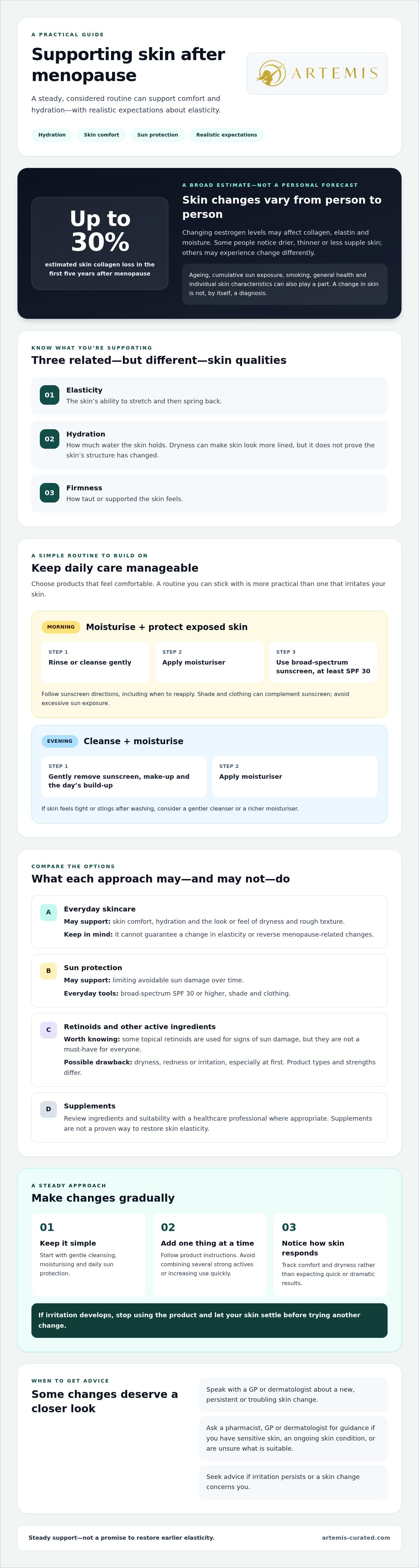
Skin elasticity is its ability to stretch and then spring back. It’s different from hydration, which describes how much water the skin holds, and firmness, which is how taut or supported it feels. These qualities can overlap: dry skin may look more lined, for example, but dryness alone doesn’t prove that the skin’s structure has changed.
Oestrogen supports skin processes involving collagen, elastin and moisture. As hormone levels change during menopause, some people notice more dryness, a change in texture or skin that seems less supple. Experiences vary, and these changes aren’t a diagnosis in themselves. A high-level overview of menopause cites an estimate that women may lose up to 30% of skin collagen in the first five years after menopause. This broad figure isn’t a prediction of what will happen to any one person.
What changes in skin after menopause?
Lower oestrogen may contribute to changes in skin structure and moisture, but menopause isn’t the only influence. Ageing, cumulative sun exposure, smoking, general health and individual skin characteristics can also play a part. Basic care may help with dryness or rough texture. A new, persistent or troubling change, however, is worth discussing with a GP or dermatologist rather than assuming menopause is the cause.
What can skin elasticity realistically mean?
Supporting skin condition means caring for comfort, hydration and resilience. It isn’t the same as restoring earlier elasticity or reversing hormonal changes. Results depend on a person’s skin, health, habits and environment, so no single routine or product can promise the same outcome for everyone.
That’s a useful starting point for considering how to improve skin elasticity after menopause: focus on steady support rather than a guaranteed return to how your skin felt before. For more on menopause and wellbeing, explore Navigating Menopause: A Curated Guide to Holistic Harmony.
How to improve skin elasticity after menopause: start with daily skin care
A steady, uncomplicated routine is a sensible place to begin. Gentle cleansing, moisturising and sun protection can support skin comfort and help limit avoidable sun damage. These steps may improve how skin feels and looks, but they can’t guarantee a change in elasticity or reverse menopause-related changes.
Which skin-care steps are sensible starting points?
Choose products that feel comfortable on your skin and keep your routine manageable. In the morning, rinse or cleanse gently, apply moisturiser, then use sunscreen on exposed skin. Choose a broad-spectrum sunscreen of at least SPF 30 and follow its directions, including when to reapply.
In the evening, cleanse to remove sunscreen, make-up and the day’s build-up, then moisturise. If your skin feels tight or stings after washing, try a gentler cleanser or a richer moisturiser. You don’t need a long list of products. A routine you can stick with is more practical than one that irritates your skin.
A simple routine: cleanse gently and moisturise in the evening, then moisturise and apply broad-spectrum SPF 30 or higher to exposed skin each morning.
Sun protection matters because ultraviolet exposure can contribute to skin damage over time. Shade, clothing and avoiding excessive sun exposure can complement sunscreen. If you add an active ingredient, introduce one product at a time and follow its instructions. Stop using it if irritation develops, and let your skin settle before trying another change.
Should you consider retinoids or other active ingredients?
Retinoids are one option to discuss, not a must-have for everyone. Some topical retinoids are used for signs of sun damage, but they may cause dryness, redness or irritation, especially at first. Product types and strengths differ, so follow the label or a clinician’s directions. Avoid combining several strong actives or increasing use quickly.
If you have sensitive skin, an ongoing skin condition or uncertainty about what’s suitable, ask a pharmacist, GP or dermatologist for guidance. Seek advice if irritation persists or a skin change concerns you. The aim is a routine your skin tolerates, not the most intensive one.
If you’re considering an optional supplement for skin, hair and nail support, review its ingredients and suitability with a healthcare professional where appropriate. Artemis Curated’s wellness supplements include The art of radiance, but supplements aren’t a proven way to restore skin elasticity.
Compare lifestyle, skincare and supplements for postmenopausal skin
There isn’t one approach that suits everyone. Skincare can help with comfort and surface appearance, while sun protection helps reduce further ultraviolet exposure. Everyday habits support general health, and supplements are an optional choice to assess carefully. None is a guaranteed way to restore elasticity.
| Option | Purpose and practical use | Evidence limits and when to seek advice |
|---|---|---|
| Skincare | Use gentle cleansing and a moisturiser that suits your skin. Add active ingredients gradually if you choose to use them. | May support comfort and improve the look of dryness or texture, but results vary and don’t guarantee a change in elasticity. Ask a GP, pharmacist or dermatologist if irritation persists or you’re unsure what’s suitable. |
| Sun protection | Use broad-spectrum sunscreen as directed, alongside shade and clothing that cover exposed skin. | Helps limit ultraviolet exposure, but won’t reverse existing changes. Seek professional advice about concerning or persistent skin changes. |
| Everyday habits | A balanced diet, enough fluids, good-quality sleep and avoiding smoking can support general wellbeing. | These habits aren’t proven treatments for restoring skin elasticity. A healthcare professional can help if you have concerns about nutrition, sleep or stopping smoking. |
| Supplements | Consider one only after reviewing its ingredients and intended use. Evidence depends on the ingredient, product and outcome studied. | Research on some ingredients, including hydrolysed collagen, suggests possible modest skin benefits, but findings don’t establish that supplements reverse menopause-related changes. Ask a qualified professional about suitability and possible interactions. |
Can everyday habits support skin health?
They can be worthwhile for your overall health without being a direct route to firmer skin. Eat a varied diet, drink enough to meet your needs and make room for sleep where you can. If you smoke, support is available to help you stop. These are general measures, not a prescribed skin plan or a promise of visible results.
What should you know before trying a skin supplement?
Check the ingredients, what the product is intended to support and whether it’s suitable alongside your medicines or health conditions. The art of radiance is an optional Artemis Curated product for skin, hair and nail support, not a proven treatment for restoring elasticity. For a broader introduction to collagen, see Collagen: A Guide to Supporting Your Body’s Natural Radiance and Vitality.
Build a realistic skin-support plan after menopause
A clear plan makes it easier to see what feels helpful and what doesn’t. Instead of changing several products or habits at once, identify your main concern, such as tightness, dryness or sensitivity. The aim is to support your skin and notice changes, not to diagnose the cause or promise a return to how it felt before.
How can you choose what to try first?
Choose one manageable change that fits your skin and your day. If your routine feels complicated, simplify it. If sun protection isn’t part of it yet, consider making that a priority. Introduce any new product gradually and follow its instructions. Changing one thing at a time makes it easier to spot irritation or an improvement in comfort.
Keep a brief record of how your skin feels rather than judging success by dramatic visual changes. Note whether it feels tight after washing, how often dryness bothers you, or whether a new product causes redness or stinging. Review your notes after giving your skin time to respond, and stop using a product if it causes irritation.
If you’re considering an active skincare ingredient or supplement, take your existing routine, preferences and health needs into account. A GP or pharmacist can answer questions about possible interactions with medicines, existing conditions and whether a supplement is suitable. This can be especially useful if you take regular medication or are unsure about an ingredient.
That measured approach is a practical way to think about how to improve skin elasticity after menopause: focus on comfort and consistent care, while keeping expectations realistic. A routine can support skin health, but it doesn’t replace medical assessment or guarantee a change in elasticity.
When should you seek professional advice?
Arrange professional advice if a skin concern is persistent, unusual, changing quickly or worrying you. A GP can assess what may be contributing and advise whether further assessment is needed. A dermatologist can also assess skin concerns and discuss suitable options. Don’t assume a new or troubling change is simply part of menopause. General skincare guidance has its limits.
If you’ve considered the options and want to explore a supplement for skin, hair and nail support, you can browse the wellness supplements. Check the ingredients and consider discussing suitability with a healthcare professional. A supplement shouldn’t be treated as a way to reverse menopause-related skin changes.
Choosing your next step for skin elasticity after menopause
There’s no single product or routine that can promise to restore skin elasticity after menopause. A realistic approach is to keep skincare simple, protect your skin from excessive sun exposure, support your general wellbeing and seek professional advice if a change persists or concerns you. Choose manageable steps and give yourself time to notice how your skin responds.
How do you decide whether a supplement fits your needs?
Start with the product information, not the promise on the front of the pack. Check the full ingredient list, what the supplement is intended to support and whether its claims match the evidence for that particular ingredient and outcome. Research on one ingredient or formulation doesn’t automatically apply to every product, and no supplement should be presented as reversing menopause-related skin changes.
If you take medicines, have a health condition or aren’t sure whether an ingredient is suitable, ask a GP or pharmacist. They can help you consider possible interactions and whether using a supplement makes sense for your circumstances. For broader guidance on comparing options, you can also read Best Supplements for Women in 2026.
The art of radiance is an optional supplement for skin, hair and nail support. It isn’t a treatment for skin elasticity or a guaranteed solution. Review its product information carefully and consider asking a healthcare professional about suitability if you’re uncertain.
What is a sensible next step?
Keep the basics steady: use skincare your skin tolerates, include sun protection in your routine and choose general wellbeing habits that work for you. If your main concern is dryness, note whether your skin feels more comfortable over time. If you’re worried about a persistent, unusual or rapidly changing concern, speak with a GP or dermatologist rather than trying to manage it with products alone.
That’s a grounded way to think about how to improve skin elasticity after menopause: support your skin without expecting a guaranteed return to its earlier condition. If you’d like to review The art of radiance alongside other wellness supplements, explore Artemis Curated’s supplement shop. Review the product details and decide whether it suits your needs.
Choose a steady next step for your skin
Skin can change during and after menopause, and there isn’t one approach that suits everyone. A simple routine, regular sun protection and habits that support general wellbeing are sensible foundations. They may help you care for your skin, but they can’t promise to restore its earlier elasticity. For persistent or worrying changes, speak with a GP or dermatologist.
If you’re considering how to improve skin elasticity after menopause, focus on realistic support rather than quick fixes. Supplements are optional, and none should be treated as a way to reverse menopause-related changes. Check product information and ask a GP or pharmacist about suitability if you’re unsure.
Artemis Curated offers wellness supplements as individual products and collections. The art of radiance is an optional offering for skin, hair and nail support, not a treatment for skin elasticity. If you’d like to review what’s available, explore Artemis Curated’s supplement shop.
Small, considered steps are enough to begin. Choose what feels manageable, pay attention to how your skin responds, and give yourself room to adjust.
Frequently Asked Questions
Can skin elasticity improve after menopause?
Skin may look and feel more comfortable with consistent care, but there’s no guaranteed way to restore its earlier elasticity. Gentle cleansing, moisturising and sun protection can support skin condition, while outcomes vary with individual skin, health and environment. If you’re considering how to improve skin elasticity after menopause, focus on realistic goals such as easing dryness and protecting skin, rather than expecting menopause-related changes to be reversed.
What causes skin to lose elasticity after menopause?
Lower oestrogen during menopause may affect skin processes involving collagen, elastin and moisture, which can contribute to changes in suppleness and texture. Menopause isn’t the only influence, though. Ageing, cumulative sun exposure, smoking, general health and individual differences can also play a part. Dryness or a change in texture doesn’t identify the cause by itself, so seek advice if a change is persistent or concerning.
Which skincare ingredients help with skin elasticity after menopause?
Moisturisers can help support hydration and comfort, while ingredients such as hyaluronic acid are used in skincare to hydrate the skin. Retinoids may be an option for some people, but they can irritate or dry the skin and aren’t right for everyone. Introduce active ingredients gradually, follow product instructions and stop if irritation develops. A pharmacist, GP or dermatologist can help you consider what’s suitable for your skin.
Do collagen supplements improve skin elasticity after menopause?
Some studies of hydrolysed collagen peptides suggest they may modestly support skin hydration or elasticity, but evidence depends on the ingredient, product and outcome studied. Results don’t show that supplements reverse menopause-related changes, and findings for one formulation can’t automatically be applied to another. Check the product information and discuss suitability or possible interactions with a GP or pharmacist, especially if you take medicines or have a health condition.
Can drinking more water improve skin elasticity?
Drinking enough fluids supports general health, but drinking more water than your body needs isn’t a proven treatment for skin elasticity. If you’re dehydrated, correcting that may support normal hydration, but it won’t necessarily change the skin’s structure or firmness. For dry or uncomfortable skin, a suitable moisturiser may help with surface hydration. If dryness persists despite simple care, ask a GP or pharmacist for advice.
How long does it take to improve skin elasticity after menopause?
There isn’t a reliable timeline, and a skincare routine can’t promise to improve elasticity. How your skin responds depends on the products used, your skin and other personal factors. Notice practical changes such as comfort, tightness or dryness rather than expecting a dramatic shift. Introduce products gradually and give your skin time to show whether a routine feels comfortable. Stop using anything that causes ongoing irritation.
When should I see a doctor about skin changes after menopause?
Speak with a GP if a skin change is persistent, unusual, rapidly changing or worrying you. Don’t assume a new concern is simply due to menopause. A GP can assess possible causes and discuss whether further assessment or a dermatologist’s advice may be appropriate. Seek guidance sooner if a change is causing significant discomfort or you’re unsure how to care for it. General skincare advice isn’t a substitute for medical assessment.
0 comments