

What if cortisol is part of the picture, but not the whole story? If stress feels harder to manage and sleep has become less settled during menopause, it’s understandable to wonder how to lower cortisol during menopause naturally. These changes can overlap, but cortisol alone can’t explain every symptom or tell you what’s causing it.
You’re not imagining the strain. Menopause-related changes, night-time waking and everyday pressures can feed into one another, leaving you feeling unlike yourself. A useful place to begin is with steady, manageable habits, rather than assuming you need to “fix” a hormone.
This guide explains what cortisol does and how stress, sleep and menopause may interact. You’ll find practical ways to support rest and stress management, along with guidance on supplements and when it’s sensible to seek medical advice. The aim is a routine that feels realistic and safe, with room for personalised care if symptoms need more attention.
Key Takeaways
- Cortisol is involved in the stress response and daily rhythms, but it isn’t a diagnosis or an explanation for every menopause symptom.
- To understand how to lower cortisol during menopause naturally, focus on supportive habits such as steadier sleep routines, movement and relaxation practices.
- Choose one manageable change at a time, then note how your sleep, stress and symptoms feel over time.
- Supplements are optional additions, not substitutes for foundational habits or personalised medical care.
- Seek qualified medical advice if symptoms are persistent, troubling or affecting daily life.
How menopause and cortisol are connected, and what that does not prove
Stress, unsettled sleep and menopause symptoms can arrive together, making it hard to tell what’s driving what. A restless night may leave you feeling more on edge the next day, while hot flushes or other changes may interrupt sleep. These experiences deserve attention, but they don’t automatically point to one hormone as the cause.
Cortisol is a hormone that helps the body respond to stress and follows daily rhythms that support ordinary functions. Symptoms alone can’t show whether your cortisol is high or explain why you feel a certain way. That takes more than matching how you feel to a list of symptoms.
What does cortisol do in the body?
Cortisol is involved in the body’s stress response, helping it respond to demands and adjust its activity through the day. Levels follow a daily pattern rather than staying the same from morning to night. You can read a basic overview of cortisol and its role in the body.
Cortisol is necessary. The aim isn’t to eliminate it or keep it as low as possible; it’s one part of a wider system. Advice promising to “reset” or “flush out” cortisol can make a normal hormone sound like a problem that needs fixing.
Can menopause symptoms overlap with stress?
They can feel intertwined. A night disrupted by symptoms may leave you tired, while ongoing pressures can make it harder to unwind. Mood changes and feeling under pressure may also occur during this stage of life. But overlap doesn’t prove that stress caused a menopause symptom or that a symptom reflects high cortisol. Several factors can contribute, and the pattern can differ from person to person.
If you’re wondering how to lower cortisol during menopause naturally, begin by supporting your overall wellbeing rather than assuming you have a cortisol problem. Notice what’s affecting your sleep, stress and day-to-day comfort. This can help you decide which practical changes to try and what to discuss with a qualified health professional.
A guide to menopause can offer broader context on changes that may occur during this stage. If symptoms are persistent, troubling or affecting daily life, speak with your GP or another qualified health professional. They can consider your individual situation and whether further assessment is appropriate. A symptom list alone isn’t a diagnosis.
How stress, sleep, and hormonal changes may shape cortisol patterns
Cortisol is part of a responsive system, not a simple measure of how stressed you feel. The hypothalamic-pituitary-adrenal (HPA) axis is a chain of communication between the brain and adrenal glands that helps coordinate the body’s response to stress. When the brain registers a demand, signals through this system can prompt the adrenal glands to release cortisol. The response is shaped by circumstances and the body’s wider rhythms.
Cortisol has a daily rhythm, not one fixed level
Cortisol levels change over the course of the day and can also respond to circumstances such as stress or disrupted sleep. A single moment cannot capture that shifting pattern, and one reading cannot explain a person’s symptoms on its own. For a closer look at the topic, read about cortisol and daily rhythms.
Research has explored how cortisol may vary during the menopausal transition, including research on cortisol levels during menopause. This is useful context, but it doesn’t mean everyone experiences the same changes or that cortisol explains a particular symptom.
Why symptoms can have more than one explanation
A broken night may leave you tired or less able to cope the next day, and feeling under pressure may make it harder to wind down. These experiences can affect wellbeing, but they aren’t diagnostic signs of a cortisol problem and don’t establish a single cause-and-effect pathway. Menopause-related symptoms can have several contributors, which need to be considered individually rather than inferred from one pattern.
Sleep disruption, mood changes or feeling stressed may overlap with menopause, lifestyle factors, medicines and other health conditions. A pattern of poor sleep, stress or mood changes cannot diagnose a cortisol problem because these experiences can have multiple causes, may interact, and don’t reveal how cortisol varies over the day.
If symptoms persist, feel concerning or interfere with daily life, speak with your GP. They can consider the wider picture, including your health and any medicines you take, and advise whether further assessment is appropriate. This broader view is more useful than trying to interpret everyday symptoms as a direct reading of one hormone.
Which natural approaches may support stress regulation during menopause?
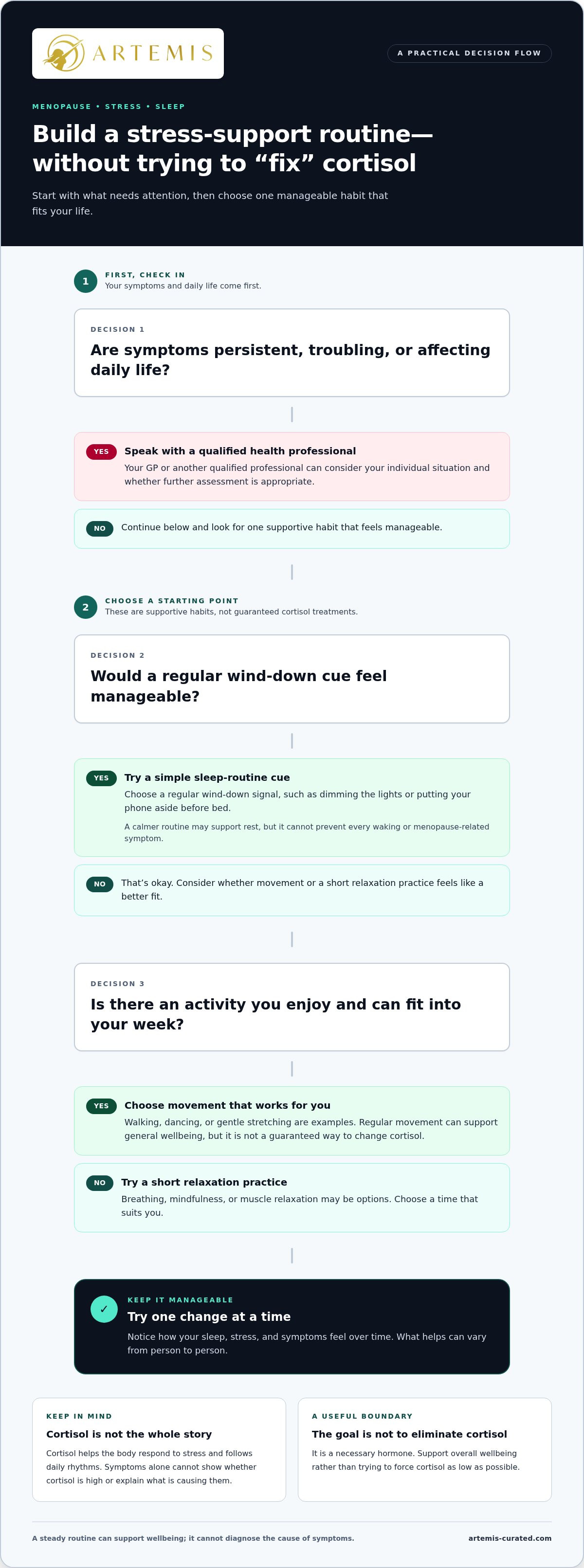
If you’re exploring how to lower cortisol during menopause naturally, focus on habits that support overall wellbeing rather than promises to control one hormone. Sleep, movement, relaxation and eating patterns can all be part of a steady routine, but none is a guaranteed cortisol-lowering treatment. What feels helpful will vary, so aim for changes you can sustain.
| Approach | Practical use | Possible value and limits |
|---|---|---|
| Sleep routine | Choose a regular wind-down cue, such as dimming lights or putting your phone aside before bed. | A calmer routine may support rest, but it can’t prevent every waking or menopause-related symptom. |
| Movement | Choose activity you enjoy and can fit into your week, such as walking, dancing or gentle stretching. | Regular movement can support general wellbeing; it isn’t a guaranteed way to change cortisol. |
| Relaxation | Try a short breathing, mindfulness or muscle-relaxation practice at a time that suits you. | These are ways to practise managing stress, not cures, and they won’t work the same way for everyone. |
| Eating patterns | Aim for balanced meals that suit your needs and routine. | Balanced eating supports general health, but there’s no single cortisol-specific diet established here. |
Sleep and relaxation practices
Keep the routine manageable. A consistent cue before bed may help mark the shift from a busy day to rest, even if sleep itself remains unpredictable. If breathing exercises or mindfulness feel comfortable, practise them gently and stop if they make you feel more unsettled. For further background, you can read about sleep and cortisol guidance.
Movement, meals, caffeine, and alcohol
Movement doesn’t need to be intense or perfectly planned. A walk or another activity you enjoy can be a realistic starting point. Think of food as support for general health, not a tool for targeting cortisol. Notice your own response to caffeine and alcohol. If either seems to affect your sleep or how you feel, consider whether adjusting the timing or amount suits you. There isn’t one rule that fits everyone.
These habits are options to try, not a test you need to pass. Start with one change and pay attention to how it affects your sleep and day-to-day wellbeing. If symptoms remain troubling, lifestyle adjustments shouldn’t take the place of personalised medical advice.
How to build a realistic menopause stress-support routine
A useful routine is one you can adjust around real life. Rather than trying to measure or control cortisol, look for small changes that support your sleep, stress levels and day-to-day wellbeing. Use this four-step approach as a starting point.
- Notice patterns. Jot down when sleep feels disrupted, what’s been demanding your attention and which symptoms affect your day. Keep it simple: a few words in a notebook or phone note is enough. The aim is to spot possible patterns, not diagnose yourself or track cortisol.
- Choose one habit. Pick a change that feels manageable, such as a calmer wind-down cue in the evening or a short relaxation break during the day. One small step is easier to fit around your existing routine than several new rules.
- Practise it consistently. Try the habit in a way that suits your schedule. If an evening routine doesn’t work on a particular night, that isn’t failure. Return to it when you can, or adapt it to make it more realistic.
- Review how it feels. After giving the change a fair try, look back at your notes. Has it helped you feel more rested, or made a stressful moment easier to manage? Progress may mean improved coping or rest, not a measured drop in cortisol.
Start with one change you can repeat
Choose a habit that fits naturally into your day. You might dim the lights as part of getting ready for bed, or pause for a few slow breaths between tasks. There’s no perfect routine or fixed timeline. If a change feels burdensome, simplify it or choose something else. The purpose is to find support you can live with, not another standard to meet.
Notice when professional advice may help
Speak with your GP if symptoms are persistent, severe or worrying, or are making everyday life difficult. A clinician can consider menopause alongside other possible causes, including health conditions or medicines, and discuss what support may be appropriate. Your notes can help you describe what’s been happening, but they don’t need to point to a diagnosis.
If you’re considering an optional addition alongside everyday wellbeing habits and appropriate medical care, explore menopause support supplements. Supplements aren’t a substitute for personalised advice, and they shouldn’t be assumed to lower cortisol or treat symptoms.
Where supplements fit, and thoughtful next steps
Supplements may be one optional part of a wider wellbeing routine. They aren’t a replacement for balanced habits or appropriate medical care, and a product positioned for general wellbeing shouldn’t automatically be assumed to affect cortisol. If you’re considering how to lower cortisol during menopause naturally, keep the focus on practical support rather than treating a supplement as a shortcut or hormone treatment.
How to think about supplements and cortisol claims
A menopause-support or sleep-support product has a different purpose from a clinically established treatment for a specific condition. General positioning doesn’t demonstrate a particular cortisol-related effect. Without evidence for the specific product and outcome, it’s sensible to be cautious about claims that a supplement lowers cortisol or treats symptoms.
Formulations can differ, and supplements may not suit everyone. If you take medicines, have a health condition or are unsure whether a product is appropriate, speak with a GP or pharmacist about possible interactions before using it. Don’t stop prescribed treatment or change it based on a supplement claim.
Choose support that fits your needs
Everyday habits such as a manageable wind-down routine or regular movement can support general wellbeing. Supplements are optional additions, while a GP can help assess persistent or concerning symptoms and discuss appropriate care. These forms of support have different roles; one doesn’t replace another.
Artemis Curated offers The art of harmony for menopause support and The art of sleep for deep sleep support. These descriptions explain how the products are positioned, not a promise to lower cortisol, treat symptoms or replace HRT. The Artemis Curated range also includes The art of radiance for skin, hair and nail support and The art of passion for libido support. Products are available individually or as the Full Curated collection.
Keep the next step simple: choose one manageable habit, seek qualified advice when symptoms need attention, and consider supplements thoughtfully. There’s no need to diagnose yourself or chase a particular cortisol number to take your wellbeing seriously.
Take your next step at your own pace
Understanding how to lower cortisol during menopause naturally starts with a useful distinction: stress, sleep changes and menopause symptoms can overlap, but they don’t prove cortisol is the cause. Cortisol has a role in the body’s normal rhythms, and symptoms alone can’t tell you whether it’s high.
Rather than trying to control a hormone, choose one manageable habit that supports your wellbeing, then notice how it feels. A calmer evening routine, regular enjoyable movement or a brief pause to unwind may be a practical place to begin. If symptoms are persistent, severe or worrying, speak with your GP so they can consider your circumstances and possible causes.
Supplements are optional, not a substitute for these habits or appropriate medical care. The art of harmony is positioned for menopause support, while The art of sleep is positioned for deep sleep support. Neither should be assumed to lower cortisol or treat symptoms.
If you’d like to explore these options, explore the Artemis Curated collection. Choose a product or collection that fits your interests, and keep your next step small and considered.
Frequently Asked Questions
Is cortisol always high during menopause?
No, menopause doesn’t mean cortisol is always high. Cortisol naturally varies through the day and responds to different circumstances, including stress and sleep disruption. Menopause symptoms such as poor sleep or mood changes can overlap with stress, but they can’t show whether cortisol is high or identify a cause. If symptoms are persistent or concerning, a GP can consider your health and circumstances rather than relying on symptoms alone.
Can natural methods lower cortisol during menopause?
Healthy routines may support wellbeing and stress management, but no habit can be guaranteed to lower cortisol. If you’re considering how to lower cortisol during menopause naturally, start with practical steps such as a consistent wind-down routine, enjoyable movement or a short relaxation practice. These can support everyday wellbeing without proving that cortisol has changed. Persistent or troubling symptoms deserve individual medical advice, rather than being treated as a cortisol problem by default.
What foods lower cortisol during menopause?
No specific food can be recommended here as a proven way to lower cortisol during menopause. A balanced eating pattern can support general health, but claims about a special cortisol-lowering diet should be treated cautiously. Choose meals that suit your needs and routine, and notice whether particular patterns affect your comfort or sleep. If you have health conditions or concerns about diet, ask a qualified health professional for personalised advice.
Does magnesium reduce cortisol during menopause?
There isn’t enough information here to say that magnesium supplements reduce cortisol during menopause. Supplements aren’t automatically suitable for everyone, and potential interactions can matter, especially if you take medicines or have a health condition. Before starting magnesium or another supplement, discuss it with a GP or pharmacist. It’s also sensible to avoid treating a supplement as a replacement for balanced habits or medical care for symptoms that are affecting you.
How long does it take for natural stress-management habits to help?
There’s no single timeline, and the effect depends on the person, the habit and what’s affecting their wellbeing. A regular wind-down routine or brief relaxation practice may feel useful to some people, while others may notice little change or need a different approach. Try one manageable habit and keep simple notes on sleep, stress and symptoms. Review how you feel, not whether you can prove a change in cortisol.
Can poor sleep make menopause stress feel worse?
Yes, disrupted sleep can leave you feeling more tired and less able to cope with everyday pressures. Menopause symptoms may disturb sleep, while stress can make it harder to unwind, so the experiences can overlap. That doesn’t prove one is the cause of the other or indicate a cortisol problem. A gentle, repeatable wind-down routine may support rest; speak with a GP if sleep problems persist or are affecting daily life.
When should I speak to a GP about menopause symptoms or cortisol concerns?
Speak with your GP if symptoms are persistent, severe, worrying or interfering with everyday life. Describe what you’re experiencing, when it happens and how it affects your sleep or routine. A symptom pattern can’t diagnose a cortisol problem, but a GP can consider menopause alongside other possible causes, including health conditions or medicines, and discuss suitable next steps. Seek advice rather than relying on supplement claims or trying to interpret symptoms on your own.
0 comments