

What if stress during perimenopause is more than a response to a busy life? Fluctuating hormone levels can affect how you respond physically and emotionally to stress, and The Menopause Charity notes that stress can also trigger hot flushes. Learning how to manage stress during perimenopause means supporting both body and mind, while taking persistent anxiety seriously.
Anxious feelings can be especially unsettling when they arrive alongside poor sleep, irritability or a racing mind. Women with a previous anxiety diagnosis are at greater risk of anxiety during perimenopause, although experiences vary from person to person.
This guide explains how hormonal changes may affect stress and mood, who may be more vulnerable to anxiety, and which practical approaches can help. It covers gentle breathing and mindfulness, regular movement, rest and social support, as well as when to speak with a GP. Small, steady choices can make days feel more manageable, without expecting you to handle everything alone.
Key Takeaways
- Notice how changing hormones, disrupted sleep and everyday pressures may combine to affect stress and mood.
- A previous diagnosis of anxiety may increase the chance of experiencing anxiety during perimenopause, so take changes in how you feel seriously.
- Explore simple ways to feel more grounded, such as paced breathing, mindfulness, relaxing activities and connection with people you trust.
- If anxiety or low mood is affecting daily life, speaking with your GP can help you consider appropriate support.
How perimenopause and menopause affect stress
During perimenopause, fluctuating hormone levels can change physical and emotional responses to stress. The Menopause Charity notes that stress may trigger hot flushes, while chronic stress can disrupt many body processes. Everyday pressures may then feel harder to absorb, particularly when night sweats or poor sleep are already draining your energy.
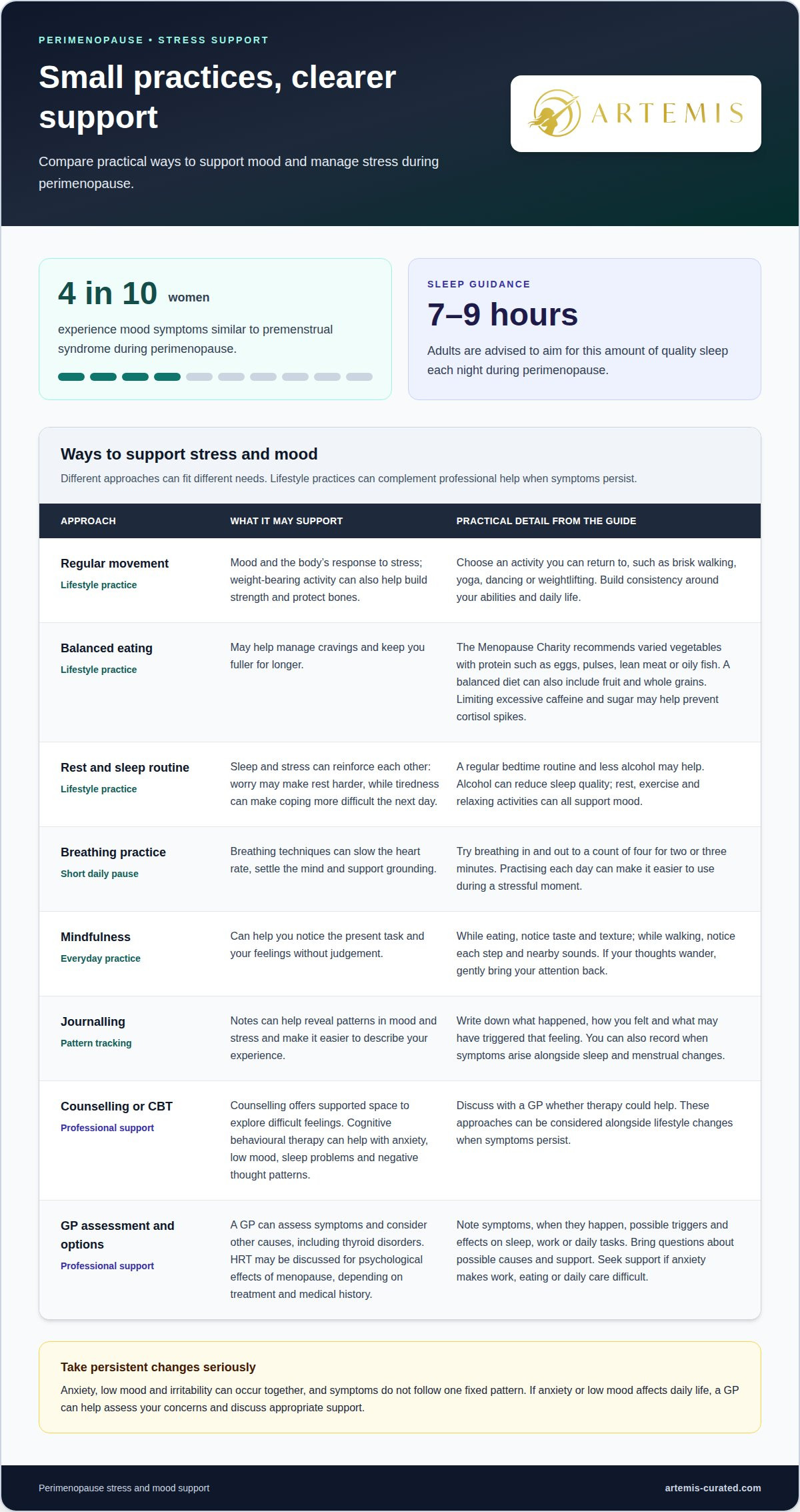
Regular exercise can support mood and help manage the body’s response to stress. Brisk walking, yoga, dancing or weightlifting can add movement without requiring a complicated routine. Choose an activity you can return to, then build consistency around your abilities and daily life. Physical activity, including weight-bearing exercise, can also help build strength and protect bones during perimenopause and menopause.
Diet is another part of a manageable lifestyle. The Menopause Charity recommends avoiding processed foods and high-sugar diets, and eating varied vegetables with protein such as eggs, pulses, lean meat or oily fish. These foods can help manage cravings and keep you fuller for longer. A balanced diet can also include fruit, whole grains and vegetables. Limiting excessive caffeine and sugar may help prevent cortisol spikes; cortisol naturally changes throughout the day, so there is no single ideal level to aim for.
Sleep and stress can reinforce each other: worry at bedtime may make rest harder, while tiredness can leave you less able to cope the next day. Adults are advised to aim for seven to nine hours of quality sleep each night during perimenopause. A regular bedtime routine and less alcohol may help, as alcohol can reduce sleep quality. Rest, exercise and relaxing activities can all support mood.
To prepare for a GP appointment, write down your symptoms, when they happen, possible triggers and how they affect sleep, work or daily tasks. Bring questions about possible causes and support, including whether therapy could help; your doctor can assess your concerns and discuss next steps. If you’re experiencing thoughts of self-harm or suicide, seek urgent help by calling 999, as advised by the UK Government.
Hormonal changes and anxiety
Changing hormone levels during perimenopause can affect mental health as well as physical symptoms. Anxiety, low mood and irritability may occur together, so it can help to notice their pattern.
Anxiety Symptoms and Mood Changes
Anxiety during perimenopause can involve persistent worry, restlessness, difficulty concentrating or a racing heart. Mood changes may include irritability, anger, sadness, low confidence and sudden swings between feelings. Around 4 in 10 women experience mood symptoms similar to premenstrual syndrome during perimenopause. These changes matter because poor sleep and tiredness can make anxiety, concentration problems and irritability harder to manage.
Oestrogen and progesterone fluctuate during the transition, but symptoms don’t follow one fixed pattern. One person may notice anxiety alongside hot flushes; another may mainly experience low mood or brain fog. Recording when symptoms arise, alongside sleep and menstrual changes, can give you and your GP a clearer picture.
Recognising Perimenopausal Anxiety
Perimenopausal anxiety describes anxious feelings during the hormonal transition, but timing alone cannot identify their cause. A previous anxiety diagnosis increases the risk of experiencing anxiety during perimenopause. Anxiety can also have other causes, including thyroid disorders, so a GP may assess your symptoms and consider tests. Seek support if anxiety makes work, eating or daily care difficult.
Self-help can start with a small, repeatable routine: regular walking or other exercise, a balanced diet, enough sleep, and time for mindfulness or deep breathing. Limiting alcohol and caffeine may also support wellbeing. These lifestyle changes can complement professional help when symptoms persist, rather than replace it.
HRT is one treatment option for the psychological effects of menopause and may be discussed when anxiety occurs alongside other symptoms. Its potential benefits and risks depend on the treatment and your medical history, which a GP or menopause specialist can review. HRT is not the only option; cognitive behavioural therapy can also help with anxiety, low mood and sleep problems.
Relaxation, mindfulness and social support
Relaxation can create space between a stressful trigger and your response. A useful starting point for managing stress during perimenopause is choosing small practices that fit naturally into your day.
Mindfulness in Everyday Life
Mindfulness means noticing the present task and your senses without judgement. While eating, pay attention to taste and texture; while walking, notice each step and nearby sounds. If your thoughts wander, gently bring your attention back to the activity. These brief pauses can help you recognise feelings before they gather momentum.
Try breathing in and out to a count of four for two or three minutes. The Menopause Charity recommends breathing techniques to slow the heart rate, settle the mind and support grounding. Practising each day can make it easier to use the technique during a stressful moment.
Counselling and Journalling
Counselling offers a supported space to explore difficult feelings, while journalling can help reveal patterns in mood and stress. Write down what happened, how you felt and what may have triggered that feeling. Over time, these notes can help you describe your experience clearly and identify situations where you may need extra support.
Cognitive behavioural therapy can help address negative thought patterns and develop coping tools. Journalling, hobbies and mindfulness can also make room for rest. Learning how to manage stress during perimenopause may mean combining these practices with conversations with trusted friends or family.
Seeking Help and Finding Support
Seek medical help if anxiety persists or affects work, eating or personal care. In the UK, your GP practice is a starting point for discussing mental health concerns during menopause. Ask about suitable support, such as counselling or an assessment. Dedicated NHS menopause services and formal support groups vary locally; your GP practice can explain what is available in your area.
Friends, family or colleagues can offer connection, especially when they understand what you’re experiencing. If you think you or someone close to you might have depression, speak to a GP. Persistent low mood deserves attention if it affects daily routines or relationships.
How perimenopause hormone changes can affect stress and mood
During perimenopause, fluctuating hormones can affect physical and emotional responses to stress. This may change how strongly everyday situations affect you: a demanding meeting, interrupted sleep or a family concern can feel harder to manage. Stress can also trigger hot flushes, creating a feedback loop between physical symptoms and emotional wellbeing.
The key point is that hormones may influence your response, but they don’t explain every difficult thought or feeling. Menopause can increase the risk of depression, and anxiety may occur alongside irritability, sadness, poor concentration or loss of confidence. Noticing which symptoms appear together can help you describe what’s happening, rather than treating each change as unrelated.
A simple record can make patterns clearer. Note when your mood or stress shifts, whether sleep was disrupted, and what was happening that day. For example, you might find that a difficult work situation feels more intense after a restless night. Share this pattern with your GP if symptoms persist or interfere with your routine. It offers useful context without assuming hormones are the only cause.
Hormonal changes don’t affect everyone in the same way. Some women experience less anxiety after perimenopause ends and hormone levels stabilise, while others continue to need support. There’s no single emotional timetable to follow. Pay attention to changes in your ability to work, rest, connect with others and manage daily responsibilities.
A practical takeaway is to consider the whole picture: physical symptoms, sleep, stressors and emotional changes together. If anxiety or low mood is affecting your wellbeing, discuss the pattern with a GP. They can assess possible causes and talk through appropriate support, including therapy. Understanding the connection between hormones and stress can help you describe your experience, but it doesn’t mean you should dismiss persistent symptoms as simply part of perimenopause.
Artemis Curated
Artemis Curated offers thoughtfully selected wellness supplements for women’s changing needs. If you’re looking for menopause support alongside the practical approaches in this guide, The art of harmony is designed for menopause support, while The art of sleep supports deep sleep. These offerings may suit someone seeking product-based support as part of a broader wellbeing routine. They aren’t a substitute for speaking with a GP about persistent anxiety, low mood or disrupted sleep. For symptoms affecting daily life, professional advice remains an important next step.
Choosing support is personal. Consider what feels most relevant to your needs, and take time to understand each offering. If you’d like to explore whether Artemis Curated’s menopause support is right for you, contact Artemis Curated.
Choose a steady next step
There’s no single way to respond to a changing season of life. Learning how to manage stress during perimenopause can begin with noticing what feels most difficult and choosing support that fits your needs. If anxiety or low mood is affecting daily life, speak with your GP; practical wellbeing choices can complement professional care.
For additional product-based support, Artemis Curated offers The art of harmony for menopause support, The art of sleep for deep sleep support, and The art of radiance for skin, hair and nail support. Each addresses a different aspect of wellbeing, so consider what feels relevant to you rather than expecting one product to meet every need.
If you’d like to explore these offerings, contact Artemis Curated. Take the next step at your own pace, with care for what your mind and body need now.
Frequently Asked Questions
Who may experience anxiety during perimenopause?
Anyone going through perimenopause may experience anxiety, but a previous anxiety diagnosis is a recognised risk factor. That doesn’t mean anxiety is inevitable or affects everyone in the same way. Notice whether feelings are new, worsening or interfering with ordinary activities. Sharing those changes with your GP can help distinguish possible perimenopause-related symptoms from other concerns.
Why am I so stressed?
Stress may feel harder to manage when hormone fluctuations coincide with poor sleep, hot flushes or pressures at home and work. It can also affect the body physically: stress may contribute to digestive problems such as indigestion, bloating and constipation. Consider what has changed recently in your routine, symptoms and circumstances. If stress persists or disrupts daily life, discuss it with your GP.
How can perimenopause symptoms contribute to stress and anxiety?
Symptoms can feed into one another. For example, night sweats may interrupt rest, and tiredness can make concentration and irritability harder to manage the next day. Worry about unpredictable symptoms can add another strain, particularly during work or social plans. This pattern doesn’t prove hormones are the only cause, but noting when symptoms occur can help you explain their impact to a GP.
How can sleep, exercise and diet support stress management in perimenopause?
A steady routine can support wellbeing: keep regular sleep times, choose movement you can maintain, and build meals around vegetables, whole grains and protein. A lunchtime walk or a simple evening wind-down may be easier to sustain than a major lifestyle overhaul. Notice whether caffeine, alcohol or sugary foods affect your sleep or symptoms, then discuss persistent problems with your GP.
Which talking therapies or medicines can help perimenopausal anxiety in the UK?
Cognitive behavioural therapy (CBT) can help address negative thought patterns and develop coping tools for anxiety or sleep problems. A GP can discuss whether CBT, counselling or another option suits your symptoms. In some cases, a clinician may prescribe anti-anxiety or sleep-promoting medicine. If low mood persists, speak with your GP so they can assess whether depression or another condition needs treatment.
0 comments