

If you’re wondering how to talk to your doctor about perimenopause uk, you don’t need a perfect explanation to get started. Changes can be difficult to connect, and it’s understandable to worry that a short appointment won’t leave enough time to cover everything.
A few notes can help you explain what’s happening, how it affects daily life and what you’d like help with. NICE guidance says that for people aged 45 and over, perimenopause is usually assessed through symptoms rather than hormone blood tests. Your doctor can discuss whether that applies to you and whether anything else needs investigating.
This guide will help you prepare a concise symptom record, gather useful details about medicines and supplements, and choose focused questions for your appointment. You’ll also find ways to clarify the next step before you leave, even if the conversation needs to continue.
Key Takeaways
- A brief symptom record can help you spot changes in your periods and other symptoms without tracking every detail.
- Note when symptoms happen, how often they occur and how they affect everyday life. Specific examples can make your concerns easier to explain.
- Plan a few focused questions and bring a list of medicines and supplements you take.
- Knowing how to talk to your doctor about perimenopause uk can help you explain what has changed and agree on a useful next step.
- If you leave without clear answers, write down what was discussed, any agreed actions and when to revisit the conversation.
Why talk to your doctor about perimenopause in the UK?
Perimenopause is the transition leading up to menopause. During this stage, menstrual patterns may change, and symptoms can affect sleep, mood or concentration. Experiences vary, so a list of symptoms can’t confirm what’s happening on its own. The overview of perimenopause and the menopausal transition offers background, but a conversation with your GP can put your own changes in context.
If symptoms are persistent, troubling or getting in the way of ordinary routines, it’s reasonable to raise them with a healthcare professional. You don’t need to know that perimenopause is the cause or arrive with a specific request. Describe what has changed, discuss your health and consider a sensible next step together. The conversation is an assessment, not a promise of a particular diagnosis or treatment.
If you’re working out how to talk to your doctor about perimenopause uk, begin with what you’ve noticed and how it affects you. For example: “My periods have changed, and I’ve also been struggling with sleep.” Use your own words. There’s no need to minimise what you’re experiencing or explain it perfectly.
When might it be useful to book an appointment?
Consider booking if changes feel persistent, distressing or disruptive, whether they affect work, relationships, sleep or everyday tasks. Symptoms can have different explanations, so an online checklist can’t diagnose the cause. When arranging an appointment, you could say, “I’ve noticed changes in my periods and other symptoms, and I’d like to discuss what might be causing them.” That’s enough to open the conversation.
What can a GP discussion help clarify?
Your GP may ask about your symptoms, menstrual changes, relevant health history and any medicines you take. Together, you can discuss possible explanations and what support or follow-up may help. Investigations depend on your circumstances and current guidance. NICE advises that for people aged 45 and over, perimenopause is generally identified from symptoms rather than hormone blood tests, since hormone levels fluctuate. Tests may be considered in other situations, including for younger people or to check for another cause, such as a thyroid problem.
You may not leave with every answer straight away, and that doesn’t make the appointment a failure. Before you finish, clarify what happens next, whether any checks or follow-up are planned, and what to do if symptoms change. Agreeing on a next step can make things feel more manageable while you and your GP build a clearer picture.
How to prepare for a perimenopause appointment: a simple UK checklist
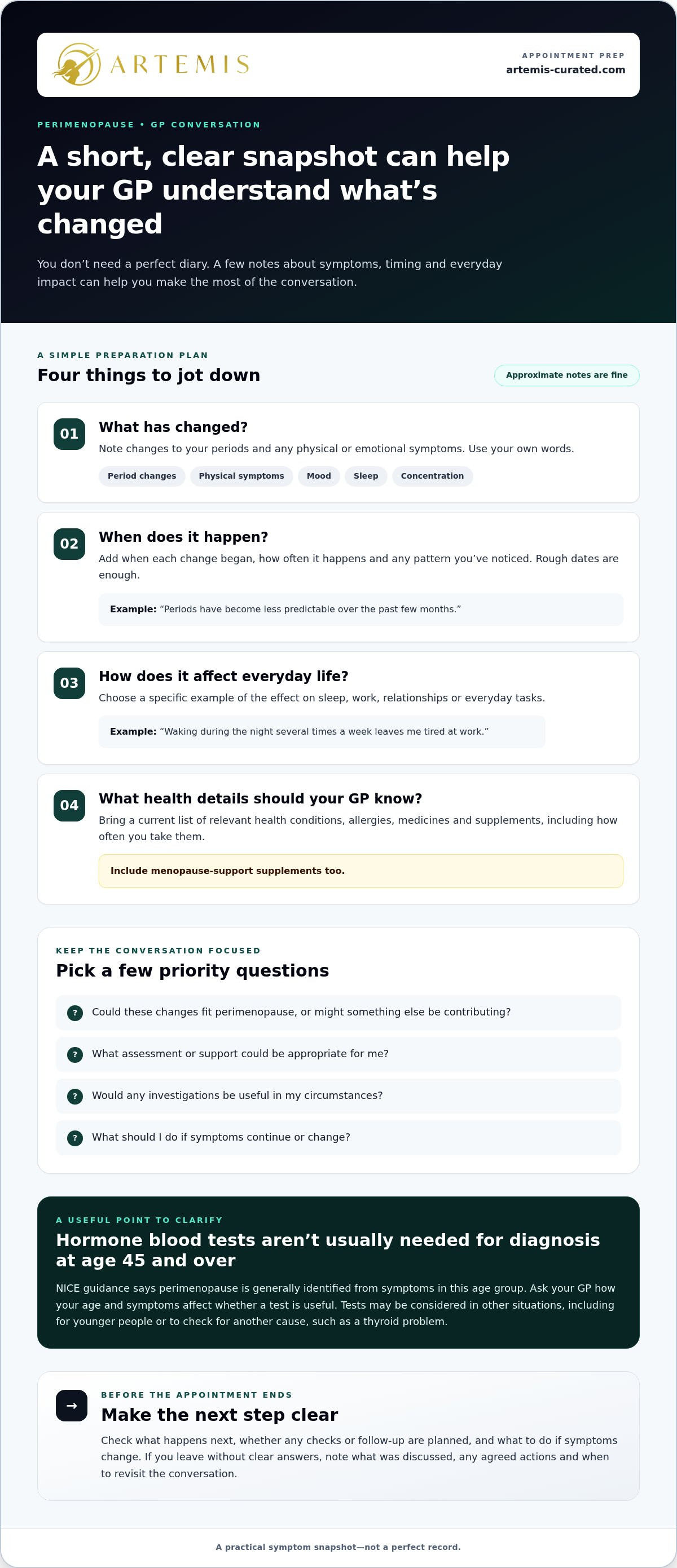
You don’t need a perfect diary or a complete account of every change. A short summary is often more useful than trying to remember everything during the appointment. Try this simple preparation plan:
- Note what’s changed. Jot down changes to your periods and any physical or emotional symptoms.
- Add a rough timeline. Record when each change began, how often it happens and any pattern you’ve noticed. Approximate dates are fine.
- Describe the effect. Include a specific example of how symptoms affect sleep, work, relationships or everyday tasks.
- Gather key details. Write down relevant health conditions, allergies, medicines and supplements. Then choose a few questions you most want answered.
Appointment length and booking arrangements vary between GP practices across the UK. When arranging your appointment, ask about the options available. If you’d feel more comfortable with support, consider asking someone you trust to come along.
What to write in a symptom summary
Group your notes so they’re easy to scan: period changes, physical symptoms, mood, sleep and concentration. For example, write “Waking during the night several times a week” or “Periods have become less predictable over the past few months.” Add what this means in practice, such as feeling tired at work or finding it harder to concentrate. You’re making a useful snapshot, not trying to create a flawless record.
Which details and questions should you bring?
Bring a current list of medicines and supplements, including how often you take them, along with any allergies and relevant health conditions. This gives your GP important context. Include menopause-support supplements too, rather than assuming they don’t need mentioning.
Choose a few priority questions, such as:
- Could these changes fit perimenopause, or might something else be contributing?
- What assessment or support could be appropriate for me?
- Would any investigations be useful in my circumstances?
- What should I do if symptoms continue or change?
If you’re wondering about hormone tests, ask how your age and symptoms affect whether one is useful. The NICE guidelines on menopause explain that diagnosis for people aged 45 and over is generally based on symptoms rather than hormone blood tests. Bringing your own questions helps keep the discussion focused on your circumstances and the next step.
What to say to your doctor about perimenopause symptoms
You don’t need medical terms to explain what’s going on. Start with why you booked and what has changed. For example: “I’ve come in because my periods have become less predictable, and I’ve noticed changes in my mood and energy.” Or: “These symptoms are starting to affect my everyday life, and I’d like to talk through what might be causing them.”
Brief examples of a symptom, its pattern and its impact can make your experience easier to explain. Instead of saying “I’m a bit tired”, describe how often it happens and what it affects: “Most afternoons I feel so drained that I struggle to concentrate at work.” You’re not expected to prove anything. Specific details simply give your doctor a clearer picture.
How to describe symptoms clearly without needing medical terms
Think about when each change began, how often it happens and what a difficult day looks like for you. You might say, “I’ve felt more anxious than usual since the start of the year,” or “I’m finding it harder to focus on tasks I’d normally manage.” Share what feels relevant, even if you’re unsure whether it’s connected. A symptom list can help you describe your experience, but it can’t confirm perimenopause or replace an individual assessment.
If a symptom feels awkward to mention, write it down or read from your notes. This includes changes affecting sex, intimacy or desire. You could say, “I feel uncomfortable bringing this up, but it’s affecting intimacy and I’d like to understand whether it could be relevant.” Your concerns deserve to be part of the conversation.
How to ask about assessment and treatment choices
Once you’ve explained what’s happening, ask for your doctor’s view. Try, “What possible explanations are you considering?” or “Is there anything else we should look into?” If treatment comes up, including HRT where it may be appropriate, you can explore it without feeling you’ve already agreed to a particular option.
- “What might the benefits and risks be for me?”
- “Are there alternatives, and how do they compare?”
- “What would the next step be if I decide to wait or think it over?”
These questions keep the discussion personal and balanced. For broader background, you can also read a menopause guide before or after your appointment. Talking with your doctor is a chance to share what matters to you and decide together what to explore next.
What if your doctor is unsure or you leave without clear answers?
Not every appointment ends with a definite explanation. Symptoms can have more than one possible cause, and your doctor may need to ask further questions, consider other explanations or arrange follow-up before recommending what to do next. Uncertainty doesn’t mean your concern has been dismissed. The important thing is to leave understanding what happens from here.
Before the appointment ends, summarise what you’ve understood. Note any advice, tests or referrals discussed, who will arrange them and when you might hear more. If no follow-up has been agreed, ask what to do if symptoms continue or change.
How to ask for a clearer next step
You could say, “I understand we don’t have a clear answer today. What should I keep track of, and when would you like me to come back?” If a test, referral or review has been suggested, ask what it’s intended to clarify and what to expect next. This helps you leave with a plan without assuming that everyone needs investigations or a referral.
If you’re unsure whether you’ve understood, repeat the plan in your own words: “So I’ll note any changes and book another appointment if things continue. Is that right?” This gives your GP a chance to correct or clarify anything before you leave.
When to seek another conversation or support
If important concerns remain, ask your GP practice for a further discussion. Bring updated notes and explain what still feels unresolved or what has changed since you last spoke. You might say, “I’m still finding this difficult day to day. Could we review what else might be contributing and what support may help?” A further conversation doesn’t guarantee a particular outcome, but it gives you another chance to make your needs clear.
The Menopause Charity and Women’s Health Concern offer national information on menopause and related support. NHS services and pathways can differ across England, Scotland, Wales and Northern Ireland, so the next step available to you may depend on where you live.
Keep track of what you raised, what was agreed and what you’ll do if things change. Store those notes somewhere easy to find so you can pick up the discussion at your next appointment.
After the appointment: turn the conversation into a manageable plan
A useful appointment gives you something to work with, even if the answer isn’t complete yet. Before the details fade, write down the advice you received and what you agreed to do next. Keep the plan simple and easy to revisit.
How to keep track of the plan you agreed
Note the next step, who’s responsible for it and any timeframe discussed. For example, record whether you’re arranging a follow-up, waiting for a test result or keeping an eye on a particular change. If a review was suggested, note when or how to arrange it. If you’re unsure about any part, contact your GP practice to clarify rather than relying on memory.
Keep symptom notes focused on meaningful changes. You don’t need to record every sensation each day. Add an entry when something shifts, becomes more disruptive or raises a new concern. Earlier notes can help you explain what’s different at a future appointment, while an up-to-date list of medicines and supplements gives your healthcare professional useful context.
Keep the agreed actions together, return to your notes if symptoms change and follow the review plan you discussed. If new concerns arise or the plan no longer feels right, arrange another conversation with your healthcare professional.
Where general wellbeing support may fit
Clinical assessment and general wellbeing support serve different purposes. Supplements don’t diagnose or treat the cause of symptoms, and they shouldn’t replace medical care or advice from your healthcare professional. If you use a supplement or decide to try one, add it to the list you share at appointments, just as you would with medicines. This helps your clinician understand what you take.
If you’re exploring general menopause-support products as one optional part of your wellbeing routine, you can view menopause support supplements. Keep questions about symptoms, diagnosis or treatment with your GP or another qualified healthcare professional. Your notes can help you return to that conversation with a clearer sense of what has changed and what you’d like to discuss next.
Take your next step with confidence
A useful conversation doesn’t depend on having every answer ready. Bring a concise account of what’s changed, explain how it affects your daily life and ask what the next step might be. If you leave with questions still open, note what was agreed and arrange another discussion when needed.
That’s the heart of talking to your doctor about perimenopause: share your experience in your own words, keep track of meaningful changes and make decisions with your healthcare professional. You deserve to have your concerns heard, even if finding the right way forward takes more than one conversation.
For general wellbeing support alongside, not instead of, clinical care, Artemis Curated offers The art of harmony for menopause support, as well as targeted supplements for sleep, skin, hair, nails and libido. Explore menopause support supplements, and remember to include any supplements you take in the list you share with your healthcare professional.
One clear note and one honest question are enough to begin. Take the next step at your own pace.
Frequently Asked Questions
Is it worth seeing a doctor about perimenopause symptoms?
Yes, it’s reasonable to speak with your GP if symptoms worry you or affect daily life. Describe what’s changed, when you first noticed it and how it’s affecting you, then ask what assessment or next steps may be appropriate. Symptoms can have different causes, so a list of experiences can’t confirm perimenopause by itself. This FAQ offers general information, but it can’t diagnose your symptoms.
What should I say to my GP if I think I am perimenopausal?
Start with the changes that prompted you to book, when they began and how they affect everyday life. You might say, “My periods have changed, and I’m also having trouble sleeping.” Bring notes on menstrual changes, symptoms, medicines and supplements, plus the questions you most want answered. You don’t need perfect records or medical terms. Ask your GP what should happen next.
Can a doctor diagnose perimenopause without a blood test?
Sometimes, yes. Assessment depends on your age, symptoms, health history and current clinical guidance. NICE guidance generally advises symptom-based diagnosis for people aged 45 and over, without routine hormone blood tests, but testing isn’t automatically ruled in or out for everyone. A clinician may consider investigations in other circumstances, including to explore different explanations. Ask why a test is or isn’t being suggested for you.
How do I prepare for a perimenopause appointment?
Make a short note of symptoms, roughly when they began, menstrual changes and effects on sleep, work or daily routines. Add relevant health history, medicines, supplements and a few priority questions. You can ask whether a longer appointment is available, though booking arrangements vary between practices. If you’d find it reassuring, consider bringing someone you trust. Your notes don’t need to be detailed or perfectly organised.
What happens if my doctor does not think my symptoms are perimenopause?
Ask what other explanations may be considered and what changes you should monitor. You could say, “If this continues or gets worse, when should I come back?” If your symptoms change, worsen or remain troubling, clarify how to follow up with your GP practice. If important concerns still feel unresolved, another discussion may help. A difference of view doesn’t by itself show that either you or your clinician is wrong.
Can I ask my GP about HRT for perimenopause?
Yes, you can raise HRT as part of a discussion about your symptoms and possible options. Your GP can consider your health history and help you weigh potential benefits, risks and alternatives relevant to you. You don’t need to have decided in advance. Ask what each option may involve and take time to consider the information. Decisions about treatment are best made in conversation with a qualified healthcare professional.
Should I tell my doctor about supplements I take for perimenopause?
Yes. Include supplements alongside prescribed and over-the-counter medicines in the information you share with your GP. If you can, bring the product name and ingredient details, or a photo of the label, and ask whether it’s relevant to your care. This helps your clinician understand what you take. Supplements don’t diagnose or treat perimenopause, and they shouldn’t replace medical assessment or advice.
What can I do if I feel rushed during a GP appointment?
Lead with your main concern and use a brief written summary to explain what has changed and how it affects daily life. Before the appointment ends, ask, “What’s the next step, and when should I seek further help?” If you haven’t been able to discuss an important concern, ask your practice about another conversation. Appointment lengths and arrangements vary, so don’t assume a longer appointment or particular pathway is available.
0 comments