
If you've ever snapped awake at 3 AM with your mind already running at full speed, you're not imagining it getting worse. For many women in the UK, disrupted sleep isn't just tiredness; it's a nightly frustration that no amount of herbal tea seems to fix. And if you've wandered down the supplements aisle at your local chemist lately, you'll know the sheer confusion of staring at a wall of magnesium options, wondering which one actually does anything useful.
Here's the thing: not all magnesium is created equal, and when it comes to magnesium glycinate for sleep UK women are increasingly turning to it for good reason. It's gentle on the stomach, highly absorbable, and works with your body's natural chemistry rather than forcing it into submission the way some traditional sleep aids do.
In this guide, you'll discover exactly why magnesium glycinate stands apart from the rest, how it supports both sleep and hormonal balance, and how to weave it into a calm, considered evening ritual that actually sticks. Think of it as a practical, science-backed starting point for nights that finally feel restorative.
Key Takeaways
- Not all magnesium supplements work the same way — the form you choose makes a significant difference to how well your body absorbs it and how it affects your sleep.
- For magnesium glycinate for sleep, UK women are finding it particularly effective because it combines a highly absorbable mineral with glycine, an amino acid that has its own calming properties.
- Magnesium plays a role in over 300 biochemical processes, and women — especially during hormonal shifts — are more likely to be running low without realising it.
- Timing and consistency matter more than most people expect; a single dose won't reveal the full picture, but a steady evening routine can gradually shift the quality of your rest.
- Supporting your sleep goes beyond a single supplement — discover how magnesium glycinate fits into a broader, more considered approach to nightly renewal.
Understanding the Sleep Gap: Why Magnesium is Essential for UK Women
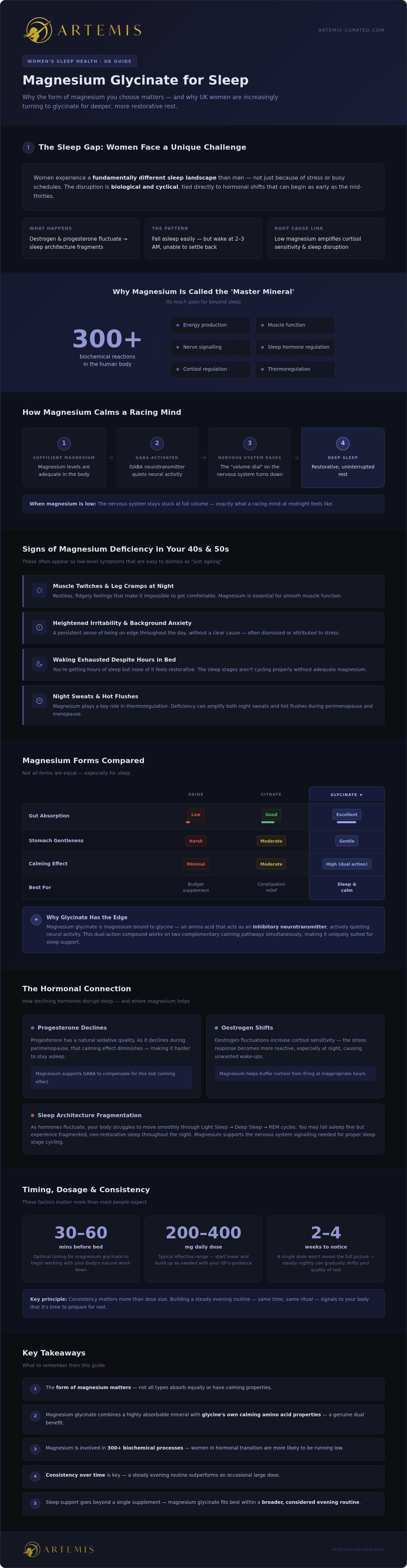
Magnesium isn't just another supplement on the shelf. It's involved in over 300 biochemical reactions in the human body, from energy production and muscle function to nerve signalling and the regulation of sleep hormones. Scientists sometimes call it the 'master mineral', and that title is earned. Without adequate magnesium, your body struggles to do the quiet, essential work that keeps you functioning well, and nowhere is that more apparent than in the quality of your sleep.
But here's what most general health articles skip over entirely: women face a fundamentally different sleep landscape than men. It's not just stress or busy schedules. The disruption is biological, cyclical, and often tied directly to hormonal shifts that begin as early as the mid-thirties. This is the sleep gap, and it's one of the most under-discussed aspects of women's health in the UK.
Magnesium plays a central role in calming the nervous system by regulating GABA (gamma-aminobutyric acid), the neurotransmitter responsible for quieting neural activity. Think of it as the body's natural volume dial. When magnesium levels are sufficient, the nervous system can ease down in the evening. When they're not, that dial gets stuck at full volume, which is exactly what a racing mind at midnight feels like.
The Hormonal Connection: Sleep, Cortisol, and Menopause
Oestrogen and progesterone don't just govern your cycle. They directly influence sleep architecture, the way your body moves through the stages of light sleep, deep sleep, and REM. As these hormones fluctuate during perimenopause and menopause, sleep becomes fragmented. You might fall asleep without difficulty but find yourself wide awake at 2 AM, unable to settle.
Progesterone, in particular, has a natural sedative quality. As it declines, that calming effect diminishes. Oestrogen shifts can also increase cortisol sensitivity, meaning your stress response becomes more reactive, especially at night. Magnesium helps buffer this by supporting the body's ability to regulate cortisol, keeping that stress response from firing at inappropriate hours.
Night sweats and restless legs, two of the most commonly reported sleep disruptors during menopause, are also linked to low magnesium. The mineral is essential for both thermoregulation and smooth muscle function, so a deficiency can amplify both symptoms considerably.
Common Signs of Magnesium Deficiency in Your 40s and 50s
Deficiency doesn't always announce itself dramatically. Often, it shows up as a collection of low-level symptoms that are easy to dismiss or attribute to ageing:
- Muscle twitches and cramps, particularly in the legs at night, or that restless, fidgety feeling that makes it impossible to get comfortable
- Heightened irritability and background anxiety during the day, a sense of being on edge without a clear cause
- Waking exhausted despite hours in bed, because the sleep you're getting isn't restorative
These signs are worth taking seriously, especially because dietary magnesium intake tends to decrease with age, while the body's demands remain high. For women exploring magnesium glycinate for sleep in the UK, understanding this deficiency picture is the starting point for making a genuinely informed choice.
Why Magnesium Glycinate is the Gold Standard for Deep Rest
Walk into any health food shop in the UK and you'll find magnesium in a dozen different forms: oxide, citrate, malate, threonate, and more. They're not interchangeable. Each form behaves differently once it enters your body, and for sleep specifically, the glycinate form has earned its reputation through a genuinely compelling piece of biochemistry, not just clever marketing.
Magnesium glycinate is simply magnesium that's been bound to glycine, a naturally occurring amino acid. That binding process, called chelation, does two things at once. It makes the magnesium far easier for your gut to absorb, and it brings glycine's own calming properties into the picture. You're not just getting a mineral top-up. You're getting a compound that works on two complementary pathways simultaneously.
The Science of Glycine: More Than Just a Mineral
Glycine functions as an inhibitory neurotransmitter in the brain and spinal cord, meaning it actively quiets neural activity rather than stimulating it. One of its more remarkable qualities is its ability to help lower your core body temperature in the evening, a process that's actually a key biological signal for sleep onset. Crucially, glycine promotes relaxation without sedation, so you drift toward sleep rather than being pushed into it.
This distinction matters. Traditional sleep aids often work by blunting your nervous system. Glycine works with your body's existing architecture. For women navigating hormonal shifts, that gentleness isn't a minor detail; it's the whole point.
Bioavailability: Getting the Most from Every Capsule
Bioavailability is the measure of how much of a nutrient your body actually absorbs and uses. Magnesium oxide, one of the most common and cheapest forms found in supplements, has notoriously poor absorption and is more likely to cause digestive discomfort. Glycinate sits at the other end of that spectrum. Because it's chelated, it bypasses the mechanisms in the gut that limit mineral absorption, meaning more of what you swallow actually reaches your cells.
Reading a UK supplement label clearly is worth a moment of your time. Look specifically for the elemental magnesium figure, not just the total compound weight. A capsule might contain 500mg of magnesium glycinate as a compound, but the actual elemental magnesium content could be closer to 70-100mg. Reputable brands will list this clearly. If they don't, that tells you something.
A few things to check when evaluating quality:
- Third-party testing: Look for supplements verified by an independent laboratory, which confirms that what's on the label matches what's in the capsule
- Elemental magnesium listed separately: This is the number that actually matters for dosing
- No unnecessary fillers: Magnesium stearate in small amounts is standard, but a long list of synthetic additives is a reasonable reason to look elsewhere
- Transparent sourcing: Brands that explain where their ingredients come from tend to take quality more seriously overall
For those exploring magnesium glycinate for sleep in the UK, this is where the real discernment begins. The supplement market is crowded, and not everything on the shelf deserves shelf space. Choosing with intention, rather than defaulting to whatever's cheapest or most prominently displayed, is the approach that actually yields results over time.
If you'd like to explore a thoughtfully curated option designed specifically for women's sleep and wellbeing, The art of sleep collection at Artemis Curated is a considered place to start.
Comparing Forms: Why Glycinate Wins Over Citrate and Oxide
The magnesium aisle can feel genuinely overwhelming. Oxide, citrate, malate, threonate, glycinate — they all carry the same mineral name, but they behave very differently once they're inside your body. For women specifically searching for magnesium glycinate for sleep in the UK, understanding these differences isn't just useful trivia. It's the difference between a supplement that works and one that quietly disappoints you for months.
Let's cut through the noise with a straightforward comparison of the three forms you'll encounter most often:
- Magnesium oxide: The cheapest and most widely available form. It contains a high percentage of elemental magnesium by weight, which sounds appealing, but absorption rates are poor. A significant portion passes through your gut unabsorbed, which is partly why it's often used as a laxative at higher doses. For sleep support, it's largely ineffective.
- Magnesium citrate: Better absorbed than oxide, and genuinely useful for digestive regularity and constipation relief. It's a reasonable choice if that's your primary concern. For sleep, though, it doesn't bring the same calming properties as the glycinate form, and its mild laxative effect can still be an issue for sensitive stomachs.
- Magnesium glycinate: Highly absorbable, gentle on digestion, and paired with glycine's own sleep-supporting qualities. It's the form most consistently associated with improved sleep quality rather than digestive outcomes.
The Digestive Advantage: Why Glycinate is Tummy-Friendly
Here's the concern that comes up most often: "Will this upset my stomach?" It's a fair question, especially if you've had a bad experience with cheaper supplements in the past. The answer, with glycinate, is almost always no.
The chelation process, where magnesium is bound to glycine, creates a compound that your gut absorbs through a different pathway than free mineral salts. It doesn't trigger the osmotic effect that draws water into the bowel, which is exactly what causes that unwanted rush to the bathroom with oxide or high-dose citrate. Women with sensitive digestion, IBS, or a history of gut issues will often find glycinate is the only magnesium form they can take comfortably at an effective dose.
Choosing the Best Format for Your Lifestyle
Once you've settled on glycinate, the next question is format. Capsules and powders both deliver the same compound, but they suit different routines. Capsules are precise, portable, and require no preparation. A powder dissolved in warm water can feel like a more intentional, ritual-like end to the day, though quality varies considerably and some products include sweeteners or flavourings that add little nutritional value.
Gummies deserve a mention because they've become genuinely popular. The honest assessment: most magnesium gummies contain very low doses of elemental magnesium, often padded out with sugar and binding agents that take up space where the active ingredient should be. They're not inherently useless, but they're rarely the most efficient way to reach a meaningful daily dose.
At Artemis Curated, the preference for carefully selected capsules comes down to exactly this kind of reasoning. Purity, precision, and a format that fits quietly into an evening without fuss or compromise. If you'd like to explore their sleep-focused collection, The art of sleep at Artemis Curated is worth a look.
Curating Your Evening Ritual: Dosage, Timing, and UK Guidelines
Taking a supplement without any thought to timing, dose, or context is a bit like planting seeds and then never watering them. The potential is there, but the conditions aren't right. Building a considered evening ritual around magnesium glycinate is where the real difference gets made, and it's the piece most generic advice completely skips over.
Finding Your Perfect Dose: Following UK Standards
The Food Standards Agency (FSA) advises that magnesium supplements for adults should not exceed 400mg of elemental magnesium per day from supplements alone, separate from what you're already getting through food. For most women, a supplemental dose of 200-300mg of elemental magnesium glycinate in the evening is a sensible, well-tolerated starting point.
More isn't always better with minerals. Excess magnesium that your body can't use simply gets excreted, and at very high doses, it can cause loose stools or digestive discomfort, which rather defeats the purpose of choosing glycinate for its gentleness. If your diet already includes a reasonable amount of magnesium-rich foods, such as pumpkin seeds, almonds, cashews, or dark leafy greens, factor that in before reaching for a higher-dose capsule. A modest supplement alongside a nutrient-dense diet will outperform a megadose taken in isolation.
If you're currently taking any prescription medications, particularly those for heart conditions, diabetes, or kidney function, a quick conversation with your GP before starting is genuinely worthwhile. Magnesium can interact with certain antibiotics and blood pressure medications, and while the risk is generally low, it's not a step worth skipping.
Beyond the Capsule: The Art of the Evening Wind-Down
Consistency is the quiet engine behind magnesium glycinate's effectiveness. One night tells you very little. Most women notice a meaningful shift in sleep quality after two to four weeks of regular evening use, as tissue levels gradually build and the nervous system begins to recalibrate.
Timing matters more than most people expect. Taking your dose 30 to 60 minutes before you intend to sleep gives glycine's calming properties time to work with your body's natural temperature drop, the physiological signal that tells your brain it's time to rest. Pair this with a few deliberate environmental choices:
The supplement does its best work when it's not fighting against a stimulating environment. For women exploring magnesium glycinate for sleep in the UK, understanding how cortisol patterns affect this wind-down process can add another layer of clarity to why evenings feel so difficult to settle. Explore our guide to cortisol and inner harmony for a deeper look at how stress hormones shape your nights.
If you'd like to explore a sleep collection designed with exactly this kind of intentionality in mind, The art of sleep at Artemis Curated is a considered place to begin.
The Art of Sleep: A Holistic Approach to Nightly Renewal
Sleep isn't a passive event. It's an act of restoration, one that ripples outward into every corner of your waking life, from the clarity of your thinking to the steadiness of your mood to the quiet confidence that comes from feeling genuinely well-rested. Choosing to support it thoughtfully, rather than just hoping it improves on its own, is a meaningful shift in how you relate to your own health.
That's the philosophy at the heart of Artemis Curated. Not quick fixes. Not overcrowded shelves of undifferentiated products. A considered, curated approach to the things that actually matter for women's wellbeing.
Why Artemis Curated Focuses on Harmony and Vitality
Artemis Curated was founded by Milly and Sarah, two women who understood from personal experience that the wellness market wasn't serving women the way it should. Too much noise, too little nuance, and almost nothing designed with the specific rhythms of a woman's life in mind. Their response was to build something quieter and more deliberate: a collection of supplements rooted in quality, transparency, and a genuine understanding of what women actually need at different stages of life.
Their sleep-focused collection sits alongside complementary offerings designed to support the full picture of women's vitality:
- The art of harmony, which supports women through the hormonal shifts of menopause
- The art of radiance, focused on skin, hair, and nail health from the inside out
- The art of passion, which addresses libido and the quieter aspects of wellbeing that often go undiscussed
- The full curated collection, for those who want to support all of these areas together
Magnesium glycinate sits naturally within this ecosystem. It doesn't just support sleep in isolation; it contributes to the hormonal balance that the art of harmony addresses, and the overall vitality that radiance and passion depend on. When your nights are genuinely restorative, everything else becomes more possible.
Selecting a supplement with this kind of intentionality is, at its core, an act of self-respect. It's choosing quality over convenience, and depth over surface-level promises. For women exploring magnesium glycinate for sleep in the UK, that discernment is the beginning of something lasting. Shop 'The Art of Sleep' and our curated collections at Artemis Curated to explore the full range.
Moving Toward a More Restful Tomorrow
The first two weeks of consistent magnesium glycinate supplementation tend to be subtle. You might notice you're falling back to sleep more easily after waking, or that the edge of anxiety you usually carry into bed feels slightly less sharp. These are quiet signals that something is shifting.
By weeks three and four, the picture often becomes clearer. Deeper sleep, less restlessness, and a morning quality that's genuinely different from the exhausted-but-functional state many women have quietly accepted as normal.
The longer-term benefits extend beyond sleep itself. Sustained mineral balance supports cardiovascular health, bone density, and emotional regulation, all areas that become increasingly significant for women in their forties and fifties. This isn't a short-term fix you cycle on and off. It's a foundation.
Your nights belong to you. Reclaiming them, one considered choice at a time, is entirely within reach.
Your Nights Are Worth Getting Right
Better sleep rarely arrives all at once. It builds quietly, through consistent choices made in the right direction. If there's one thread running through everything covered here, it's this: the form of magnesium you choose genuinely matters, timing and consistency do the heavy lifting, and supporting your sleep is always part of a broader picture of women's wellbeing.
For women across the UK, magnesium glycinate for sleep represents one of the more evidence-backed, gentle, and practical tools available right now. Not a cure-all, but a genuinely useful foundation.
What sets Artemis Curated apart is the care behind the selection: expertly formulated for the unique needs of women, free from unnecessary fillers and mass-produced shortcuts, with national UK shipping so your wellness journey doesn't depend on where you live.
If you're ready to start sleeping with more intention, discover 'The Art of Sleep' and our curated collections at Artemis Curated. Your most restorative nights are still ahead of you.
Frequently Asked Questions
How long does it take for magnesium glycinate to help with sleep?
Most women notice subtle improvements within the first week, such as falling back to sleep more easily after waking, but the more meaningful shift tends to arrive between weeks two and four. This is because magnesium works by gradually replenishing tissue levels rather than producing an immediate sedative effect. Consistency is everything here. Taking it sporadically will tell you very little about whether it's actually working for you.
Can I take magnesium glycinate every night?
Yes, daily use is both safe and recommended for sleep support. Magnesium isn't a sleep aid you cycle on and off; it's a mineral your body uses continuously, and regular evening supplementation is how you maintain the tissue levels that make a difference. Think of it less like taking a tablet and more like consistently eating a nutrient your diet may be falling short on. Long-term daily use at sensible doses is well-tolerated by most women.
What are the side effects of taking magnesium glycinate?
Magnesium glycinate is one of the gentlest forms available, and side effects are uncommon at recommended doses. Occasionally, very high doses can cause loose stools, but this is far less likely with glycinate than with oxide or citrate forms. Some women report feeling slightly drowsy if they take it too early in the day, which is actually a useful reminder to keep your dose timed to the evening rather than treating it as a general daytime supplement.
Can I take magnesium glycinate with HRT or other supplements?
Magnesium glycinate is generally considered compatible with most supplements, including vitamin D, B vitamins, and zinc, and there's no established interaction with HRT. That said, Artemis Curated doesn't offer clinical consultations or HRT services, so if you're on a prescribed hormonal treatment, a quick check with your GP or pharmacist is the right move before adding anything new. They can review your full picture and advise with confidence.
Is it better to take magnesium on an empty stomach or with food?
With magnesium glycinate, either works, but a light evening meal or snack beforehand can help if your stomach is particularly sensitive. Unlike some minerals that compete with food for absorption, the chelated form of glycinate is absorbed efficiently regardless. Taking it with a small amount of food also makes it easier to build into a consistent pre-bed routine, which, as covered earlier, is a meaningful part of how the supplement does its best work.
How much magnesium glycinate should a woman take for sleep in the UK?
For women using magnesium glycinate for sleep in the UK, a starting dose of 200-300mg of elemental magnesium in the evening is a practical and well-tolerated range. The Food Standards Agency advises not exceeding 400mg of elemental magnesium daily from supplements. Always check the elemental magnesium figure on the label, not just the total compound weight, as these numbers differ considerably and the elemental figure is the one that actually matters for dosing.
Does magnesium glycinate interact with any common medications?
Magnesium can reduce the absorption of certain antibiotics, particularly tetracyclines and fluoroquinolones, if taken at the same time. It can also interact with some blood pressure medications and bisphosphonates used for bone density. Spacing magnesium at least two hours away from these medications usually resolves any absorption issue, but if you're on regular prescription medication, it's worth mentioning your supplement to your GP or pharmacist so they can advise on timing.
Can I give magnesium glycinate to my teenager for sleep?
The FSA's 400mg daily upper limit from supplements applies to adults, and the guidance for children and teenagers differs by age and weight. Magnesium glycinate isn't inherently unsafe for adolescents, but dosing isn't straightforward, and teenage sleep disruption often has multiple causes worth exploring, from screen habits to anxiety, before reaching for a supplement. A GP or paediatric dietitian is the right starting point for anyone under 18, rather than adapting adult guidance.
0 comments