

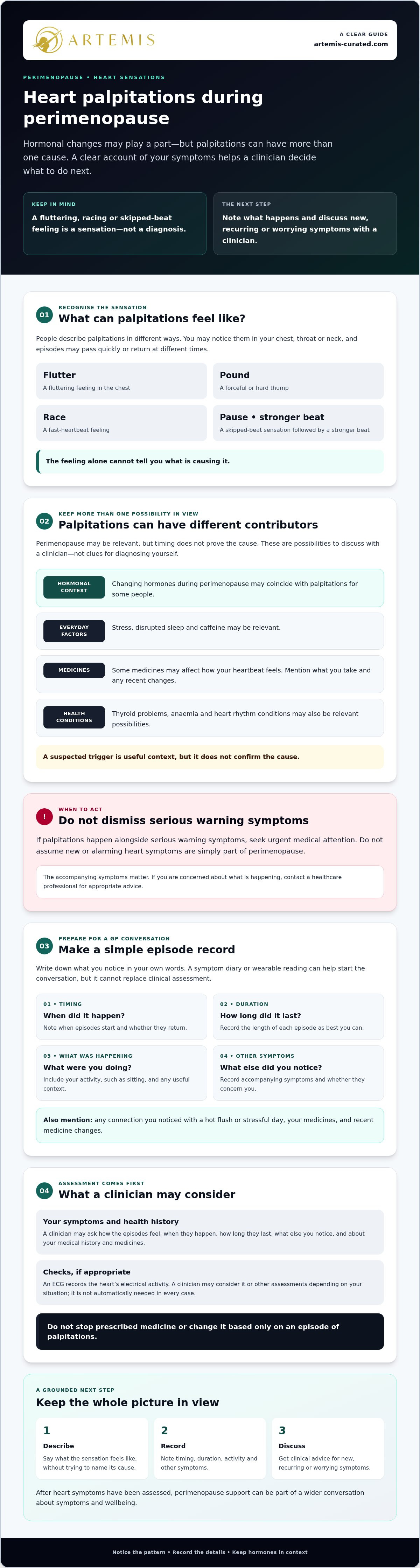
Perimenopause may coincide with heart palpitations, but it shouldn’t be treated as the explanation without proper assessment. If your heart suddenly flutters, pounds, races or seems to skip a beat, it’s understandable to feel unsettled. Managing heart palpitations during perimenopause starts with recognising that changing hormones may play a part, while keeping in mind that other causes are possible too.
You don’t have to work out the cause on your own. This guide explains how palpitations may relate to perimenopause, what else can bring them on, and which accompanying symptoms need urgent medical attention. It also covers what to record before speaking with your GP, so you can give a clear account of when episodes happen, how long they last and what else you notice. A symptom diary or wearable reading can help start the conversation, but it can’t replace a clinical assessment. The aim is a calmer, more informed next step, without dismissing your concerns or jumping to a diagnosis.
Key Takeaways
- Learn what a fluttering, racing or skipped-beat sensation can feel like, without assuming it points to a heart problem.
- See why stress, disrupted sleep, caffeine, medicines and other health conditions may be worth discussing with a clinician.
- Understand which accompanying symptoms need urgent attention and how to seek appropriate help in the UK.
- Use a simple record of episode timing, duration, activity and other symptoms to prepare for a GP appointment.
- Explore managing heart palpitations during perimenopause as part of a wider conversation about menopause symptoms and wellbeing, after your heart symptoms have been assessed.
What do heart palpitations during perimenopause feel like?
A sudden flutter, a hard thump or the sense that your heart has skipped a beat can be unsettling, especially if the sensation is new. Palpitations are feelings or awareness of your heartbeat. They can happen for different reasons and don’t, by themselves, mean you have a heart rhythm problem.
Palpitations describe a sensation, not a diagnosis: they’re the feeling that your heartbeat is racing, fluttering, pounding or irregular. A heart rhythm condition can only be identified through medical assessment. For a general explanation, see what heart palpitations are.
How people commonly describe palpitations
People may feel a fast heartbeat, a flutter in the chest, a forceful thud, or a pause followed by a stronger beat. Some notice the sensation in their throat or neck; others mainly feel it in their chest. Episodes may pass quickly, return at different times, or feel unlike one another. The sensation alone can’t tell you what’s causing it.
Describe what you notice without trying to label the cause. For example, “a flutter for a short time while sitting” gives your GP useful information. A racing feeling doesn’t automatically point to one cause, and a skipped-beat feeling doesn’t confirm a heart rhythm condition.
Why perimenopause may be part of the picture
Heart palpitations can occur during perimenopause, a stage when hormone levels change. Some people notice heart sensations alongside other changes, such as hot flushes or disrupted sleep. The timing may be relevant, but it can’t establish the cause. Stress, caffeine, medicines and health conditions may also play a part, so it’s sensible not to assume hormones are the whole explanation.
If you’re looking for broader information about changing symptoms and support, our menopause guide can help put this stage of life in context. For managing heart palpitations during perimenopause, keep both parts of the picture in view: note how the episodes feel and when they happen, and discuss new, recurring or worrying symptoms with a clinician. This gives your GP a clearer starting point for deciding whether further assessment is appropriate.
Why palpitations can have more than one cause
Perimenopause may be one part of the picture, but it isn’t the only possible explanation for a change in your heartbeat. Stress, disrupted sleep and caffeine can be relevant, as can some medicines or an underlying health condition. These are possibilities to mention to a clinician, not clues you can use to diagnose yourself.
The sensation of palpitations alone can’t identify their cause. A clinician considers your symptoms and health history to decide whether further assessment is needed.
Hormonal changes and other possible contributors
Changing hormones may coincide with palpitations for some people during perimenopause. Thyroid problems, anaemia and heart rhythm conditions can also be relevant possibilities. Certain medicines may affect how your heartbeat feels, so tell your clinician what you take, including any recent changes. Don’t stop prescribed medicine or make changes based only on an episode of palpitations.
Notice whether symptoms are new, recurring, changing or concerning to you. A connection with a hot flush or a stressful day may be useful context, but it doesn’t prove what caused the sensation. If symptoms keep returning or feel different from usual, contact your GP rather than relying on a suspected trigger. Seek urgent help if palpitations come with serious warning symptoms, as covered below.
Why a clinician may consider an ECG or other checks
A GP or other clinician may ask what the episodes feel like, when they happen, how long they last, and whether you’ve noticed other symptoms. They may also ask about your medical history and medicines. This information helps them decide what checks, if any, are appropriate for you.
An electrocardiogram, usually called an ECG, records the heart’s electrical activity. It may be one check a clinician considers, but it isn’t automatically needed in every case and doesn’t guarantee a particular answer. Depending on your situation, they may consider other assessments. The Mayo Clinic explains how doctors diagnose heart palpitations, including the role of tests such as an ECG and heart rhythm monitors.
For managing heart palpitations during perimenopause, keep the hormonal context in view without letting it overshadow other possibilities. A clear account of what’s happening gives your clinician a more useful starting point than trying to settle on a cause alone.
When are perimenopause palpitations urgent?
Don’t assume new or alarming heart symptoms are part of perimenopause. The symptoms that happen alongside palpitations matter, and some need urgent medical attention. If you’re worried about what you’re experiencing, seek help rather than waiting to see if it passes.
Symptoms that need urgent medical attention
The NHS advises calling 999 or going to A&E if palpitations are happening with any of these symptoms:
- Chest pain
- Shortness of breath
- Feeling faint or fainting
Don’t delay urgent care to write a symptom diary, read the rest of this article or contact your GP. Call 999 if you need emergency help. This information isn’t a substitute for emergency care or individual medical advice. You can read the NHS guidance on heart palpitations.
When to contact a GP or NHS 111
If palpitations have stopped but you had them alongside chest pain, shortness of breath, or feeling faint or fainting, the NHS advises seeking an urgent GP appointment or calling NHS 111. If you can’t get an urgent appointment, call 111 for advice on what to do next.
For palpitations without those warning signs, contact your GP if they keep coming back, are getting worse, or last longer than a few minutes. You can ask for advice even if an episode has ended. A clinician can help decide whether you need an assessment and what to do next.
When managing heart palpitations during perimenopause, treat urgent symptoms as urgent, whether or not you suspect a hormonal connection. If you’re unsure which route to take, contact NHS 111 for guidance. If severe symptoms are happening now, call 999 rather than waiting for a routine appointment.
How to track palpitations and prepare for a GP appointment
A few clear notes can help you explain what’s happening without trying to work out the cause yourself. Keep a simple record when it’s practical and take it to your appointment. You don’t need to capture every detail perfectly.
What to note when an episode happens
For each episode, write down:
- When it happened: note the time and date, or roughly when it occurred.
- How long it lasted: estimate the duration if you can.
- What it felt like: for example, racing, fluttering, pounding or an irregular beat.
- What you were doing: include whether you were resting, exercising, feeling stressed or experiencing a hot flush.
- What else you noticed: record any symptoms that happened at the same time.
Also note relevant medicines and supplements, how much caffeine you’d had if you know, and any recent changes. These details can give your GP useful context. If you use a smartwatch or another device, you can share its readings, but don’t treat them as a diagnosis or delay urgent care to collect more information.
Questions to take to your appointment
You might find it helpful to write down a few questions before you go:
- What possible causes should we consider?
- Would any tests be appropriate in my situation?
- Could my personal or family medical history be relevant?
- Could any of my medicines or supplements affect how my heartbeat feels?
- Which changes or symptoms should prompt urgent follow-up?
Bring a list of medicines and supplements you use, including anything recently started, stopped or changed. Mention relevant personal or family history, even if you’re unsure whether it matters. Your clinician can decide whether checks such as blood tests are appropriate. A guide to blood tests can explain what these checks may involve, but it can’t determine which tests you need.
Preparing a concise record is one practical part of managing heart palpitations during perimenopause. It keeps the conversation focused on what you’ve experienced and what should happen next, without asking you to diagnose yourself.
Perimenopause support after palpitations have been assessed
Even if a clinician thinks your palpitations may be linked to perimenopause, keep them informed if the sensations return, change or worry you. Don’t assume a new episode has the same cause as an earlier one. Assessment comes first; broader menopause support is a separate conversation.
Your appointment can also be a chance to talk about other symptoms affecting daily life, such as disrupted sleep, stress or hot flushes. Mention which concerns matter most to you and ask what support options may be suitable. A wider discussion can help you consider your wellbeing without losing sight of heart symptoms that need their own attention. Our menopause guide offers further context on symptoms and support during this stage of life.
Discussing menopause symptoms and care options
Ask your GP what options may be appropriate for your symptoms and circumstances. They can discuss care with you, including whether referral or further advice is needed. Be open about what you’ve tried and what you’d like help with.
Artemis Curated sells wellness supplements, including The art of harmony, described as menopause support. It doesn’t provide HRT or one-to-one clinical consultations. Supplements are not a substitute for medical assessment or care.
Where supplements fit, and where they do not
Artemis Curated supplements are not a treatment for palpitations or a heart condition. They shouldn’t be used to delay seeking advice about heart symptoms or as a replacement for care recommended by a clinician. If you take supplements, tell your GP or pharmacist what they are, along with any medicines you use. This gives them a chance to consider your full list when discussing your care.
If you’re exploring general menopause support separately from heart symptoms, you can view menopause support supplements. Check the product information and speak with a healthcare professional if you’re unsure whether a supplement is suitable for you.
Managing heart palpitations during perimenopause means keeping these questions distinct: get heart symptoms assessed, then discuss menopause support in the context of your overall health. A clear conversation with a clinician can help you decide what to address next.
Take your next step with confidence
Managing heart palpitations during perimenopause starts with taking the sensation seriously without assuming hormones are the cause. Palpitations can have different explanations, so speak with a clinician about symptoms that are new, recurring or changing. If they come with chest pain, shortness of breath, feeling faint or fainting, seek urgent help rather than waiting to make notes.
A simple record of when episodes happen, how they feel and what else you notice can help you prepare for a GP conversation. You can also raise other menopause concerns, including sleep and stress, and ask what support may suit your circumstances.
For general menopause support, Artemis Curated offers The art of harmony. It’s a supplement, not a treatment for palpitations or heart conditions, and Artemis Curated doesn’t provide HRT or one-to-one clinical consultations. Explore Artemis Curated’s menopause support as a separate consideration alongside appropriate medical care.
You deserve clear answers and support that takes your concerns seriously. Start with the next step that feels right for your health.
Frequently Asked Questions
Can perimenopause cause heart palpitations?
Palpitations can happen during perimenopause, but the timing alone can’t confirm that hormone changes are the cause. Stress, disrupted sleep, caffeine, medicines and health conditions may also be relevant. If you notice new, recurring or changing sensations, speak with a GP rather than assuming they’re menopause-related. A brief record of when they happen and what you feel can help you explain your experience.
Are heart palpitations during perimenopause normal?
Some people experience palpitations during perimenopause, but “normal” shouldn’t be taken to mean they’re always harmless or don’t need attention. The sensation doesn’t identify its cause. If it’s new, keeps returning, lasts longer than a few minutes or is getting worse, contact your GP. Seek urgent help if palpitations happen with chest pain, shortness of breath, feeling faint or fainting.
When should I worry about palpitations during perimenopause?
Call 999 or go to A&E if palpitations are happening with chest pain, shortness of breath, feeling faint or fainting. Don’t wait to make notes or continue reading if these symptoms are occurring. If the episode has stopped but came with these warning signs, seek urgent GP advice or call NHS 111. For recurring, worsening or prolonged palpitations without these signs, contact your GP.
How can I track heart palpitations before seeing my GP?
Note when an episode starts, how long it lasts, and whether your heartbeat feels fast, fluttering, pounding or irregular. Add what you were doing and any symptoms you noticed at the same time. If practical, record relevant medicines, supplements, caffeine and recent changes. A smartwatch reading may be useful to show your GP, but it isn’t a diagnosis and shouldn’t delay urgent care.
Can anxiety or caffeine cause palpitations during perimenopause?
Anxiety and caffeine may be relevant triggers for palpitations, and disrupted sleep or stress can also be useful context to share with your GP. But noticing a possible link doesn’t prove it’s the cause, and symptoms alone can’t rule out other explanations. Write down what was happening before an episode, including caffeine intake or stressful events, and discuss recurring or concerning symptoms with a clinician.
Should I take supplements for perimenopause palpitations?
Don’t rely on supplements to treat palpitations or a heart condition, and don’t use them instead of seeking medical advice. If you take supplements, tell your GP or pharmacist what they are, especially if you also use medicines. Artemis Curated offers The art of harmony as general menopause support, not as a treatment for palpitations. Check suitability with a healthcare professional if you’re unsure.
What tests might a GP consider for palpitations?
Your GP may ask about your symptoms, medical history and medicines before deciding whether any tests are appropriate. They may consider an electrocardiogram (ECG), which records the heart’s electrical activity, or other checks based on your circumstances. Blood tests may also be considered, depending on what the clinician needs to assess. No particular test or result is guaranteed, so ask your GP what they recommend and why.
0 comments