

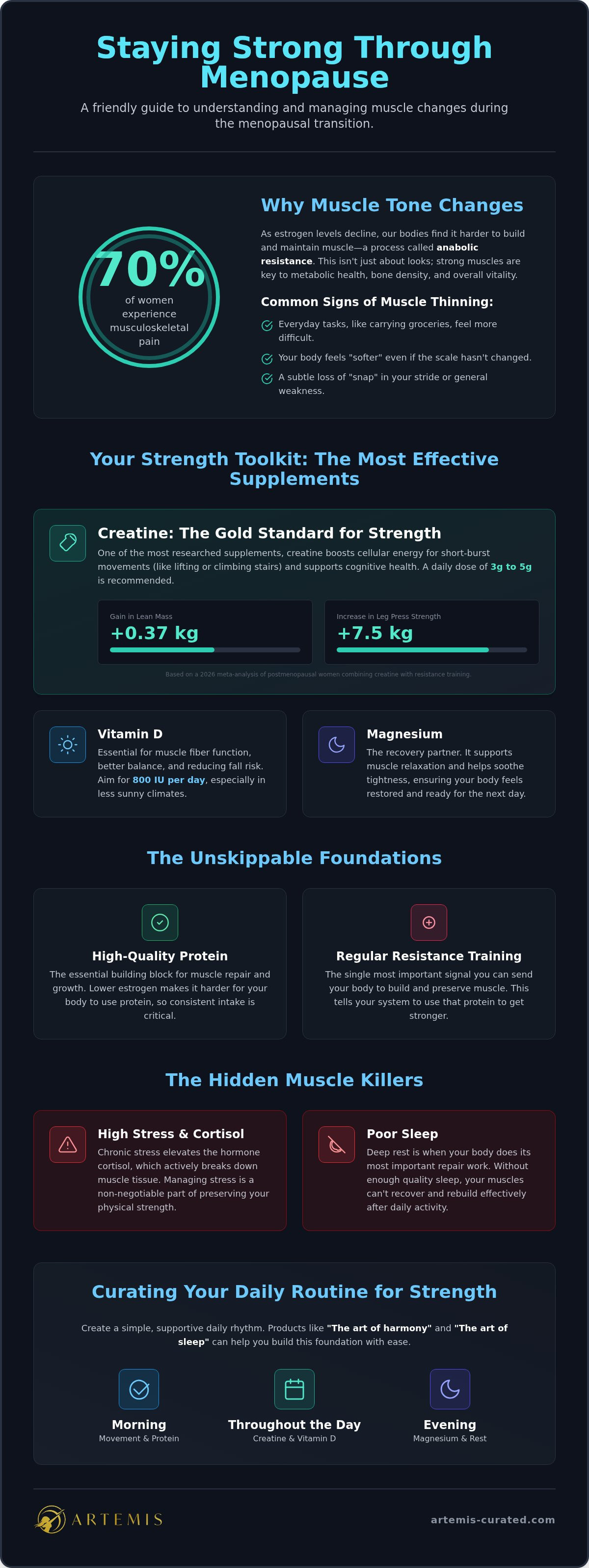
Did you know that over 70% of women experience musculoskeletal pain during the menopausal transition? It's a high number, and it explains that quiet frustration we feel when our bodies start to move or look a bit differently. You might notice your favorite clothes fitting with less ease or feel a new, subtle weakness during your morning routine. It's easy to feel a bit disconnected from a body that used to feel so predictable, leading many to search for the right supplements for menopause muscle loss.
We believe that understanding the "why" behind these changes is the first step toward reclaiming your strength. This guide will show you how the right nutrients, paired with intentional movement, can help you stay strong and vibrant. We'll look at evidence-based choices like creatine, which a 2026 meta-analysis found helps postmenopausal women gain an average of 0.37 kg more lean mass when paired with exercise. We'll also explore how The art of harmony and The art of sleep support your hormonal balance and rest. By the end, you'll have a clear, simple daily routine designed to keep you feeling capable and grounded.
Key Takeaways
- Understand why muscle thinning happens as estrogen levels drop and how to recognize the signs of sarcopenia in your daily life.
- Discover how evidence-based choices like Creatine, Vitamin D, and Magnesium serve as the most effective supplements for menopause muscle loss.
- Learn why high-quality protein and regular resistance training are the essential foundations for maintaining a strong and capable body.
- Explore the connection between deep rest and muscle repair, and how keeping stress in check prevents cortisol from breaking down your physical tone.
- Find out how to curate a simple daily routine using "The art of harmony" and "The art of sleep" to support your strength and vitality.
Why Muscle Loss Happens During Menopause
It's a quiet realization for many of us. One day, the activities that felt effortless start to carry a new weight. You might think it's simply the passage of time, but there's a deeper story happening within your cells. This transition isn't just about age; it's a profound hormonal shift. Estrogen acts as a vital messenger for your musculoskeletal system. When its presence fades, the very foundation of your physical strength begins to change. This process is known as Sarcopenia, a term that describes the natural thinning of muscle mass. It's a biological reality, but it's one you can influence with intention.
Your muscles are much more than a way to fill out a silk blouse or a pair of tailored trousers. They're the primary drivers of your metabolic health. Strong muscles act as a reservoir for glucose and provide the necessary tension to keep your bones dense and resilient. When you lose muscle, you lose your body's most effective tool for staying balanced and energized. This is why looking into supplements for menopause muscle loss isn't just about aesthetics. It's about preserving the capability of your physical sanctuary and ensuring you feel strong in your own skin.
The Estrogen and Muscle Connection
Estrogen plays a sophisticated role in how your body repairs itself. After a walk or a yoga session, this hormone signals your muscle fibers to knit back together, stronger than before. As levels decline during menopause, your body experiences what experts call anabolic resistance. It's as if the volume has been turned down on your body's ability to build and maintain tissue. Essentially, lower estrogen makes it harder for your system to effectively use the protein you consume, leading to a gradual loss of tone and power that can feel quite sudden.
Signs You Might Be Losing Muscle Tone
The signs are often functional rather than numerical. You might find that you're losing the "snap" in your stride or that carrying heavy groceries feels more taxing than it did a year ago. Sometimes, the scale doesn't move at all, yet your body feels softer and clothes fit differently. This happens because muscle is being replaced by fat, a shift that changes how you move through the world. The good news is that muscle is remarkably responsive. It's the most adaptable tissue in your body, and with the right support, you can begin to restore what's been lost.
The Best Supplements for Menopause Muscle Loss
When you begin to curate a routine for your physical well-being, think of supplements as the quiet supporters that enhance the work you're already doing. They don't replace a protein-rich diet or the effort of movement, but they do help your body respond more effectively to those signals. Choosing the right supplements for menopause muscle loss is about quality and intentionality. It's better to select a few evidence-based nutrients that work in harmony than to overwhelm your system with a long list of unverified options.
We focus on a refined edit of nutrients that address the specific biological hurdles of this transition. By layering these into your day, you provide your muscles with the cellular energy and structural support they need to remain resilient. If you're looking for a comprehensive foundation, exploring the Full Curated collection can help you find a routine that feels both simple and complete.
Creatine: The Gold Standard for Strength
Creatine often carries a reputation tied to heavy lifting, but it's actually one of the most researched and beneficial tools for women in menopause. It works by increasing the availability of cellular energy, specifically helping with "short-burst" movements like climbing stairs or lifting a heavy garden pot. Beyond the physical, it supports cognitive health, which can feel like a welcome relief during years of brain fog. A daily dose of 3g to 5g is the standard recommendation to maintain muscle fullness. In fact, a 2026 meta-analysis showed that women who used creatine while resistance training gained significantly more lean mass and increased their leg press strength by an average of 7.5 kg compared to those who didn't.
Vitamin D and Magnesium: The Support Act
These two nutrients act as the essential infrastructure for your muscles. Vitamin D is vital for muscle fiber function and has been closely linked to better balance and a lower risk of falls. As of early 2026, the general recommendation for postmenopausal women is 800 IU per day. This is particularly important for those of us in the UK, where the winter sun is rarely strong enough to trigger natural production. Magnesium complements this by supporting muscle relaxation and recovery. It helps soothe the "tight" feeling that can follow a busy day, ensuring your body feels restored and ready for the next morning.
Collagen for Structural Integrity
While muscle tissue is the focus, the connective tissues that hold everything together are just as important. Collagen provides the scaffolding for your tendons and ligaments, ensuring the connection between muscle and bone stays strong. We've written a detailed Collagen Guide that explains this relationship in depth. Incorporating a high-quality source, such as "The art of radiance", can be a beautiful addition to your strength routine, supporting both your internal structure and your external glow.
Beyond the Bottle: Protein and Movement
While the right supplements for menopause muscle loss offer a sophisticated layer of support, they work best when built upon a steady foundation. Think of your daily movement and nutrition as the primary architecture of your strength. Nutrients like creatine and magnesium are remarkable, but they require the clear signal of protein and physical tension to truly transform your body’s composition. It's a partnership between what you ingest and how you move, creating a rhythm that feels sustainable rather than frantic.
Focusing on this balance isn't about chasing fleeting fitness trends. It's about respecting the biological needs of a body in transition. By prioritizing these simple shifts, you ensure that your curated supplement routine has the best possible environment to succeed. If you're ready to start your journey, you can find our foundational support in the Full Curated collection.
Finding Your Protein Rhythm
For women in menopause, the recommended daily protein intake is 1-1.6 grams per kilogram of body weight. This might sound like a lot, but it's easier to manage when you aim for 25-30g of protein at every meal. This specific amount is the threshold needed to trigger muscle protein synthesis, telling your body to maintain its tone. It's a simple way to work with your biology rather than against it.
- Breakfast: Two eggs with a side of smoked salmon or Greek yoghurt with seeds.
- Lunch: A bowl of hearty lentils or grilled chicken with greens.
- Dinner: A piece of white fish or a serving of tofu.
Starting your day with a high-protein breakfast is a total game-changer. It stabilizes your blood sugar and provides a steady source of energy, preventing the mid-afternoon slump that often leads to cravings. It's about fueling your body with intention from the moment you wake up.
Resistance Training for the Modern Woman
Resistance training doesn't have to mean spending hours in a crowded gym. It simply means creating tension in the muscle. This could be through resistance bands in your living room, bodyweight exercises like squats and planks, or a set of handheld dumbbells. The goal is to send a message to your nervous system that your muscles are needed and valued. This signal is what tells your body to utilize those supplements for menopause muscle loss effectively.
We recommend finding space for two to three sessions a week. Consistency is far more powerful than intensity; a twenty-minute session you actually enjoy is better than a grueling hour you dread. There's a profound joy in feeling your own strength return. It's a quiet confidence that comes from knowing your body is capable and resilient.
The Hidden Muscle Killers: Stress and Poor Sleep
We often think of muscle maintenance as an active, waking pursuit. We lift weights, we prioritize protein, and we carefully select our nutrients. But there is a silent partner in this journey that often goes unnoticed: your nervous system. High levels of stress and fragmented sleep act as invisible barriers to the progress you're making. Even the most effective supplements for menopause muscle loss can struggle to perform if your body is constantly in a state of high alert.
When you're under pressure, your body produces cortisol. While this hormone is essential for survival, it is naturally catabolic, meaning it breaks down muscle tissue to provide quick energy. During menopause, the decline of oestrogen makes our bodies more sensitive to these stress spikes. This makes rest an active, non-negotiable part of your muscle-building strategy. To understand this balance more deeply, our Cortisol Guide explores how to curate a life of inner harmony and vitality.
Managing the Cortisol Spike
Calming your mind isn't just a mental exercise; it's a physical requirement for muscle health. When you lower your stress levels, you effectively switch off the signal that tells your body to waste its hard-earned tissue. Simple evening rituals can make a significant difference. Try a warm bath with salts or five minutes of focused, rhythmic breathing. These small acts of care help transition your body from survival mode into repair mode. Our foundational support, "The art of harmony", is specifically designed to assist with this overall hormonal balance, making it easier to stay centered.
The Art of Deep Rest
Sleep is the time when your body finally turns its attention to the work of restoration. During deep sleep, particularly the REM cycle, your system releases the growth hormones needed to repair muscle fibers after a day of movement. If your rest is shallow or frequently interrupted, this vital repair window is cut short. Creating a sanctuary for sleep is essential for anyone looking to maintain their strength. One of the most effective tips is a digital sunset. By turning off all screens an hour before bed, you allow your brain to produce melatonin naturally. To support this journey into deep, restorative rest, The art of sleep offers a gentle way to encourage the physical recovery your body deserves.
Curating Your Daily Routine for Strength
Bringing these elements together shouldn't feel like a frantic race to a finish line. Instead, think of it as a quiet, steady composition. By layering your protein intake, intentional movement, and specific supplements for menopause muscle loss, you create a supportive rhythm that fits your life. We encourage you to start small. You don't have to change your entire world overnight. Perhaps you pick one supplement to try or set one simple movement goal for the week. This journey is truly about longevity. It is about feeling vibrant and capable as you move through each day. For those who want a comprehensive approach, the Full Curated collection offers a thoughtful way to support your whole self.
A Morning and Evening Ritual
Rituals offer us a sense of order and gentle care. In the morning, you might take "The art of harmony" alongside a protein-rich breakfast. As we explored earlier, that 25-30g of protein acts as the essential signal your muscles need to maintain their tone. This simple pairing ensures your body has the building blocks it needs from the moment the sun hits your window. In the evening, let "The art of sleep" become part of your winding-down process. This is more than just a routine; it is about creating the space for deep, cellular repair while your cortisol levels naturally dip. If you're looking for more guidance on this transition, our Menopause Guide provides a deeper look at holistic harmony.
Listening to Your Body’s Voice
Every woman’s experience is unique. As you choose your supplements for menopause muscle loss, do so with a sense of intentionality. Listen closely to what your body is asking for. Perhaps you feel you need more support for your recovery after a yoga class, or maybe your focus is on maintaining your strength for daily tasks. We believe that the quality of ingredients and the "hand of the maker" truly matter. The care put into every formulation ensures you are giving your body only what is meaningful and effective.
By choosing quality over a long list of unnecessary additions, you honor your body's needs. This isn't about mere consumption; it's about collecting the right tools to live well. When you prioritize high-quality, curated ingredients, you're investing in a future where you feel strong, balanced, and entirely yourself. Explore our shop for your curated wellness edit.
Embracing Your Strength for the Years Ahead
Maintaining your physical tone through menopause is a beautiful act of intentionality. It's about more than just the reflection in the mirror; it's about the freedom to move through your life with confidence and ease. By focusing on a protein-rich rhythm, consistent movement, and evidence-based supplements for menopause muscle loss, you're building a foundation that supports your body's natural resilience. Remember that deep rest and stress management are just as vital as the active work you do each morning.
Our team of UK-based wellness experts has crafted a collection specifically for these unique needs, focusing on high-quality ingredients that encourage natural harmony. If you're ready to start your journey toward lasting vitality, Discover The Art of Harmony for Menopause Support. You have the power to rebuild and maintain your strength, one small, thoughtful choice at a time. Stay patient with yourself and enjoy the quiet confidence that comes with a capable, vibrant body.
Frequently Asked Questions
Can I take muscle-support supplements if I am on HRT?
Yes, you can certainly take supplements for menopause muscle loss alongside HRT. While HRT focuses on replacing declining hormones, supplements like creatine or magnesium work directly at the cellular level to support muscle fibers and recovery. They act as supportive layers rather than replacements. It's always a good idea to chat with your healthcare provider to ensure your personal routine is perfectly balanced for your specific health history.
How long does it take to see results from menopause muscle supplements?
Patience is a vital part of this journey. While you might notice a subtle shift in your energy or sleep quality within the first few weeks, rebuilding muscle tissue is a slower process. Most women begin to see and feel tangible changes in their strength and tone after about twelve weeks of consistent supplementation and regular movement. This timeframe allows your body to effectively utilize the nutrients and adapt to the new physical signals you're providing.
Is creatine safe for women over 50?
Creatine is remarkably safe for women over 50 and is one of the most researched supplements available. Beyond its role in maintaining muscle fullness, it offers support for bone density and cognitive function, which can be a welcome relief during the menopausal years. A daily dose of 3g to 5g is generally recommended. It's a simple, effective way to support your physical sanctuary without the need for complex or frantic fitness regimes.
What is the best time of day to take magnesium for muscle recovery?
Evening is the ideal time to take magnesium for muscle recovery. Taking it about an hour before you plan to rest allows the mineral to support muscle relaxation and calm your nervous system. This timing works in harmony with your body's natural repair cycle, helping you drift into a deeper sleep. By supporting your recovery overnight, you ensure that you wake up feeling refreshed and ready for whatever movement your day brings.
Do I need a DEXA scan to check for muscle loss?
While a DEXA scan isn't strictly necessary, it can be a very helpful tool for understanding your body's composition. It provides a clear picture of your muscle mass and bone density, giving you a baseline to track your progress over time. If you can't access a scan, paying attention to functional signs like your balance and how easily you lift everyday objects is a perfectly valid way to monitor your physical strength and vitality.
Can collagen actually help with muscle mass?
Collagen doesn't build muscle mass directly in the same way that protein or creatine does, but it plays a crucial supporting role. It provides the structural integrity for your tendons and ligaments, which are the essential connections between your muscles and bones. By keeping these tissues resilient, collagen allows your muscles to work more efficiently and reduces the risk of discomfort during exercise. It's an important piece of the overall strength puzzle.
How much protein do I really need during menopause?
Your protein needs actually increase as you move through menopause. Aiming for 1 to 1.6 grams of protein per kilogram of your body weight is a solid target for most women. This amount helps overcome the anabolic resistance that happens as estrogen levels drop. Spreading this intake across your day, with about 25 to 30 grams at each meal, ensures your body has a steady supply of the building blocks needed for repair and tone.
What happens if I don’t address muscle loss during perimenopause?
Ignoring muscle loss during perimenopause can lead to a gradual decline in your metabolic health and physical independence. Without intervention, the natural thinning of muscle tissue can increase the risk of falls and make daily tasks feel more taxing. Addressing these changes early with the right movement and supplements for menopause muscle loss ensures you remain strong and capable. It's about protecting your vitality so you can continue to enjoy an active, fulfilling life.
0 comments