

A confident supplement claim isn’t the same as convincing evidence. If you’re looking into menopause skin supplements uk, start by considering what may be changing: hormonal shifts can affect skin’s moisture, texture and feel, but they aren’t the whole explanation for everyone.
It’s understandable to want clear answers when your skin feels drier, more sensitive or simply different. With so many products promising support, it can be difficult to separate useful information from marketing. Supplements may have a role, but evidence varies and they aren’t a substitute for medical care.
This guide explains how menopause may affect skin and gives you a practical way to assess supplement ingredients, claims and labels. It also covers what to consider if you take medicines or HRT, and when to ask a pharmacist, GP or another healthcare professional for advice. A thoughtful choice starts with clear information and realistic expectations.
Key Takeaways
- Assess menopause skin supplements uk by the evidence for their ingredients, not by bold promises on the label.
- Distinguish established information about menopause-related skin changes from emerging research and marketing claims.
- Use a simple checklist to compare label clarity, claim wording and whether a supplement suits your circumstances.
- Treat reviews as personal accounts, not proof that a product will work for you.
- Consider your health and medicines before trying a supplement. Ask a pharmacist, GP or suitable healthcare professional if you’re unsure.
How can menopause affect skin, and what can supplements realistically do?
Skin can feel different during midlife, and the reason isn’t always obvious. Menopause may be part of the picture, but it isn’t the only possible explanation. Menopause skin supplements uk are products marketed to support skin-related nutritional needs. That description alone doesn’t mean they’re proven to change skin or treat a condition.
What skin changes might someone notice during menopause?
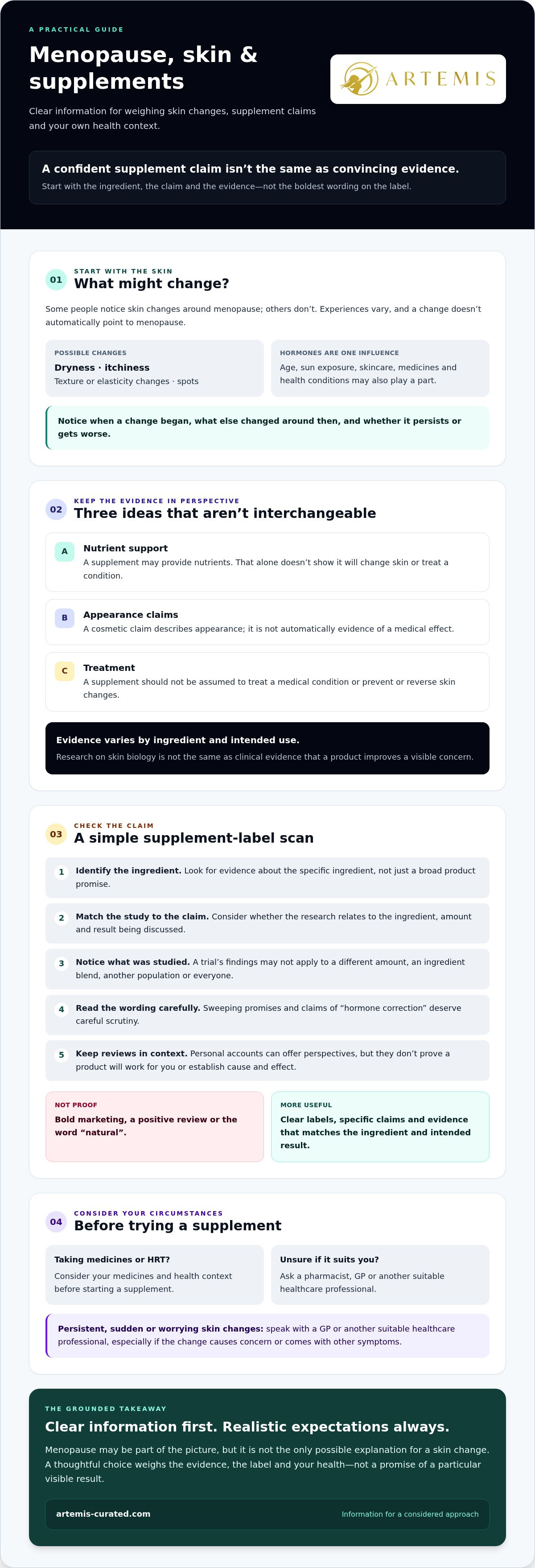
Some people notice dryness, itchiness, changes in texture or elasticity, or spots. Experiences vary: not everyone has skin changes, and they won’t necessarily begin at the same stage. Hormonal changes may influence skin, but age, skincare products, health conditions, medicines and other factors can also play a part. A broad overview of menopause can provide general context, though it can’t explain an individual’s symptoms. For more on the stages and wider experiences, read a dedicated guide to menopause.
A change in your skin doesn’t automatically point to menopause. Note when it began, whether anything else changed around the same time, and whether it persists or gets worse. These details can help you decide what to discuss with a healthcare professional.
Can supplements treat menopause-related skin changes?
It helps to distinguish between three things: a supplement providing nutrients, a cosmetic claim describing appearance, and treatment for a medical condition. Evidence varies by ingredient and intended use. A product’s marketing or a positive review isn’t proof that it will work for you.
Possible nutritional support isn’t the same as a proven treatment for menopause-related skin changes. Don’t expect a supplement to prevent or reverse a change, or to deliver a particular visible result. If a product makes a sweeping promise, check its ingredients and the evidence behind the claim instead of relying on persuasive wording.
If a skin change persists, causes concern or comes with other symptoms, speak with a GP or another suitable healthcare professional. They can help consider possible causes and whether further advice is needed. Ask a pharmacist or GP before starting a supplement if you take medicines, have a health condition or aren’t sure whether it’s suitable for you. Start by understanding the concern, rather than simply adding another product.
Why can skin change around menopause, and what does the evidence say?
Menopause can be one influence on skin, but it doesn’t explain every change. Hormones, age, sun exposure, skincare, medicines and health conditions may all be relevant. When you assess the evidence, keep these possibilities in view instead of assuming a supplement can correct the cause.
How might hormonal changes relate to skin?
The American Academy of Dermatology describes skin changes such as dryness, slackening and wrinkles during menopause, and discusses the role of changing hormone levels. Its guidance on skin care during menopause offers practical advice, but it doesn’t establish that a supplement will prevent or reverse these changes.
Skin is influenced by more than hormones. A new product, another health issue or a change in medication may also affect how it looks or feels. If a change is persistent, sudden or worrying, ask a healthcare professional rather than trying to diagnose its cause from a label or online post.
What can research on supplements tell us?
Evidence needs to be assessed for the specific ingredient and outcome studied. A trial may examine a particular amount in a particular group of people, over a defined period. Its findings don’t automatically apply to a different amount, an ingredient blend, another population or everyone who takes the supplement.
Evidence about menopause-related skin changes doesn’t, by itself, prove that a supplement can treat them. Research about skin biology is not the same as clinical evidence that a product improves a visible concern. Marketing can blur that distinction, so check whether studies relate to the ingredient, amount and result being discussed. Reviews can offer personal perspectives, but they can’t establish cause and effect.
For menopause skin supplements uk, a measured approach is more useful than looking for a promise of “hormone correction”. A supplement shouldn’t be treated as a direct hormonal intervention, and “natural” doesn’t tell you whether it’s effective or suitable. Compare claims with evidence and consider your own health context. If you’re exploring support for skin, hair and nails, you can review Artemis Curated’s supplement range alongside that guidance without assuming a particular outcome.
How to compare menopause skin supplements in the UK without relying on hype
Start with details you can check, not the product with the most persuasive story. Northwestern Medicine describes skin changes as a common occurrence during menopause. That context doesn’t establish that a particular supplement can improve them. Use the checks below to assess menopause skin supplements uk more carefully.
| What to check | A useful question | Take care if… |
|---|---|---|
| Evidence | Does the research relate to the ingredient, amount, group studied and outcome claimed? | The evidence is only a general reference to wellness or skin health. |
| Label clarity | Are ingredients and their amounts clearly stated where applicable? | Important details are hard to find or unclear. Check current Food Standards Agency guidance for UK food supplements and relevant claim rules. |
| Suitability | Have you considered allergies, medicines and existing health conditions? | You’re unsure whether the product is appropriate for you. Ask a pharmacist, GP or another suitable healthcare professional. |
| Claim wording | Does the wording describe support in a measured way? | It promises guaranteed, dramatic or specific visible results without clear evidence. |
Which questions help assess a supplement label?
Read the full label rather than relying on the product name or front-of-pack message. Check the ingredient list, amounts where provided, directions and warnings. If the information doesn’t make it clear what you’d be taking, pause and seek clarification. A dramatic skin promise isn’t proof. It’s a reason to check the evidence and wording more closely.
How should readers interpret evidence and reviews?
Clinical research, testimonials and influencer posts aren’t interchangeable. Reviews can help you understand someone’s personal experience, but they can’t show that a supplement caused the result or that you’ll have the same experience. General wellness language also doesn’t establish a specific skin benefit.
Look for research that matches the ingredient and amount in the product, as well as the population and outcome behind the claim. A study on one ingredient doesn’t automatically support a blend, a different amount or a different result. Check current FSA information on food supplements and relevant nutrition and health claims rather than assuming a phrase is acceptable because it appears in an advert. Once you’ve used this framework, compare the available information for Artemis Curated supplements against the same questions.
What should you do before trying a menopause skin supplement?
Use these steps to make a considered decision:
- Identify the concern. Is your skin dry, itchy or different in another way? Note when you first noticed the change and whether it persists or is getting worse.
- Review your routine and health context. Consider recent changes to skincare, medicines or general health. Don’t stop prescribed treatment without speaking to the professional who recommended it.
- Check the evidence and label. Look for clear ingredient information and evidence that relates to the claim, not just broad wellness language.
- Decide whether it’s suitable. If you’re unsure, ask a pharmacist, GP or another suitable healthcare professional before taking it.
When should you ask a healthcare professional first?
Ask before starting a supplement if you take medicines, have an existing health condition or allergies, or can’t tell whether the product is suitable for you. A pharmacist or GP can help you consider your circumstances. Current NHS information can help you understand menopause and available routes to care, but it can’t replace individual advice.
Seek professional assessment if a skin change is new and concerning, doesn’t settle or is getting worse. Don’t assume menopause is the cause, and don’t try to diagnose or treat a skin condition from a supplement label. A healthcare professional can help decide what should happen next.
How can you set realistic expectations?
Start with one concern rather than expecting an all-in-one fix for skin, sleep and other changes. Evidence may be limited or specific to an ingredient, amount or outcome, and results can differ from person to person. A supplement marketed for skin support doesn’t guarantee a visible change.
If you choose to try one, keep track of what you’re taking and what you notice, without setting an unsupported deadline for results. If you develop a new symptom or feel unwell, seek appropriate advice. For a separate question about collagen, use a dedicated collagen guide to explore that ingredient in more depth. That won’t determine whether a particular product is right for you.
Once you’ve considered your needs, health context and the label, you can assess skin, hair and nail support supplements as one option. Review the product details carefully, and ask a pharmacist or GP if you’re unsure about suitability.
How Artemis Curated fits into a considered approach to menopause skin supplements
Choosing menopause skin supplements uk doesn’t mean accepting broad promises or expecting one product to address every change. Start with your needs, review the available information and decide whether a product is relevant to you.
Where does The art of radiance fit?
Artemis Curated offers The art of radiance, a supplement positioned for skin, hair and nail support. This may be relevant to explore if you’re considering nutritional support, but it doesn’t establish a specific skin benefit or mean the product treats menopause-related changes. Check the product information for ingredients, amounts, directions and suitability, then consider those details alongside the evidence for any claims.
Review the available product details before deciding whether they match your needs. If information you’d expect to see isn’t clear, don’t fill in the gaps with assumptions. Ask the business for product information, or speak with a pharmacist or GP if your question is whether a supplement is suitable for you.
What is a sensible next step for readers?
Artemis Curated also offers The art of harmony, positioned separately as menopause support. It shouldn’t be treated as a skin supplement or a treatment for skin changes. Choose based on what a product is presented to support, rather than assuming every menopause-support product addresses every menopause-related concern.
Before choosing, check four things: whether the evidence supports the claim, whether the label is clear, whether the product suits your circumstances, and whether your expectations are realistic. Focus on one concern at a time. Evidence or outcomes for one ingredient or product may not apply to another.
Supplements don’t replace a diagnosis, prescribed care or advice from a healthcare professional. If you have persistent or concerning symptoms, or you’re unsure about interactions with medicines or an existing condition, speak with a pharmacist, GP or another suitable professional. If the product information aligns with what you’re looking for, you can explore the shop at your own pace.
Choose your next step with confidence
Menopause can be one influence on skin, but changes have more than one possible cause. Supplements may provide nutritional support, yet claims and evidence vary. A product shouldn’t be treated as a guaranteed result or a substitute for professional advice.
For menopause skin supplements uk, keep your decision grounded: identify the concern, check the label and supporting evidence, and consider whether the product is suitable for you. If symptoms persist or you’re unsure about a supplement alongside medicines or a health condition, speak with a pharmacist, GP or another suitable healthcare professional.
Artemis Curated’s The art of radiance is positioned for skin, hair and nail support, while The art of harmony is a separate menopause-support supplement, not a skin treatment. Products are offered individually and in the Full Curated collection. Review the available details at your own pace, then explore Artemis Curated supplements if they align with what you’re looking for.
A thoughtful choice starts with clear information and your own needs. Explore Artemis Curated’s supplements when you’re ready to compare the available options.
Frequently Asked Questions
Can menopause supplements improve your skin?
Some supplements may provide nutritional support, but that doesn’t mean they’ll improve visible skin changes. Evidence depends on the ingredient, amount and outcome studied, and it may not apply to every product or person. If you’re considering menopause skin supplements uk, look for clear product information and evidence that matches the claims. Be wary of promises to prevent, reverse or quickly change skin concerns.
Which supplements are best for menopause-related skin changes?
There isn’t one supplement that’s best for everyone or proven to address every menopause-related skin change. Start with the concern you want to address, then check the ingredient details, evidence and suitability for you. For example, Artemis Curated positions The art of radiance for skin, hair and nail support, but that description alone doesn’t establish a specific result. Ask a pharmacist or GP if you’re unsure what may suit you.
Can supplements increase oestrogen and improve skin?
Don’t assume a supplement can reliably raise oestrogen or act like a hormonal treatment. Products may use language about balance or menopause support, but that wording doesn’t prove they change hormone levels or improve skin. If you’re considering something for menopause symptoms, discuss your options with a GP or another suitable healthcare professional. Supplements shouldn’t replace prescribed care or be used to change a treatment plan without professional advice.
Are menopause skin supplements safe to take with medication?
Not necessarily. Whether a supplement is suitable can depend on its ingredients, your medicines, health conditions and allergies. Check the label, then ask a pharmacist or GP before starting if you take medication or have a health concern. Share the product name and ingredient information so they can advise you. Don’t stop or adjust prescribed medicine to take a supplement unless the professional responsible for your care advises you to.
How long do menopause skin supplements take to work?
There’s no reliable timeframe that applies to every supplement or person. Research may examine a specific ingredient, amount and outcome, so it can’t guarantee when or whether a different product will make a difference. Follow the product directions and avoid taking more than advised. If you decide to try a supplement, note what you’re taking and any changes you notice, and seek professional advice if symptoms persist or worsen.
Should I speak to a GP about skin changes during menopause?
Yes, speak to a GP if a skin change is new and concerning, persistent, worsening or affecting your wellbeing. Menopause may be one factor, but other causes are possible, and a healthcare professional can help assess what’s happening. Seek advice rather than trying to diagnose the issue yourself or relying on a supplement. If you’re unsure where to start, you can also ask a pharmacist for guidance.
0 comments