

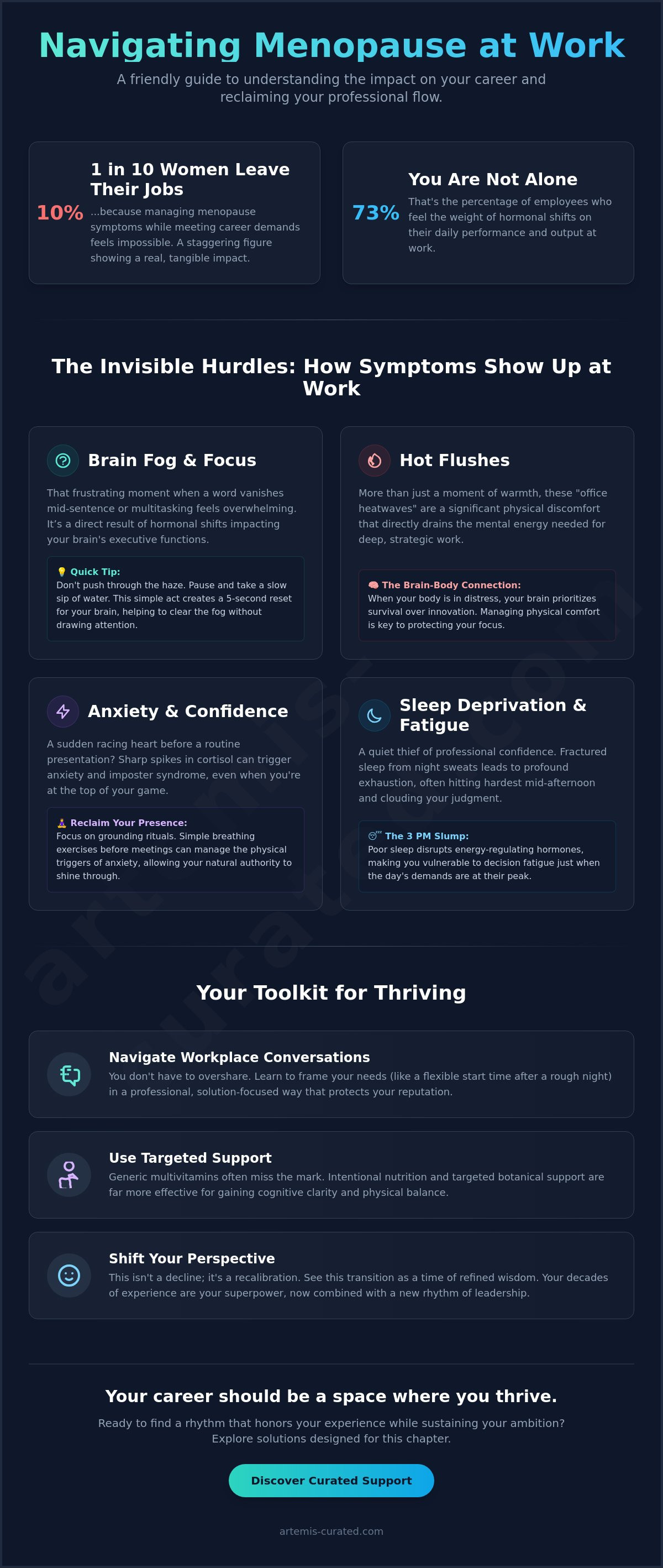
According to research from the Fawcett Society, 10% of women leave their jobs because they find it impossible to manage their physical transitions while meeting the demands of their careers. It's a staggering figure that highlights how deeply menopause symptoms that affect work performance can disrupt even the most established professional rhythm. Whether it's a sudden fog that clouds your words in a meeting or the exhaustion from sleepless nights that makes decision-making feel like a heavy chore, these experiences are real and significant. You're part of the 73% of employees in this age bracket who feel the weight of these hormonal shifts on their daily output.
It's frustrating to feel your confidence waver when your expertise has never been sharper. We believe your career should be a space where you thrive, and you deserve to feel in control of your body and your future. This guide explores how to manage these changes with grace and intentionality. You'll learn practical strategies to sustain your focus, discover which supplements actually support cognitive function, and find out how to curate a lifestyle that protects your reputation and your peace.
Key Takeaways
- Discover how shifting hormones act as a physiological recalibration, changing how your brain processes information and stays focused throughout the day.
- Identify the most common menopause symptoms that affect work performance and learn how to stop mild disruptions from turning into major career roadblocks.
- Gain confidence in navigating workplace conversations by framing your needs in a professional, solution-focused way that keeps your reputation intact.
- Learn why intentionality in your nutrition and targeted botanical support is more effective than relying on generic vitamins for cognitive clarity.
- Shift your perspective to see this transition as a time of refined wisdom, allowing you to step into a new rhythm of leadership and confidence.
The Invisible Impact: How Hormonal Shifts Disrupt the Working Day
The transition through perimenopause isn't a sudden drop-off; it's a slow, deliberate physiological recalibration. For many, this shift feels like the familiar architecture of their daily life is being quietly rearranged. Much of this comes down to declining oestrogen. This hormone acts as a master key for neurotransmitters like serotonin and dopamine, which regulate our mood and cognitive speed. When these levels fluctuate, the internal communication lines we've relied on for decades can feel momentarily frayed. Gaining a deeper perspective by understanding menopause as a biological evolution rather than a personal failing is essential for your long-term wellbeing.
There's a persistent competence myth that suggests these changes somehow diminish your professional value. This couldn't be further from the truth. Your decades of expertise and your unique perspective remain entirely intact. However, the specific menopause symptoms that affect work performance can create a temporary disconnect between your internal knowledge and your external delivery. Recognizing these shifts early isn't just about finding comfort. It's a vital strategy to prevent burnout and maintain your professional standing during a time of significant change.
Brain Fog and the Struggle for Cognitive Clarity
Brain fog is one of the most common menopause symptoms that affect work performance, yet it often remains invisible to colleagues. You're in the middle of a high-stakes meeting when a common word suddenly vanishes. It's a jarring experience that can shake even the most seasoned leader. Fluctuating hormones directly impact executive function and memory, making complex multitasking feel unusually taxing. When a fog descent happens mid-task, don't try to push through the haze. A quick win is to simply pause and take a slow sip of water. This creates a natural five-second reset for your brain, allowing cognitive pathways to clear without drawing unwanted attention to the moment.
The Anxiety Loop: Reclaiming Confidence in the Boardroom
Many women find themselves grappling with a sudden onset of imposter syndrome, often driven by sharp cortisol spikes. These micro-stresses at work can trigger a physical hormonal response, leading to a racing heart or a sense of dread before a routine presentation. Reclaiming your professional presence starts with restoring inner harmony. By focusing on grounding rituals and exploring targeted support from the Full Curated collection, you can manage the physical triggers of anxiety. This allows your natural authority to shine through, unburdened by the temporary noise of hormonal shifts. It's about finding a rhythm that honours your experience while sustaining your ambition.
Physical Disruptions: From Restless Nights to Office Heatwaves
While the cognitive shifts are often subtle, the physical reality of this transition is usually much more visible. Hot flushes, persistent fatigue, and aching joints aren't just minor inconveniences. They are significant menopause symptoms that affect work performance. When these symptoms stack up, they create a compounding effect that drains your capacity for high-level thinking. Dealing with one hot flush is manageable. Dealing with five in a day while your knees ache and your eyes are heavy from lack of sleep is another story entirely. A weight that feels heavy. A mind that seeks rest.
There's a certain stigma attached to the hot flush, a feeling that it betrays a loss of composure. It doesn't. A UK Government Report on Menopause and Productivity points out that physical discomfort directly erodes the mental energy needed for deep, strategic thinking. When your body is in distress, your brain prioritizes survival over innovation. It's hard to focus on a five-year plan when you're simply trying to stay cool in a wool blazer.
Sleep Deprivation and the 3 PM Decision Fatigue
Sleep deprivation is a quiet thief of professional confidence. Night sweats fracture your rest, leading to a profound exhaustion that usually hits hardest around mid-afternoon. This isn't just about feeling tired. Poor sleep disrupts the hormones that govern hunger and energy, often leading to sugar crashes that further cloud your judgment. To manage this, try scheduling your most demanding, high-focus tasks for your peak energy window. If you find your nights are consistently restless, you might find solace in the art of sleep to help restore your natural rhythm and clarity.
Temperature Regulation in Shared Workspaces
There's a particular psychological weight to feeling out of control of your own body temperature, especially in a shared office. The thermostat wars can feel like a burden, but there are quiet ways to reclaim your comfort. It's about intentionality in your environment. Consider these adjustments:
- Choose natural, breathable fabrics like silk or linen that allow for better airflow while maintaining a polished look.
- Position your desk near a window or a vent for a steady source of fresh air whenever possible.
- Invest in small, portable tech like a quiet USB desk fan for a discreet breeze during intense meetings.
Reclaiming your professional rhythm means acknowledging these physical changes without letting them define your value. By making small, intentional adjustments to your workspace and your daily habits, you can manage the menopause symptoms that affect work performance and stay focused on the work that truly matters. It's about finding a new way to move through the day with grace.
Navigating the Professional Landscape: Communication and Boundaries
Deciding whether to speak openly about your experience is a choice that requires a delicate balance. You value your privacy, yet you also recognize that a supportive environment can make a world of difference. When menopause symptoms that affect work performance begin to disrupt your flow, the silence can sometimes feel heavier than the symptoms themselves. It's important to remember that sharing your situation isn't about asking for pity. It's about advocating for the tools you need to continue delivering the high-quality work you're known for. Clear boundaries. Quiet focus.
Setting boundaries is a form of professional respect. It shows you're committed to your output and proactive about managing your energy. Managing the menopause symptoms that affect work performance often starts with these quiet, professional conversations. By being intentional about how and when you communicate, you protect your reputation and your peace of mind. This transition is a time to refine your working style, ensuring it supports the woman you're becoming. A new rhythm. A steady presence.
The Language of Support: Having the Conversation
When you're ready to talk, focus on "adjustments for excellence" rather than "allowances for weakness." You don't need to overshare personal medical history. Try a script like this: "I'm currently navigating some hormonal changes that occasionally impact my sleep and focus. I'd like to suggest a few small adjustments to my schedule to ensure I can keep working at my usual high standard." In the UK, the landscape is shifting in your favour. Under the Employment Rights Act 2025, larger employers are now required to publish Menopause Action Plans. You can use these frameworks and guidance from ACAS to ground your request in professional standards and shared goals.
Designing Your Sanctuary: Physical and Digital Boundaries
Your immediate environment plays a huge role in how you manage cognitive fatigue. Creating a "desk sanctuary" can help soothe sensory spikes. This might mean using noise-cancelling headphones during deep work blocks to protect your concentration. Digitally, you can lean on tools like shared calendars or project management apps to reduce the pressure of instant recall. By scheduling specific times for "deep work," you give your brain the space it needs to focus without the constant ping of notifications. It's about curating a workspace that feels like a calm, productive retreat rather than a source of stress. Intentionality in every detail, including a clean and hygienic environment; you can discover Serenity Chemicals Limited for specialized hygiene solutions that help keep your professional sanctuary fresh and inviting.
Curating Your Personal Support System: Nutrition and Rituals
Taking charge of your day starts with what you put into your body. It's about moving away from the idea of just getting through the hours and toward a philosophy of intentional selection. When you're dealing with menopause symptoms that affect work performance, your nutrition isn't just about health; it's about maintaining your cognitive edge. Blood sugar stability is your secret weapon here. When your levels are steady, your focus remains sharp. You avoid the mid-morning crashes that make a simple email feel like a mountain. A quiet strength. A clear mind.
Rituals are different from routines. A routine can feel like another item on your to-do list, but a ritual is something you do with soul and purpose. It might be the way you prepare your morning tea or how you clear your desk at the end of the day. These small acts of intentionality create a sense of rhythm that feels supportive rather than forced. They remind you that you're in control of your environment. This is incredibly empowering when your body feels like it's changing in ways you didn't choose. Soul over trends. Meaning over habit.
Targeted Supplements for Workplace Vitality
Generic vitamins often fail to meet the specific needs of this transition. Instead, look toward adaptogens. These unique botanicals help your body manage its cortisol response, which is vital when work stress begins to feel overwhelming. The art of harmony is designed to support this emotional and physical balance, helping you stay grounded even during the busiest periods. There's also a deep connection between your gut health and mental clarity. By supporting your internal ecosystem, you're actually helping your body metabolize hormones more effectively. This keeps your mind clear for the tasks at hand.
Feeding the Focused Mind
It's easy to fall into the "coffee and pastry" cycle when you're tired. While it gives you a quick lift, it's actually detrimental to brain fog. To truly manage the menopause symptoms that affect work performance, you need nutrients that act as anchors for your concentration. Omega-3s and Magnesium are essential for this. They support the nervous system and help keep your energy levels consistent throughout the afternoon. Try practicing a mindful lunch. Even ten minutes of quiet, intentional eating can reset your nervous system, preparing you for a productive afternoon. You can explore our full range of support in The Full Curated collection to find what resonates with your specific needs.
Finding Your Flow: A Holistic Approach to Career Longevity
Instead of viewing this transition as a hurdle to clear, we invite you to see it as a "Second Spring." This concept describes a time of refined wisdom and leadership. You've spent decades gathering expertise and honing your craft. Now, you're learning to apply that knowledge with a new kind of intentionality. While menopause symptoms that affect work performance can feel like a disruption, they also offer a chance to recalibrate. It's an invitation to move away from the frantic pace of the past and toward a more sustainable, soulful way of working. Refined expertise. Quiet power.
Self-care is often dismissed as a luxury, but for women over 40, it's the ultimate professional investment. When you prioritize your wellbeing, you're protecting your most valuable asset: your mind. Managing the menopause symptoms that affect work performance isn't just about comfort. It's about ensuring you have the energy to lead, innovate, and contribute for years to come. By choosing to move at a pace that respects your current energy, you actually become a more effective and grounded leader. Authority doesn't need to rush. It simply needs to be present.
Establishing a Rhythmic Morning Routine
A frantic start to the day often leads to a fractured afternoon. To build resilience, move away from the "rush and react" cycle. Instead, create a morning that feels steady and supportive. This starts with the quality of your rest. If you've been struggling with restless nights, exploring The art of sleep can help you reclaim the deep, restorative rest needed for professional success. Once you're awake, set a simple intention for the day. Align your tasks with your energy levels rather than fighting against them. A calm start. A focused mind.
The Art of Harmony: Sustaining Your Professional Soul
Consistency is the foundation of long-term vitality. When you have a support system that works in harmony with your body, you can lead with a sense of grace and presence that others notice. Your career isn't a sprint; it's a long-term contribution to your field. By using the The art of harmony, you provide your body with the botanical support it needs to stay balanced through every professional challenge. We encourage you to explore the full curated collection to find the right combination of support for your journey. This is your time to lead with soul and wisdom. A new rhythm. A lasting impact.
Step Into Your Second Spring with Confidence
Your career is a story of expertise and dedication that deserves to continue with strength. Moving through this transition isn't about simply enduring changes; it's about curating a lifestyle that respects your new hormonal rhythm. By addressing the menopause symptoms that affect work performance with intentionality, you protect both your professional reputation and your personal peace. From establishing a rhythmic morning to setting clear workspace boundaries, you have the power to reclaim your focus and lead with a quiet, steady authority.
True professional longevity is built on a foundation of internal balance. Our expertly curated botanical blends are designed for the discerning, professional woman who values quality and soulful contribution. We focus on holistic harmony and rhythm to help you stay grounded through every meeting and deadline. Explore The Art of Harmony for targeted menopause support and find the support your body needs to thrive. You've worked hard to reach this peak. Now, it's time to enjoy the view with clarity and grace.
Frequently Asked Questions
How do I explain my menopause symptoms to my boss without feeling embarrassed?
You can start the conversation by focusing on your professional output rather than the medical details. Frame it as a request for small adjustments that will allow you to maintain your high standards. Many women find that being proactive about menopause symptoms that affect work performance actually builds trust with their manager. It shows you're committed to your role and taking intentional steps to manage your energy and focus.
Can menopause brain fog be mistaken for early-onset dementia in the workplace?
It's a common fear because the cognitive shifts can feel incredibly disruptive to your daily rhythm. While the experience of losing a word mid-sentence is unsettling, it's typically related to how declining oestrogen affects your brain's processing speed. This is a physiological recalibration, not a permanent decline. If you're concerned, it's always wise to speak with a professional, but knowing the hormonal cause can often provide significant peace of mind.
What are the best natural supplements to help with focus and memory at work?
Look for targeted botanical support rather than generic vitamins. Adaptogens are particularly effective for managing the cortisol response to workplace pressure. Nutrients like Omega-3s and Magnesium act as cognitive anchors, helping to steady your focus. Choosing a high-quality, curated collection of supplements ensures you're feeding your mind exactly what it needs to stay sharp and resilient during high-stakes tasks without relying on caffeine spikes.
Are there specific workplace adjustments I am entitled to in the UK for menopause?
Under the Employment Rights Act 2025, UK employers with 250 or more staff are now required to publish Menopause Action Plans. This legal shift means you have a supportive framework for requesting reasonable adjustments. These might include changes to your workspace temperature, flexible start times to manage fatigue, or the ability to take quiet breaks when symptoms feel overwhelming. It's about ensuring your environment supports your continued excellence.
How can I manage sudden hot flushes during an important presentation?
Keep a glass of ice water nearby and choose your clothing with intentionality. Taking a slow sip of water provides a natural pause and helps cool your core temperature discreetly. Breathable fabrics like silk or linen are also essential for maintaining your professional presence. If a flush occurs, remember that it's a brief physical event that doesn't diminish your authority or the value of the expertise you're sharing.
Does stress at work make menopause symptoms worse?
Yes, work stress and hormonal shifts are deeply connected. High-pressure situations trigger cortisol, which can worsen menopause symptoms that affect work performance like anxiety and hot flushes. This often creates a cycle where the symptoms themselves become a source of further stress. Breaking this loop requires a combination of grounding rituals at your desk and a support system, such as the professional counseling available at femalefocusedtherapy.com, that helps restore your internal harmony and presence.
Is it better to work from home during perimenopause?
Working from home can be a powerful tool for reclaiming your professional rhythm. It gives you total control over your environment, from the thermostat to the lighting. This privacy can be especially helpful on days when fatigue or physical discomfort is high. However, the best approach is often a flexible one that allows you to choose the setting that best supports your focus and confidence each day.
How can I improve my sleep so I'm not exhausted during my 9-to-5?
Improving your rest starts with creating an evening ritual that signals safety to your nervous system. Focus on cooling your bedroom and avoiding the sugar and caffeine cycle that often leads to night sweats. Using targeted support like The art of sleep can help you achieve the deep, restorative rest needed for a productive 9-to-5. When your nights are steady, your days feel much more manageable and your decision-making remains sharp.
0 comments