

Restoring your sex drive in midlife isn't about forcing sudden physical arousal; it begins with replenishing an exhausted nervous system. When daily fatigue, mental fog, and fluctuating hormones leave you feeling depleted, seeking an effective natural treatment for low libido in perimenopause can feel daunting. You might wonder why your desire quietly faded, or worry that you have lost touch with your personal sensuality for good.
It is completely normal to feel disconnected from your partner and detached from your own body right now, especially when low energy drains the bandwidth needed for closeness. You don't have to accept this shift as your new normal. In this 2026 guide, you'll discover gentle, practical ways to understand your changing hormones, revive natural desire, and restore intimate vitality. We will explore the science behind midlife arousal, introduce calming botanicals, and share a balanced daily routine to help you feel confident and comfortable again.
Key Takeaways
- Understand how shifting oestrogen and progesterone levels impact physical comfort, sensation, and natural sexual desire.
- Uncover how elevated cortisol and restless nights drain intimate energy, making stress reduction essential for midlife arousal.
- Discover how a gentle natural treatment for low libido in perimenopause can nurture your body and support intimacy alongside everyday lifestyle habits.
- Learn four actionable daily rituals, including pelvic movement, to boost circulation and reconnect with your personal sensuality.
- Find out how targeted daily botanicals, like The art of passion - libido support, provide steady encouragement for long-term vitality.
Why Does Libido Dip During Perimenopause?
A sudden or gradual quietening of your sex drive can feel unsettling. Many women find that intimacy slowly begins to feel like another chore on an endless to-do list, which brings a quiet sense of guilt or frustration. If you feel detached from your personal sensuality, know this right away: a shifting libido is simply a biological signal, not a personal failing or a lack of love for your partner.
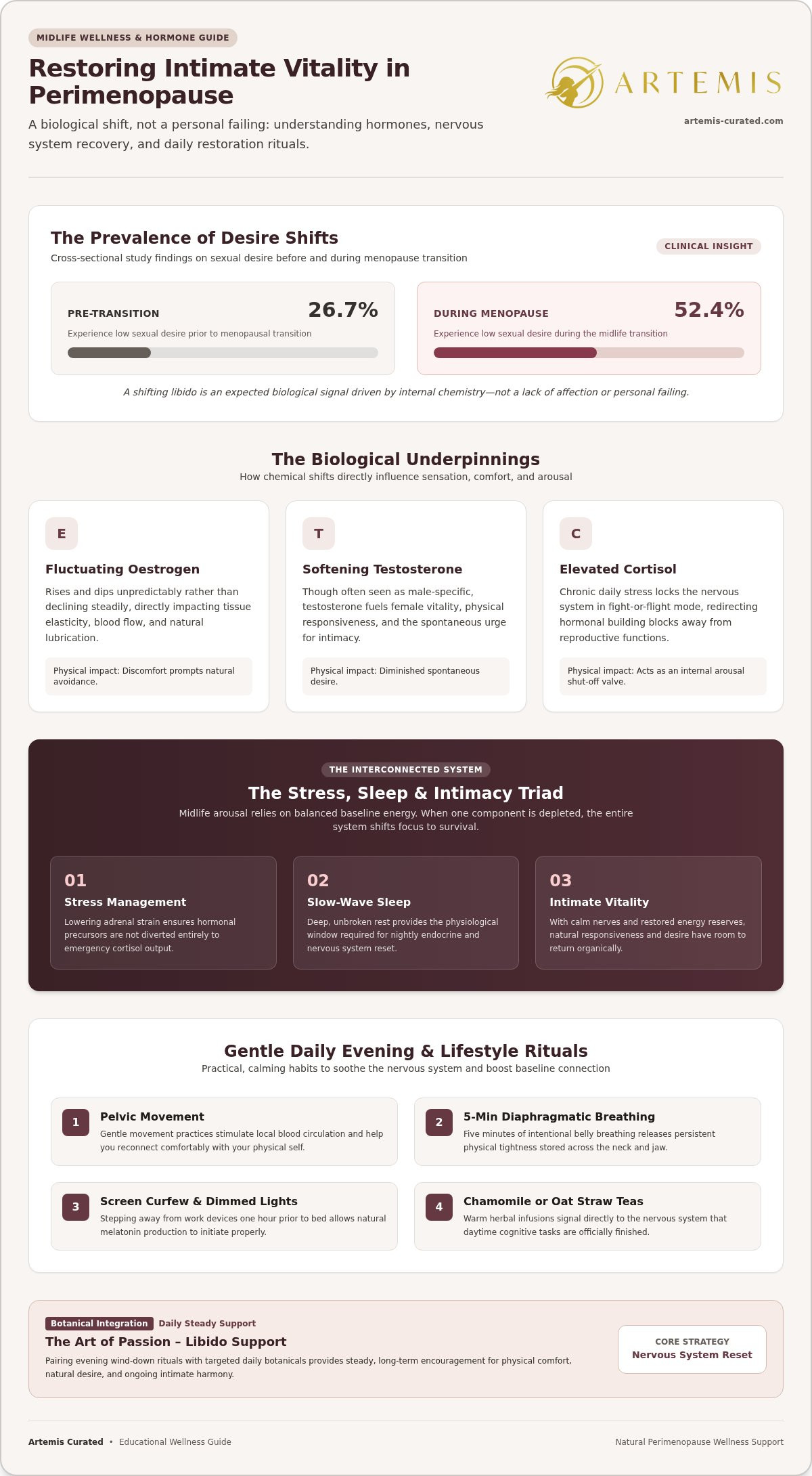
One cross-sectional study revealed that 52.4% of menopausal women experience low sexual desire, compared to just 26.7% before this transition begins. When you explore a understanding the stages of menopause, you see how deeply physical and chemical changes influence your natural rhythm. Exploring a supportive natural treatment for low libido in perimenopause starts with uncovering what is actually happening beneath the surface.
The Shifting Hormone Landscape
During perimenopause, oestrogen doesn't drop in a neat, orderly line. Instead, it rises and falls unpredictably. These sharp peaks and sudden dips directly alter blood flow and tissue elasticity, often resulting in vaginal dryness. When physical closeness causes discomfort or irritation, your mind naturally learns to avoid it.
At the same time, your body gradually produces less testosterone. While often labelled a male hormone, testosterone fuels female sexual desire, vitality, and physical responsiveness. When these levels soften, the spontaneous urge for intimacy often dims alongside them. Recognizing these chemical shifts helps lift unnecessary self-blame, clearing space to explore a thoughtful natural treatment for low libido in perimenopause that works with your body's rhythm.
The Mental Load and Physical Fatigue Connection
Desire is rarely just hormonal; it lives in your nervous system. Erratic sleep patterns, broken by night sweats and early awakenings, drain the energy reserves you need to feel sensual. When your brain is constantly juggling responsibilities while running on poor sleep, intimacy gets pushed to the bottom of the pile.
Modern cognitive overload keeps your body locked in an alert state. You simply can't switch seamlessly from running a household or managing a career into relaxed, romantic intimacy in the space of five minutes. Cultivating desire during this stage of life requires addressing this mental fatigue and giving your body permission to slow down.
The Cortisol, Sleep, and Intimacy Triad
Most guides treat midlife arousal as a standalone puzzle. In reality, your sex drive is bound to a three-part system: stress levels, restorative sleep, and reproductive vitality. When chronic demands keep your nervous system trapped in a state of high alert, your body instinctively channels energy into survival rather than intimacy.
Elevated cortisol acts as an internal shut-off valve. It directs building blocks toward emergency functions, temporarily dampening the pathways responsible for sexual desire and lubrication. Finding an effective natural treatment for low libido in perimenopause means soothing this heightened fight-or-flight response, allowing your body to settle back into rest, connection, and pleasure.
How Stress Steals Your Desire
Adrenal fatigue happens when continuous life stressors demand non-stop cortisol output. Over time, your adrenals pull resources away from producing the subtle hormones that sustain intimate desire. Relationship tension and the mental effort of balancing midlife pressures only add to this strain. When looking for genuine relief, exploring clinical insights on natural ways to boost libido shows that lowering physical tension is often the most reliable way to awaken natural arousal.
Restoring Restful Sleep for Better Energy
Sleep is when your hormonal system resets. Slow-wave, unbroken sleep gives your body the window it needs to rebuild baseline energy for the day ahead. Night sweats and restless tossing ruin this balance, leaving you operating on empty long before the evening arrives.
To help reset this essential rhythm, try establishing simple boundaries an hour before bed:
- Dim household lights and step away from work screens to allow natural melatonin production to begin.
- Practise five minutes of slow, diaphragmatic breathing to release physical tightness from your neck and jaw.
- Sip warm chamomile or oat straw tea to signal to your nervous system that the day's tasks are finished.
When you protect your evening hours, you lay the foundation for natural vitality to flourish. Deep rest is the cornerstone of every dependable natural treatment for low libido in perimenopause. If you are looking to support your body's transition into tranquil evenings, you can explore soothing nighttime wellness options at our curated wellness shop to encourage deeper, restorative rest.
Comparing Natural Approaches vs Clinical Treatments
When searching for ways to revive desire, medical articles often push straight toward hormone replacement therapy (HRT) or off-label testosterone prescriptions. While pharmaceutical pathways offer life-changing support for some women, they are not the only route. Botanical allies and targeted nutrition provide a gentle, non-hormonal starting place for those who prefer to nurture their bodies naturally.
These two approaches do not have to compete against each other. Clinical therapies and lifestyle adjustments can work side by side, creating a rounded system of care. Exploring a thoughtful natural ways to boost libido in perimenopause gives you personal agency, letting you decide how gently or directly you wish to support your intimate health.
Exploring Botanical and Nutritional Support
Plant-based remedies focus on replenishing the building blocks of vitality rather than overriding your biology. Adaptogens like Maca root help the endocrine system handle stress while gently improving stamina and sensation. Other traditional herbs encourage healthy pelvic blood flow, ensuring tissues receive the warmth and circulation needed for comfortable arousal.
Targeted botanical blends take this principle further. Dedicated formulations such as The art of passion - libido support are designed to encourage everyday vitality without synthetic hormones. When used regularly, these botanical blends serve as a steady, nourishing natural treatment for low libido in perimenopause that works quietly in step with your baseline chemistry.
When to Seek Clinical Advice
Natural remedies bring tremendous daily comfort, but some situations call for professional medical support. If you experience persistent, sharp pain during intercourse, severe vaginal atrophy, or sudden changes in bleeding patterns, speak with your GP or a women's health specialist. Localised vaginal oestrogen creams, for example, work strictly on surface tissues and provide rapid physical comfort where supplements may take longer to build.
You can read more about evaluating your markers in our guide on curated wellness support. Combining an honest discussion with your doctor alongside restorative botanical care ensures your physical comfort is protected from every angle.
Daily Rituals to Cultivate Desire and Intimate Vitality
Reconnecting with your body doesn't require grand gestures or rigid expectations. Sensual energy returns gradually when you create small pockets of physical ease throughout your day. By making space to unwind, you send your nervous system the message that it is safe to soften and receive pleasure.
Here are four simple, grounding practices to weave into your daily rhythm:
- Gentle pelvic mobility: Spend five minutes doing standing hip circles or seated pelvic tilts to encourage fresh circulation to lower abdominal tissues.
- Deep belly breathing: Take several minutes each afternoon to extend your exhale, dropping tension out of your chest and shoulders.
- Pressure-free connection: Share physical affection with your partner, such as a long hug or a back rub, with sexual expectations completely off the table.
- Targeted cellular nourishment: Support tissue elasticity by hydrating consistently and eating nutrient-dense, healthy fats.
Reconnecting With Your Body Through Mindful Movement
Sitting for long hours at a desk constricts pelvic blood flow and tightens the hips. Restorative postures, such as a supported butterfly pose or a gentle child's pose, physically open the pelvic basin. This increased blood flow warms the tissues and sharpens physical sensitivity.
Pairing these stretches with slow breathwork helps untie the mental knots of your day. When you speak openly with your partner about taking things slowly, you remove performance pressure. Removing expectations lets you focus on comfort and physical pleasure rather than an end goal.
Nourishing Your System From Within
Physical intimacy demands stamina and hydrated tissues. Foods rich in omega-3 fatty acids, zinc, and magnesium, such as pumpkin seeds, leafy greens, and walnuts, support cell membrane flexibility and natural moisture balance. Without proper baseline hydration, vaginal tissues become fragile and prone to irritation.
Consistent nourishment is a central pillar when building an effective natural treatment for low libido in perimenopause. If you want to reinforce your everyday vitality with clean, targeted botanicals, you can explore The art of passion - libido support to gently complement your healthy daily rituals.
Building a Supportive Natural Routine for Long-Term Harmony
True vitality rarely returns overnight. Hormonal shifts unfold across months and years, and gently guiding your body back into equilibrium requires patient, deliberate care. A holistic approach thrives on steady daily rhythm rather than quick, temporary fixes.
When you combine mindful lifestyle shifts with purposeful supplementation, you give your body the exact resources it needs to thrive. Viewing your intimate wellness as an ongoing ritual turns daily self-care into an empowering act of restoration.
Targeted Botanical Supplementation
Botanicals need time to build within your tissues. While synthetic stimulants try to force an immediate response, adaptogenic herbs and plant nutrients work quietly to support your endocrine and nervous systems. Committing to a consistent routine for 8 to 12 weeks gives these active compounds the space to accumulate and deliver their full benefits.
To create a rounded foundation, consider pairing targeted blends together. Taking The art of passion - libido support alongside The art of harmony - menopause support provides comprehensive care. While one nourishes circulation, sensitivity, and intimate desire, the other works to ease temperature fluctuations and emotional swings. Establishing this kind of consistent, high-purity natural treatment for low libido in perimenopause creates steady, dependable results over time. You can explore these carefully crafted blends directly at the Artemis Curated shop.
Embracing Your Next Chapter With Confidence
Midlife is far too often framed as a season of decline. In truth, this chapter can be an invitation to deepen your self-attunement and renewal. Choosing to prioritise your pleasure, comfort, and physical ease is not selfish; it is essential to your overall well-being.
As you introduce a gentle natural treatment for low libido in perimenopause, take time to celebrate the subtle milestones along the way. Notice when your morning energy feels lighter, when physical tension begins to melt away, or when affectionate moments with your partner feel easy again. By tuning into your body with patience and respect, you create the space to reclaim vibrant, joyful confidence in your intimate life.
Moving Forward With Renewed Sensual Confidence
A quiet libido doesn't mean your passionate years are behind you. Midlife desire rarely disappears completely; it simply pauses while your hormones and nervous system find their footing. Rebuilding intimate vitality begins with everyday care: lowering cortisol through deep rest, unburdening yourself from performance expectations, and moving gently to support circulation.
Choosing an intentional natural treatment for low libido in perimenopause allows you to support these delicate shifts without added pressure. Artemis Curated was co-founded in 2023 by Milly and Sarah to provide purposeful midlife wellness, offering carefully formulated botanicals designed to support female hormonal balance naturally. If you are ready to invite ease, pleasure, and balance back into your days, take a moment to explore our thoughtfully crafted collection at the Artemis Curated shop.
Trust your body's wisdom, celebrate small shifts in daily energy, and know that your intimate spark can flourish once again.
Frequently Asked Questions
Can perimenopause permanently ruin your sex drive?
No, perimenopause does not permanently destroy your sex drive. It represents a temporary transition where fluctuating hormones, mental fatigue, and stress disrupt physical arousal cues. Once your hormones settle and you restore nervous system balance, desire often returns. Intimacy in postmenopause can be deeply satisfying and connected, especially when you remove pressure and care for your physical comfort.
How long does it take for natural libido supplements to show results?
Most natural libido supplements require between 8 to 12 weeks of daily use to show meaningful results. Unlike synthetic medications that trigger rapid, short-lived effects, botanicals work gradually to replenish depleted nutrient stores and support adrenal function. Choosing a high-purity natural treatment for low libido in perimenopause rewards consistency, giving your body the steady nourishment it needs to rebuild baseline vitality.
Is low libido in perimenopause caused by low oestrogen or low testosterone?
Low libido usually stems from a combination of both hormonal drops rather than just one. Declining oestrogen thins vaginal tissues and reduces natural lubrication, making physical touch uncomfortable or painful. Meanwhile, waning testosterone reduces mental drive, motivation, and physical responsiveness. Together, these hormonal shifts send signals that diminish spontaneous desire, which is why supporting whole-body balance is essential.
What natural herbs are considered most effective for female sexual desire?
Maca root, ashwagandha, and shatavari are among the most respected herbs for female intimate vitality. Maca helps support stamina and mood, while ashwagandha lowers stress hormones that shut down arousal signals. Shatavari has been traditionally used to nourish reproductive tissues and support natural moisture. When combined thoughtfully, these adaptogenic botanicals offer a balanced natural treatment for low libido in perimenopause that works without synthetic hormones.
Can improving sleep quality really help restore low sex drive in midlife?
Yes, restoring deep sleep is one of the most effective ways to revive midlife desire. Chronic sleep disruption keeps your body locked in a high-cortisol stress state, which actively suppresses reproductive hormones. Quality slow-wave rest allows your endocrine system to recharge, clearing mental fog and replenishing daytime energy reserves. Without basic physical energy, your body simply won't prioritise romantic connection or sexual pleasure.
Can I take natural libido supplements alongside standard menopause vitamins?
Yes, natural libido supplements can generally be taken alongside daily multivitamin regimens. Multivitamins deliver foundational micronutrients like vitamin D and B-complex, while dedicated libido formulas provide targeted botanical extracts that support circulation and hormone receptivity. Pairing complementary blends, like The art of passion alongside The art of harmony, creates a coordinated daily routine. Always check ingredient labels to avoid duplicating specific minerals.
How do I talk to my partner about low libido without causing worry?
Frame the conversation around physical biology and teamwork rather than personal attraction. Explain that shifting perimenopausal hormones naturally reduce physical sensitivity and spontaneous arousal right now. Reassure them that your love and emotional attraction haven't faded. Inviting them into the process by focusing on gentle, non-sexual affection removes performance expectations and helps you both navigate this transition with closeness and mutual understanding.
0 comments