

Imagine it's 3 AM again. You're lying in the quiet dark with a racing heart and a mind that refuses to switch off, even though your body feels completely drained. It's that frustrating "tired but wired" sensation that leaves you staring at the ceiling, wondering if a natural sleep aid for perimenopause insomnia is the missing piece of your puzzle. When you're desperate for rest, the anxiety of another sleepless night can feel like a heavy weight, casting a shadow over the day to come.
You're certainly not alone in this; nearly 60% of women find their sleep patterns shifting during this transition. It's a challenging time, but you can steady your evening rhythm and reclaim the deep rest you need. In this guide, we'll explore how gentle botanical ingredients and mindful rituals can help you fall asleep faster and stay asleep until morning. You'll learn how to support your body's changing needs so you can wake up feeling truly refreshed and clear headed, rather than groggy and depleted.
Key Takeaways
- Uncover why perimenopause often leaves you feeling "tired but wired" and how night sweats can disrupt your most restorative sleep cycles.
- Understand the relationship between falling progesterone and the midnight cortisol spikes that leave you feeling suddenly alert.
- Discover how specific botanicals and minerals can act as a gentle natural sleep aid for perimenopause insomnia to calm a racing mind.
- Learn how to adjust your bedroom environment to better manage oestrogen-related temperature shifts for a more comfortable night.
- Find out how to anchor your evening with "The art of sleep" to build a ritual that supports both rest and long-term hormonal harmony.
Understanding the Perimenopause Sleep Gap: Why Rest Feels Out of Reach
During the perimenopausal transition, sleep often stops being something that just happens and becomes something you have to actively pursue. It’s a frustrating shift. You might find yourself physically exhausted yet mentally buzzing, a state that feels less like a choice and more like a physiological glitch. This isn't just "life stress" or a busy mind. It's actually a fundamental change in how your brain manages your sleep-wake cycles.
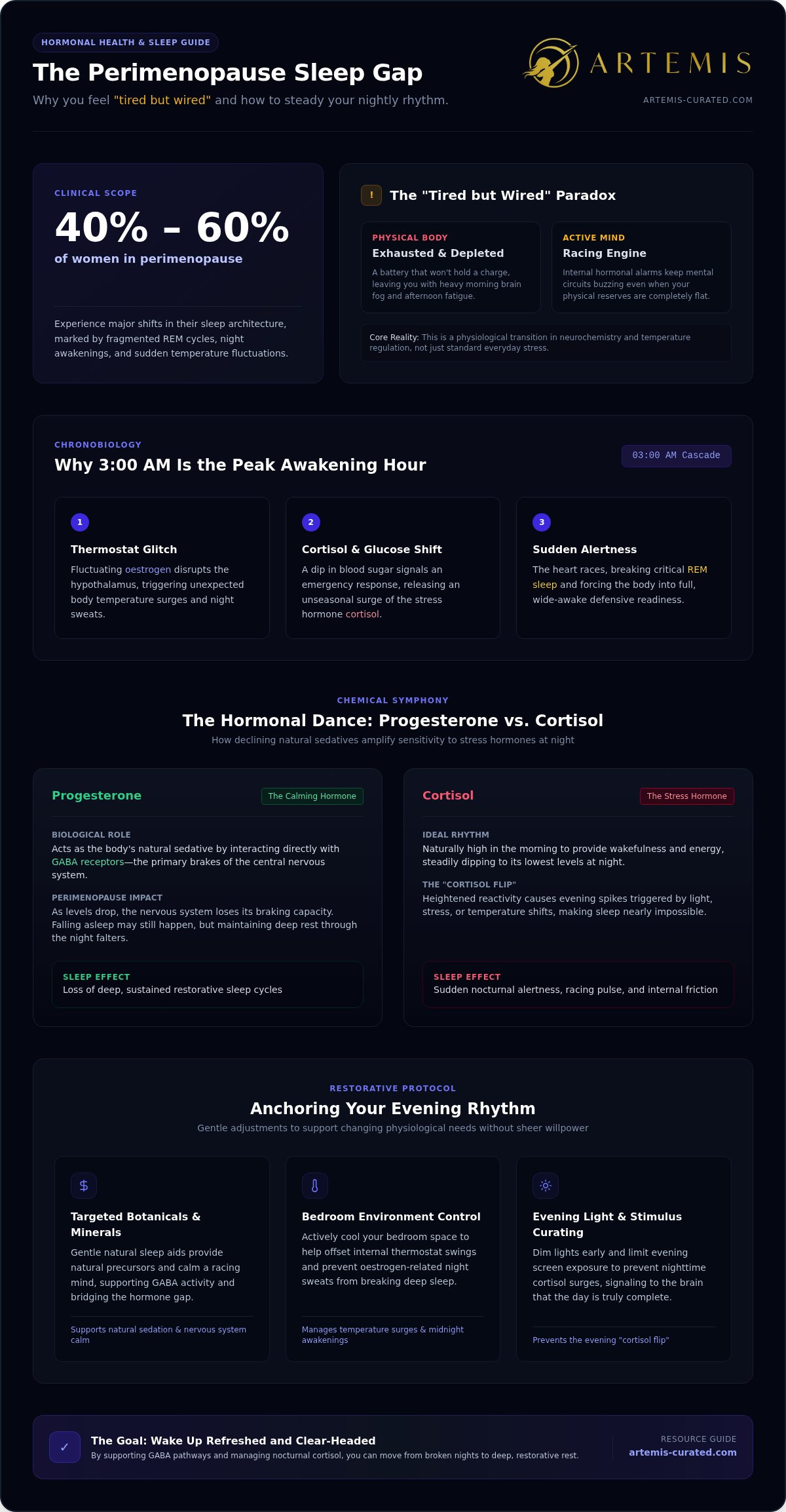
The weight of this chronic exhaustion is heavy. It colours your morning with brain fog and leaves you feeling brittle by the afternoon. When your REM sleep is constantly broken by night sweats, your body never gets the chance to truly repair itself. Research shows that between 40% and 60% of women experience these disruptions. It’s a significant number that highlights why finding a reliable natural sleep aid for perimenopause insomnia is such a priority for so many.
The 'Tired but Wired' Phenomenon
Imagine your body is a battery that won't charge, yet the engine is still revving. That is the "tired but wired" sensation. You’re desperate for the pillow, but once you’re there, your mind starts a marathon. Standard advice like "avoid caffeine" or "read a book" often feels hollow because it doesn't address the internal hormonal storm. This state doesn't just ruin your night; it bleeds into your day, making focus difficult and mood stability much harder to maintain.
Why 3 AM is the Magic Hour for Wakefulness
There is a specific reason you often wake up at exactly 3 AM with a racing heart. As oestrogen levels fluctuate, your body’s ability to regulate its internal thermostat falters. A sudden surge in temperature triggers a wake-up call, often followed by a spike in cortisol, the stress hormone. Your blood sugar might also dip, prompting your body to wake you up for "safety." It’s a complex physiological puzzle. Finding the right support in a curated collection of supplements can help quiet these internal alarms. A targeted natural sleep aid for perimenopause insomnia works to bridge the gap between your shifting hormones and your need for restorative rest, helping you stay asleep when your body wants to bolt upright.
The Hormonal Dance: Progesterone, Cortisol, and Your Nightly Rhythm
Sleep isn't just a period of inactivity. It's a carefully choreographed chemical process. During perimenopause, the lead dancers, progesterone and cortisol, start to miss their cues. Progesterone is often called our "calming" hormone because it helps the brain switch off and stay off. As its levels decline, your body loses its natural sedative, leaving you more vulnerable to every small noise or stray thought. This shift is a primary reason why a natural sleep aid for perimenopause insomnia becomes such a vital tool for reclaiming your night.
When progesterone levels are low, your body becomes far more sensitive to cortisol, the stress hormone. Ideally, your cortisol should be high in the morning and low at night. However, many women experience a "cortisol flip" where stress hormones peak at night instead of the morning. This creates a state of internal friction that makes true rest nearly impossible. Cultivating inner harmony and vitality requires us to address this rhythm directly rather than just trying to force sleep through sheer willpower.
Progesterone: The Architect of Calm
In the brain, progesterone interacts with GABA receptors, which are essentially the "brakes" of the central nervous system. When these receptors are stimulated, they signal the body to relax and drift into deep sleep. The "progesterone drop" means those brakes aren't being applied effectively. You might fall asleep fine, but you'll struggle to maintain that state through the night. Using natural precursors and support can help encourage this system to function more smoothly, providing the foundation for a more stable evening.
Managing the Cortisol Surge
The perimenopausal body is simply more reactive to the world around it. Stressors that you might have brushed off a few years ago now trigger a full-blown physiological response. Evening light from screens or a stressful conversation can send cortisol surging just when it should be dipping. Following the National Institute on Aging's advice on sleep issues, such as cooling your environment and dimming lights early, helps signal to your brain that the day is done.
By incorporating a natural sleep aid for perimenopause insomnia alongside these habits, you provide your nervous system with the quiet it needs to recover. If you find your rhythm is consistently out of sync, exploring The art of harmony can help support your body through these hormonal swings. It's about finding a balance that feels sustainable and supportive for your unique journey.
Evaluating Natural Sleep Aids: Which Ingredients Actually Work?
Choosing a natural sleep aid for perimenopause insomnia isn't about finding a quick fix or a "magic pill." Instead, it's about selecting specific ingredients that speak the same language as your changing body. Many high-street options offer generic vitamins in forms that are difficult for the body to absorb, leading to little more than frustration. A more thoughtful approach involves looking for curated blends where each component works in harmony to address both the physical and mental barriers to rest.
While single high-dose vitamins can sometimes overwhelm the system, a balanced blend mimics the complexity of our own biology. This synergy ensures that you're not just sedating the brain, but supporting the entire nervous system. By looking for purity and intentional sourcing, you can find support that feels sustainable for long-term use throughout your transition.
Magnesium: The Mineral of Relaxation
Magnesium is essential, but the form you choose matters immensely. We focus on Magnesium Glycinate (or bisglycinate) because it is bound to the amino acid glycine, which has its own calming effects on the brain. Unlike cheaper forms like magnesium oxide, which often cause digestive upset, glycinate is gentle and highly absorbable. It helps regulate muscle tension and quietens the nervous system, making it much easier to drift off. For the best results, take your magnesium about 30 to 60 minutes before you plan to sleep. You can find more detail on why this mineral is so effective in our guide to magnesium for a calm night.
Adaptogens for Hormonal Resilience
Perimenopause makes your body more reactive to stress, which is where adaptogens like Ashwagandha become invaluable. These botanicals help your body "adapt" to cortisol fluctuations, preventing the midnight spikes that lead to sudden wakefulness. A 2026 study published in the journal Menopause showed that 600mg of ashwagandha root extract significantly improved sleep quality scores for women in midlife. When paired with L-Theanine, an amino acid found in green tea, it promotes alpha brain waves. This creates a state of deep relaxation without the heavy, groggy feeling the next morning.
The Role of Botanical Support
Traditional aids like Valerian root and Lemon Balm have been used for generations to soothe a restless mind. Modern science also highlights the role of 5-HTP, a natural precursor to serotonin and melatonin, which helps regulate your internal clock. Following the National Institute on Aging's guide to menopause and sleep problems, it's clear that non-pharmacological support can be incredibly effective. By choosing a natural sleep aid for perimenopause insomnia that prioritises botanical purity, you're investing in a ritual that supports your body's natural wisdom and long-term vitality.
Creating a Sanctuary for Rest: Beyond the Supplement Bottle
While finding a reliable natural sleep aid for perimenopause insomnia is a vital first step, the space where you close your eyes matters just as much. Think of your bedroom as a dedicated sanctuary, a place where the frantic pace of the day is strictly forbidden. It isn't just about aesthetics; it's about creating a sensory experience that tells your nervous system it's safe to let go. When you curate your environment with the same care you give your health, you build a bridge to deeper, more restorative sleep.
Temperature is perhaps the most critical environmental factor during this transition. Clinical guidelines suggest that a room kept between 15 and 19 degrees Celsius is ideal for preventing the night sweats triggered by oestrogen shifts. Alongside this, consider a "digital sunset." Removing blue light from screens at least two hours before bed allows your brain to produce its own melatonin without interference. It's a simple change that yields significant results for your nightly rhythm.
The Sensory Environment
Texture plays a quiet but powerful role in how we rest. Choose breathable linens, like high-quality cotton or linen, which help wick away moisture and keep your body cool through the night. Your sense of smell is also directly linked to the limbic system, the brain's emotional centre. Scents like lavender or cedarwood can lower your heart rate almost instantly, signaling a shift into rest mode. Finally, clear the visual noise. A clutter-free space reduces the subconscious "to-do" list that often keeps us awake when we should be drifting off.
Rituals for Inner Harmony
Your mind needs a way to offload the day's weight. Journaling for ten minutes can act as a "brain dump," capturing those 3 AM anxieties before they have a chance to wake you up. Combine this with gentle movement, such as light stretching, to release the physical cortisol that builds up in your muscles during a busy day. Consistency is your greatest ally here. By sticking to a similar schedule every night, you reinforce your body's natural circadian rhythm, making your natural sleep aid for perimenopause insomnia even more effective. Ready to transform your evening? Explore the Full Curated collection to find the perfect anchor for your nightly ritual.
Curating Your Evening with 'The Art of Sleep'
Embracing a new evening ritual is a quiet act of rebellion against the exhaustion that so often defines midlife. It’s about more than just closing your eyes. It’s about choosing to support your body with intentionality. We believe that your supplement routine should feel like an act of self-care, a moment of pause before the day ends. 'The art of sleep' was designed by Milly and Sarah to serve as a targeted natural sleep aid for perimenopause insomnia, focusing on the specific physiological needs we’ve explored. By pairing it with The art of harmony, you create a comprehensive support system that addresses hormonal fluctuations from sunrise to sunset.
We don't chase fleeting wellness trends or mass-produced formulas. Instead, we focus on the soul of the ingredients and the history of their effectiveness. This commitment to quality ensures that every capsule contributes to your larger personal story of health and vitality. When you choose supplements that are carefully selected rather than merely consumed, you’re investing in a long-term philosophy of living well. It’s a soulful approach to a very physical challenge.
Why 'The Art of Sleep' is Different
Most standard sleep aids rely on heavy sedation, which often leads to a heavy, groggy feeling the next morning. Our formula possesses a quiet authority, using a well-researched blend of Magnesium Bisglycinate, Ashwagandha, and L-Theanine to calm the perimenopausal mind without the side effects. We’ve focused on the "tired but wired" sensation specifically, ensuring the ingredients help lower your core temperature and quieten the racing heart that often accompanies a 3 AM wake-up. It’s a simple, elegant solution for a complex transition.
A Holistic Approach to Menopause
Better rest is the foundation for everything else. When you reclaim your nights, you’ll notice a significant shift in your daytime vitality. Irritability starts to soften. The thick brain fog that makes simple tasks feel monumental begins to lift. For those seeking total support, the Full Curated collection offers a way to manage every facet of this journey, from libido to skin radiance. Trust your body’s ability to return to balance. With the right natural sleep aid for perimenopause insomnia and a dedicated evening rhythm, you can move away from the frantic energy of exhaustion and back toward a state of restorative harmony. You deserve to wake up feeling like yourself again.
Reclaiming Your Nightly Rhythm
The journey through midlife shouldn't be defined by the quiet anxiety of a 3 AM wake-up call. By understanding the delicate shift between progesterone and cortisol, you can move from nightly frustration toward a state of deep, restorative peace. Whether you're cooling your sensory environment or choosing targeted botanicals, every small adjustment helps your body return to its natural rhythm. Finding a reliable natural sleep aid for perimenopause insomnia is an intentional step toward reclaiming your daytime vitality and mental clarity.
Milly and Sarah founded Artemis Curated to provide soulful, high-quality support designed specifically for the hormonal transition. We prioritize the integrity of our ingredients over fleeting trends, ensuring each formula works in harmony with your unique biology. To help you begin your journey toward better rest, we offer free UK shipping on all our full collections. It's time to treat your evening with the reverence it deserves and build a foundation for long-term wellness.
Explore 'The Art of Sleep' and our curated collections to find your essential evening anchor. You have the power to quiet the noise and wake up feeling like yourself again.
Frequently Asked Questions
What is the best natural sleep aid for perimenopause specifically?
The most effective support is one that addresses the unique "tired but wired" sensation caused by shifting hormones. We recommend "The art of sleep" because it combines Magnesium Bisglycinate with botanical adaptogens like Ashwagandha. This specific natural sleep aid for perimenopause insomnia helps lower your core body temperature and quietens a racing mind. It’s designed to work with your body’s changing chemistry rather than simply masking symptoms.
Can I take sleep supplements if I am also taking vitamins for menopause?
Yes, our collections are intentionally designed to be used together as part of a cohesive wellness ritual. Taking a natural sleep aid for perimenopause insomnia alongside "The art of harmony" provides a more holistic approach to your transition. While your daytime vitamins support energy and mood, your sleep support acts as an essential evening anchor. Just ensure you monitor your total magnesium intake across all supplements to stay within daily limits.
How long does it take for natural sleep aids to start working?
You may feel the relaxing effects of minerals like magnesium and amino acids like L-Theanine within thirty to sixty minutes of your first dose. However, botanical adaptogens often require consistent use to show their full potential for hormonal resilience. Clinical studies indicate that significant improvements in sleep quality and stress management typically peak after twelve weeks of daily use. Patience is a key part of returning your body to balance.
Will these natural remedies make me feel groggy in the morning?
Unlike traditional sedatives or heavy over the counter aids, our formulas support rest without causing a next day fog. By focusing on calming the nervous system rather than forcing unconsciousness, you can wake up feeling clear headed and refreshed. Ingredients like L-Theanine promote alpha brain waves, which encourage deep relaxation while maintaining mental clarity. You won't have to fight through a heavy, sluggish feeling when your alarm goes off.
Is it safe to use magnesium every night for sleep during perimenopause?
It is generally safe and often beneficial to use magnesium nightly, provided you don't exceed the recommended supplemental limits. The NIH suggests a tolerable upper intake level of 350 mg per day for supplemental magnesium in adults. Using a gentle form like Magnesium Bisglycinate helps avoid the digestive issues common with cheaper alternatives. Consistent nightly use helps maintain cellular levels, supporting both muscle relaxation and your nervous system through the transition.
What happens if I wake up in the middle of the night, can I take more?
We recommend sticking to your primary evening dose rather than taking more if you wake up at 3 AM. Taking supplements too close to the morning might lead to unwanted lingering effects as you start your day. Instead, focus on your pre sleep ritual to help prevent these awakenings from happening. If you do find yourself awake, try gentle breathing exercises to quiet your mind until you can naturally drift back.
Are there any side effects to botanical sleep aids like Ashwagandha?
Ashwagandha is widely considered safe and well tolerated for most women navigating the perimenopausal transition. Some individuals might experience very mild digestive upset when they first begin, though this often settles quickly as the body adjusts. It is always wise to consult with a healthcare professional if you have specific medical conditions or are taking prescribed medications. Our focus is on providing high quality, pure extracts that respect your body’s integrity.
0 comments