

You wake up on a Tuesday morning, checking your calendar against a rhythm that has guided you for decades, only to realize the rules have changed without your consent. Maybe your cycle arrived two weeks early, or perhaps it hasn't visited in months, leaving you in a state of quiet suspense. It's unsettling to feel like a stranger in your own skin, especially when unpredictable bleeding starts to dictate your schedule and your peace of mind. If you feel disconnected from your body's previous flow, you aren't alone in that frustration.
We understand the quiet anxiety that comes with perimenopause irregular periods and the constant questioning of whether these changes are normal. This is not a sign that your system is broken. It's an invitation to curate a new, supportive rhythm for your evolving self. This guide provides a serene space to understand the hormonal shifts occurring within you. You'll learn why your cycles are changing, receive reassurance on what to expect in 2026, and discover holistic ways to support this transition with grace and intentionality.
Key Takeaways
- Understand why your body is moving away from a rigid schedule toward a more fluid rhythm during this natural transition.
- Learn why perimenopause irregular periods happen as your hormones shift and how to navigate these changes with confidence.
- Discover how to tell the difference between normal cycle variations and times when you might need extra support.
- Explore how simple nutritional foundations and botanical blends can help you feel more like yourself again.
- See how "The art of harmony" can act as a gentle companion to help you find your balance once more.
Understanding the Shift: Why Your Cycle Changes During Perimenopause
Perimenopause is a long, lyrical transition. It isn't a sudden wall you hit, but a gradual softening of the rhythms you've known for years. For many women, perimenopause irregular periods serve as the very first signal that the seasons are shifting. This often happens in your late 30s or 40s, long before you might expect it. The predictable monthly beat begins to feel more like a fluid, erratic dance. Understanding the Shift: Why Your Cycle Changes is about more than just tracking dates on a calendar. It's about approaching your body with a sense of intentionality. Instead of viewing these changes as a loss of control, try to see them as a new internal narrative. You are moving away from a rigid structure toward a more flexible way of being. This shift requires a soulful appreciation for what your body has done and what it is becoming.
Recognising the First Signs of a Changing Rhythm
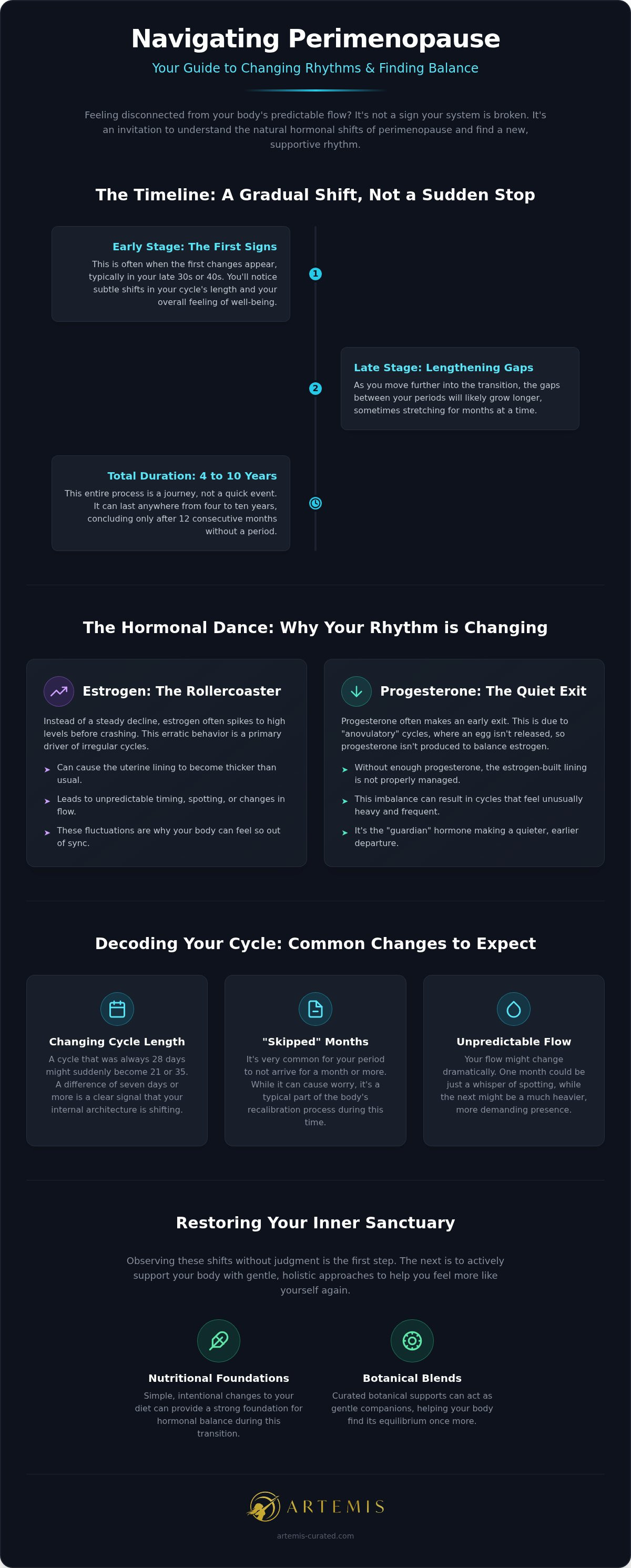
The first signs are usually quite quiet. A cycle that was always 28 days might suddenly become 21 or 35. Even a difference of seven days is a clear sign that your internal architecture is changing. You might experience "skipped" months, which can cause a lot of worry if you aren't expecting them. Your flow might change too. One month it's just a whisper of spotting; the next, it's a much heavier, more demanding presence. These variations are the body's way of navigating a new landscape. It's natural to feel a bit disconnected when your previous rhythm disappears. However, these changes are simply the physical expression of a deeper hormonal transition. Taking the time to observe these shifts without judgment is the first step in reclaiming your sense of balance.
The Timeline of the Menopausal Transition
It's helpful to know that this isn't a quick process. The transition can last between four and ten years, moving through early and late stages. In the early stage, you'll mostly see those perimenopause irregular periods and subtle shifts in how you feel. As you enter the late stage, the gaps between your cycles will likely grow longer, sometimes stretching for months at a time. This is a period of significant recalibration. The journey only truly concludes when you've experienced twelve months of silence. Knowing this timeline allows you to settle into the process. It gives you the space to curate your wellness and find balance in the midst of the erratic. If you're looking for ways to support your body through these stages, you can explore our curated collection of botanical supports designed for this specific journey.
The Hormonal Architecture: Why Oestrogen and Progesterone Disrupt Your Rhythm
Your hormones act as the quiet architects of your internal sanctuary, working in a delicate partnership to maintain your monthly flow. For years, the communication between your brain and your ovaries followed a precise cadence. But as you enter this new phase, that dialogue begins to falter. The Hormonal Architecture: Why Oestrogen and Progesterone Disrupt Your Rhythm isn't just about a steady decline. Instead, it's often a chaotic transition where your body tries to find its footing. This erratic hormonal landscape is what creates the experience of perimenopause irregular periods, as the once-reliable signals become faint or unpredictable.
Oestrogen: The Architect of Vitality and Balance
Oestrogen is responsible for building the uterine lining each month. In a typical cycle, it rises gracefully, but during perimenopause, it often behaves like a rollercoaster. It doesn't just drop; it frequently spikes to surprisingly high levels before crashing. These dramatic fluctuations are a primary cause of perimenopause irregular periods. When oestrogen levels stay high for too long without being balanced by progesterone, the uterine lining can become thicker than usual. This leads to unpredictable timing or unexpected spotting. Gaining a deeper sense of Understanding Oestrogen helps you see why your body feels so out of sync. It isn't failing; it's simply responding to a changing blueprint.
Progesterone: The Guardian of the Cycle's End
While oestrogen builds, progesterone is the steady hand that maintains and eventually signals the body to shed the uterine lining. During this transition, progesterone often makes a quiet, early exit. This happens because you may start to have "anovulatory" cycles, where your ovaries don't release an egg. Without ovulation, your body doesn't produce enough progesterone to balance the oestrogen. The result is often a cycle that feels heavy and frequent, or perhaps one that disappears for months only to return with a much more intense presence. This lack of a "stop" signal is why many women find their periods becoming much more demanding of their energy and attention.
Finding balance in the midst of this architectural shift requires a gentle, intentional approach. You can support your body's natural resilience by exploring The art of harmony, which is designed to provide soulful botanical support as you navigate these internal changes.
Decoding Your Cycle: Distinguishing Normal Changes from Concerns
As your body moves through this transition, it begins to speak in a different dialect. The steady, predictable rhythm you've known for years is evolving into something more fluid. Learning to interpret this new voice is a vital part of caring for yourself. It isn't just about tracking dates on an app; it's about developing a soulful awareness of your internal state. Understanding perimenopause irregular periods involves distinguishing between the natural noise of hormonal recalibration and signs that your body needs extra support. By listening closely, you can move from a place of uncertainty to one of quiet confidence.
The Spectrum of Perimenopausal Bleeding
Shortened cycles are often the first thing you'll notice. When your period starts arriving every 21 days or even sooner, it can feel like you're constantly in a state of flux. This happens because the follicular phase of your cycle is speeding up as your ovaries respond differently to brain signals. Then there's the question of flow. Menorrhagia, or very heavy bleeding, is common but can be exhausting. If you're finding that you need to change your protection every hour or if large clots are present, your body is sending a clear signal. Perimenopause and its symptoms often include these breakthrough moments where oestrogen builds up the lining without enough progesterone to keep it in check. Spotting between your cycles is another part of this narrative, acting as a small, erratic interruption in your usual flow.
When to Seek Professional Guidance
While most changes are a normal part of the journey, some red flags deserve professional attention. The most significant is the 12-month rule. Once you've gone a full year without a period, you've officially reached menopause. Any bleeding at all after this point, even a tiny amount of spotting, should be discussed with a healthcare provider. It's also important to watch for signs of anaemia. If you feel a deep, lingering fatigue or find yourself breathless after a short walk, your iron levels might be low. This is often linked to low ferritin, which is your body's iron storage. Heavy perimenopause irregular periods can quickly deplete these stores, leaving you feeling physically and emotionally drained.
Gaining clarity through Blood Tests for Women can help you understand exactly what's happening beneath the surface. It turns guesswork into a clear plan for your vitality. By tracking your personal patterns, you move away from anxiety and toward a sense of empowered selection in your wellness journey. You deserve to feel supported as your rhythm finds its new shape.
Restoring Your Inner Sanctuary: Holistic Support for Irregular Periods
Taking care of yourself during this time is about more than just checking boxes. It's a shift from consuming wellness to curating it with purpose. When you're dealing with perimenopause irregular periods, your body is essentially asking for a softer, more intentional approach to daily life. This isn't about fixing something that's broken. It's about supporting a system that's finding a new way to exist. By focusing on foundational nutrition and managing your internal environment, you can help your body navigate these changes with much more ease. Creating a daily ritual that honours your changing needs allows you to reclaim a sense of calm and stability.
Nourishing the Hormonal Landscape
Magnesium and Vitamin D are essential for supporting a healthy cycle. Magnesium helps calm the nervous system, while Vitamin D acts more like a hormone than a vitamin, helping to regulate your internal rhythm. Phytoestrogens, found in plants like flaxseeds and organic soy, speak a language your body understands. They provide a gentle way to balance your own levels. Keeping your blood sugar steady is also a secret to calmer hormones. When you avoid the spikes and crashes of processed sugars, you give your body the steady ground it needs to maintain resilience. This simple act of selection can significantly reduce the intensity of your symptoms.
Curating a Rhythm of Rest
Sleep quality and menstrual regularity are deeply connected. When your rest is fragmented, your body's ability to regulate hormones is compromised. Managing the "cortisol spike" is vital for protecting your evening sanctuary. High stress levels tell your body to prioritize survival over reproduction, which often makes perimenopause irregular periods even more erratic. By learning about Curating the Rhythm of Inner Harmony, you can begin to lower your stress response. This allows your body to focus on restoration rather than constant alertness. A peaceful evening routine isn't a luxury; it's a necessary part of your hormonal care.
If you're finding it difficult to establish these rhythms at home, you might visit Oregon Wellness Retreat for a dedicated experience designed to help you restore your internal sanctuary.
If you're ready to bring more balance to your daily routine, you can explore The art of harmony to support your body's natural rhythm with our specialized botanical blends.
The Art of Harmony: A Curated Approach to Perimenopausal Wellness
The art of harmony was created to be a companion for this specific season of life. It offers a refined alternative to synthetic options, using specialized botanical blends to help you find your footing when your internal rhythm feels erratic. By choosing supplements with purpose, you're not just managing symptoms. You're honouring the unique requirements of your own health. This approach allows you to embrace the evolution of your body with grace, knowing you have the tools to support your vitality. You deserve to feel like the lead architect of your own well-being.
A Targeted Collection for Menopause Support
Traditional multivitamins often take a generic approach, but perimenopause requires something much more specific. The art of harmony addresses the unique fluctuations we've discussed, from oestrogen spikes to the quiet exit of progesterone. The ingredients work in synergy to restore a sense of balance, helping you navigate perimenopause irregular periods without feeling overwhelmed. This curated approach ensures that every botanical element serves a clear purpose in your wellness narrative. It's about focusing on what truly resonates with your body's changing needs in 2026. You're selecting a path that prioritizes long-term harmony over temporary fixes.
Step into Your Next Chapter with Confidence
Menopause is often viewed as an end, but it's actually a time of profound personal growth. It's a chance to step into a new chapter with confidence and a deeper understanding of your own strength. Sharing these narratives with other women creates a powerful community where we can all learn from each other's journeys. You're moving toward a stage of life defined by wisdom and a refined sense of self. By curating your wellness now, you're setting the foundation for a future filled with radiance and poise. We invite you to Explore the Full Curated Collection and find the support that speaks to your story.
Curating Your New Internal Rhythm
As you navigate this transition, try to view these changes as a natural recalibration rather than a loss of control. Your body is moving toward a different phase, and while perimenopause irregular periods can feel unsettling, they're also a call to listen more closely to your internal needs. You've learned that understanding your hormonal architecture and recognizing your own personal patterns are the first steps toward reclaiming your vitality. By making intentional choices about your rest and nutrition, you can find a sense of steady ground again.
Our co-founders, Milly and Sarah, created Artemis Curated to provide a soulful approach to women's wellness during these years. Every one of our botanical blends is designed for hormonal harmony, offering you a purposeful way to support your system. You don't have to navigate this journey alone or settle for generic solutions. Instead, you can choose a path that respects your body's history and its future growth.
Discover 'The art of harmony' for holistic menopause support and begin your next chapter with confidence and grace. You have the authority to define this season of your life.
Frequently Asked Questions
Can perimenopause cause a period every two weeks?
Yes, it's quite common for cycles to shorten to 21 days or even less during this transition. This happens because your body speeds up the process of preparing an egg as your hormones begin to fluctuate. It can feel like your rhythm is constantly interrupted. While frequent bleeding is often part of the natural narrative, you should always check with a professional if it becomes exhausting or unmanageable.
What is the typical age for perimenopause irregular periods to start?
Most women begin to notice perimenopause irregular periods in their early to mid-40s, though it can start as early as the late 30s. Every woman's timeline is unique, resembling a slow, unfolding story rather than a sudden change. According to research from 2025, symptoms like hot flashes and vaginal dryness often appear around this same time, signaling that your internal architecture is shifting toward a new phase.
How can I tell the difference between perimenopause and a thyroid issue?
Distinguishing between these two can be difficult because symptoms like fatigue and weight changes often overlap. A thyroid issue might cause more consistent cold intolerance or hair loss, while perimenopause usually involves specific cycle changes and hot flashes. The only way to be certain is through precise blood testing. You'll want to look at both your thyroid hormones and your follicle-stimulating hormone levels to get a clear picture.
Is it normal to have a very heavy period during perimenopause?
Yes, very heavy periods are a frequent experience during this time of life. When oestrogen levels remain high without enough progesterone to balance them, the uterine lining builds up more than usual. This leads to a much heavier presence when your period finally arrives. If you find you're changing protection every hour or seeing large clots, it's a sign to seek a bit more guidance from a professional.
Can stress make perimenopause irregular periods worse?
Stress absolutely plays a role in making perimenopause irregular periods more erratic and difficult to manage. High levels of cortisol can act as a disruptor, drowning out the delicate communication between your brain and your ovaries. When your body is in survival mode, it often deprioritizes your reproductive rhythm. Creating a daily ritual of rest helps protect your internal sanctuary from these external demands.
How long does the irregular period phase of perimenopause usually last?
The irregular phase of this transition typically lasts anywhere from four to ten years before menstruation stops completely. It's a long, lyrical process that moves through different stages of intensity. You might have years of subtle changes followed by a more erratic late stage. Remembering that this is a decade-long journey can help you settle into the process with more patience and grace.
Are there natural supplements that help regulate perimenopause cycles?
Yes, specialized botanical blends and foundational nutrients like Magnesium and Vitamin D can help restore a sense of balance. We've designed "The art of harmony" specifically to act as a companion during these fluctuations. These natural selections work in synergy with your body's own language. They offer a soulful alternative to synthetic options, focusing on holistic resilience rather than just masking the symptoms.
Should I be worried if I skip my period for three months in my 40s?
Skipping your period for three months is usually a normal sign that you've entered the late stage of perimenopause. It isn't a cause for worry on its own, but it does signal that your body is getting closer to the final twelve months of silence. Keep a quiet, intentional record of these gaps. This tracking helps you understand your evolving rhythm and provides clear information if you decide to consult a professional.
0 comments