

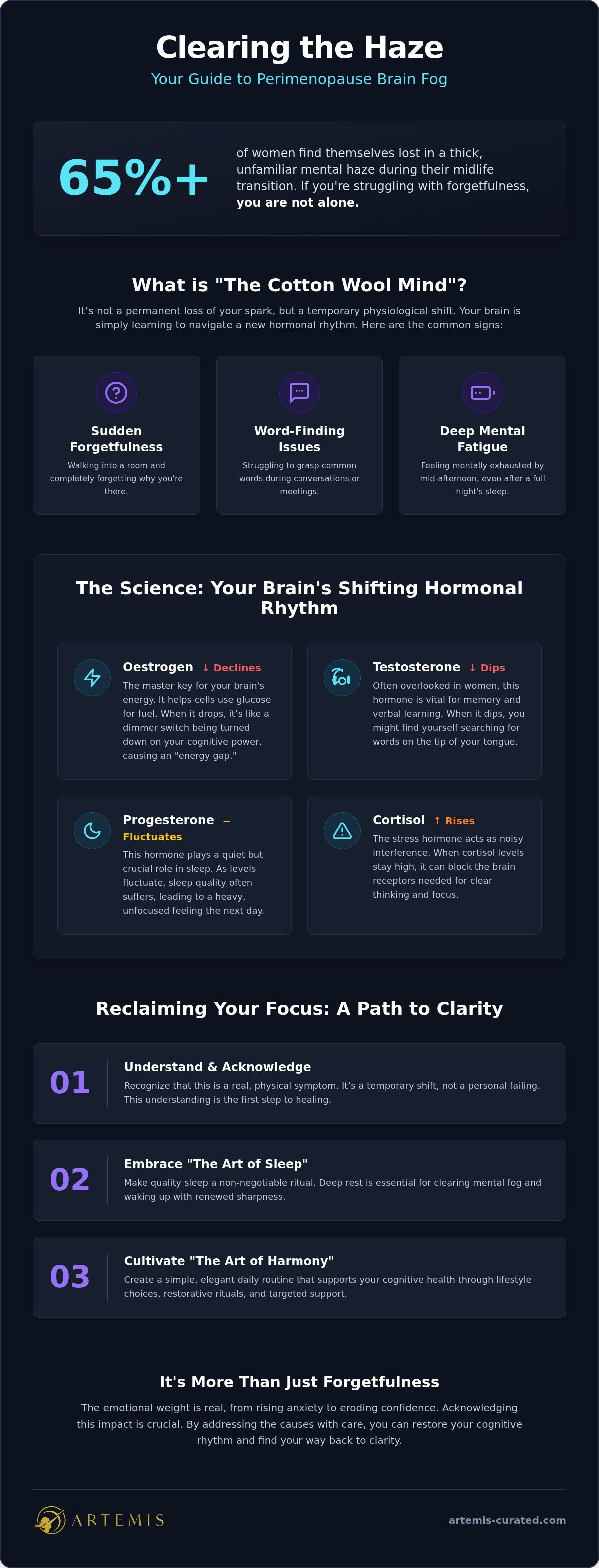
Did you know that over 65% of women find themselves suddenly lost in a thick, unfamiliar haze during their midlife transition? It's a startling figure that confirms you aren't alone in your forgetfulness. When you're standing in the kitchen wondering why you walked in, or struggling to find a simple word during a meeting, it's natural to feel a flicker of fear. Understanding perimenopause brain fog causes is the first step toward reclaiming your narrative. This isn't a permanent loss of your intellectual spark; it's a physiological shift where your brain is learning to navigate a different hormonal rhythm.
We understand the frustration of living with a cotton wool mind when you've always been the one with the sharpest focus. You deserve to feel like the conductor of your own thoughts again. We'll explore how to lift this mental mist through a thoughtful blend of hormonal science, restorative lifestyle rituals, and targeted supplemental support. We'll show you how to move from a place of cognitive anxiety to a daily routine that feels both simple and elegant. You'll discover a curated path to regain your mental sharpness and protect your long-term cognitive health.
Key Takeaways
- Understand that the "cotton wool" feeling is a natural, temporary shift in your body rather than a permanent loss of your mental spark.
- Discover how oestrogen affects your brain’s energy levels and why identifying perimenopause brain fog causes is the first step to feeling like yourself again.
- Learn how to use "The art of sleep" as a nightly ritual to clear your mind and ensure you wake up with renewed mental sharpness.
- Find out how to create an elegant, easy-to-follow routine with "The art of harmony" to support your cognitive health and long-term vitality.
Understanding the Cotton Wool Mind: What Perimenopause Brain Fog Really Feels Like
Have you ever felt as though a thin, translucent veil has been dropped over your thoughts? One moment you're sharp, and the next, you're wading through a mental haze that feels heavy and dull. This is the "cotton wool mind." It's an experience that transforms the simple act of thinking into an arduous task. For many women, identifying the specific perimenopause brain fog causes is the first step toward clearing that mist. This isn't just about being a bit tired; it's a collection of cognitive symptoms that include sudden forgetfulness, word-finding issues, and a persistent lack of focus.
To put it simply, brain fog is a hormonal disruption of cognitive processing speed. It isn't a permanent decline or a sign of early-onset dementia, though the fear of that can be overwhelming. Instead, it's a temporary physiological shift. Clinically, this state is often discussed as Postmenopausal confusion, a term that highlights how our internal chemistry dictates our mental clarity. When we understand that our brain is simply reacting to a new environment, we can stop the panic and start the healing.
Common Signs You Shouldn't Ignore
These moments often arrive uninvited during the most inconvenient times. You might find yourself experiencing these specific disruptions to your daily flow:
- Walking into a room and standing there, completely forgetting why you entered, as if the purpose vanished at the threshold.
- Struggling to grasp common words during professional meetings, feeling a visible gap where a clear thought used to be.
- Noticing a deep mental fatigue that sets in by mid-afternoon, even if you managed a full night's sleep.
The Emotional Toll of Cognitive Mist
The impact goes far beyond simple forgetfulness. There's a profound emotional weight to this shift. It often contributes to a rising sense of perimenopausal anxiety and an unsettling feeling that you're losing your sense of self. When you can no longer rely on your memory, your confidence in the workplace and social settings can start to erode. You might pull back from conversations or hesitate to take on new projects. Acknowledging that this is a real, physical symptom is the essential first step toward intentional treatment. By choosing to address these changes with care, you can begin to restore your cognitive rhythm and find your way back to clarity.
The Science of Mental Clarity: How Hormonal Shifts Disrupt Your Focus
To understand why your thoughts occasionally feel like they're moving through heavy water, we must look at the delicate chemistry of the female brain. Oestrogen is far more than a reproductive hormone. It acts as a master key for energy. It helps your brain cells absorb and use glucose for fuel while supporting the intricate connections between neurons. When levels begin to swing during midlife, an energy gap opens up. Your brain literally struggles to maintain its usual power levels, which is one of the primary perimenopause brain fog causes.
It isn't just oestrogen playing a part. Testosterone, often overlooked in women, is vital for memory and verbal learning. When it dips, you might find yourself reaching for a word that was on the tip of your tongue only seconds ago. Progesterone also plays a quiet but crucial role. As it fluctuates, your sleep quality often suffers. This lack of deep rest leads to a heavy, unfocused sensation the next morning. Exploring a holistic treatment for perimenopause brain fog involves addressing all these shifting elements together.
Oestrogen and the Brain’s Fuel Supply
Declining oestrogen creates a temporary deprivation state in your brain cells. It’s like a dimmer switch being turned down on your cognitive processing. You might notice that hot flushes are often followed by a "short circuit" in your thinking. This happens because the same part of the brain that regulates temperature also manages memory. Your mind feels exhausted even when you haven't been physically active because it's working twice as hard to process simple information.
The Cortisol Connection
Stress hormones act as a noisy interference in an already crowded mental space. When cortisol remains high, it blocks the receptors your brain needs for clear thinking. Identifying these perimenopause brain fog causes allows you to move away from frustration toward a more intentional way of living. Finding a rhythm of inner harmony is essential to protect your focus from these spikes. You can learn more about managing this in our guide to Cortisol: Curating the Rhythm of Inner Harmony and Vitality.
By balancing these internal shifts, you create a sanctuary for your thoughts to thrive. If you're ready to begin your journey toward balance, you might find support in our curated collections designed for this very transition.
Navigating Treatment Options: Balancing Clinical Advice with Holistic Support
Choosing how to address the mental haze of midlife is a deeply personal act of selection. While we've explored the biological perimenopause brain fog causes in previous sections, this stage of the journey is about finding the right tools to restore your clarity. It's helpful to view treatment not as a way to mask a symptom, but as a path to return your body and mind to a state of harmony. Whether you choose a clinical route, a holistic one, or a thoughtful blend of both, the goal remains the same: regaining your sense of focus and your sense of self.
Hormone Replacement Therapy (HRT) is a frequent choice for many women in the UK. By replacing the oestrogen and testosterone that have begun to fluctuate, HRT aims to bridge that energy gap in the brain we discussed earlier. It can help the brain return to its usual efficiency in processing information and managing daily tasks. However, medical support is often most effective when it sits alongside a supportive lifestyle. Consulting with a professional allows you to get a tailored medical view, ensuring that any clinical steps you take work in concert with your broader wellness rituals.
The Power of Botanical and Nutritional Support
For those who prefer to start with a non-clinical approach, or for those looking to enhance their existing routine, botanical and nutritional support offers a powerful way to build cognitive resilience. Specific vitamins and high-quality herbs can nourish the nervous system, helping you stay grounded even when internal shifts feel unpredictable. This type of support focuses on the long-term health of your brain cells rather than a temporary fix.
We believe in moving away from the frantic world of mass-produced wellness. Instead, we focus on the intentional selection of ingredients that possess a true sense of purpose and quality. Supporting your body during this time requires a gentle, reverent approach to what you consume. You can explore our Artemis Curated for curated menopause support designed to act as a foundational tool for your daily harmony. It's about collecting the right elements to support your unique cognitive rhythm and finding beauty in the process of self-care.
Practical Rituals for Focus: Lifestyle and Supplemental Support
Establishing a daily rhythm is more than a matter of productivity. It's a way to anchor the mind against the shifting tide of perimenopause brain fog causes. By choosing intentional rituals, you create a space where mental clarity can return. This isn't about rigid rules, but about selecting habits that honour your body’s current needs. When the world feels fast and your thoughts feel slow, these practices offer a sanctuary of focus.
Rest serves as the foundation of this structure. We often speak of "The art of sleep" because deep rest acts as a vital nightly brain wash, allowing the glymphatic system to clear away metabolic waste. Without this process, the mental mist only thickens. To support this, Magnesium is indispensable for fostering both restorative sleep and a sense of cognitive calm. Nutrition plays an equally quiet, powerful role. A Mediterranean-style approach, rich in Omega-3s and antioxidants, provides the essential nutrients your brain requires to maintain its structural integrity.
Cognitive hygiene is another essential layer of support. In an age of constant digital noise, the act of single-tasking becomes a form of mental preservation. By focusing on one thing at a time, you reduce the strain on your cognitive processing speed. It's a simple, elegant way to protect your energy from being scattered. By addressing the underlying perimenopause brain fog causes through these daily choices, you begin to rebuild your cognitive resilience.
Curating Your Daily Routine
Your morning sets the tone for the hours that follow. Simple rituals, like a few moments of quiet reflection or a deliberate cup of tea, establish a baseline of calm. If you find your thoughts becoming cluttered, a "brain dump" can be incredibly effective. By writing down every task and worry, you offload the cognitive burden and reduce the underlying anxiety that often accompanies forgetfulness. For a tactile approach to grounding yourself, you can discover Worry Rings designed to support wellness and focus. Gentle movement is also key. Regular, low-impact exercise stimulates the production of brain-derived neurotrophic factor (BDNF), which encourages the growth and health of brain cells.
While food provides the foundation, targeted supplements act as the building blocks for mental energy. Vitamin D and B-vitamins are essential for neurotransmitter health and maintaining steady energy levels throughout the day. Adaptogens are also worth considering, as they help your body manage the cortisol response, preventing the stress-induced flare-ups of brain fog we discussed earlier. For a deeper look at these options, you can explore our Best Supplements for Women in 2026. Selecting the right support is an act of self-respect.
If you are ready to reclaim your mental sharpness, we invite you to explore The art of harmony collection and begin your journey toward lasting clarity.
Cultivating Harmony: How Targeted Selections Restore Your Cognitive Rhythm
Regaining your mental focus isn't a task to be rushed. It is an act of curation. We have spent time exploring the various perimenopause brain fog causes, from the energy gaps created by declining oestrogen to the noisy interference of cortisol. Now, the path forward involves shifting from a place of frustration to a narrative of intentional self-care. Your health is a story you are writing. Every choice you make contributes to the harmony of the whole, and selecting the right support is where that story begins to change. Understanding the various perimenopause brain fog causes is a powerful first step, but the true transformation happens when you move into action with purpose.
At Artemis Curated, we believe in the power of the edit. Our foundational collection, 'The art of harmony', is designed specifically to support the 'architect of female vitality'-your intricate endocrine system. By focusing on high-quality botanical blends rather than a cluttered cabinet of mass-produced options, you can begin to restore your cognitive rhythm. This isn't just about masking a symptom; it's about providing your body with the building blocks it needs for lasting resilience. When you choose with intentionality, you move away from mere consumption toward a philosophy of living well. A curated routine. A focused mind. A sense of self restored.
The Art of Harmony: Menopause Support
This collection addresses the multifaceted symptoms of midlife, including the mental mist that can feel so isolating. We focus on quality over quantity. Your cognitive health deserves ingredients selected for their purity and history. By integrating these into your daily life, you create a steady foundation for mental clarity. You can find more guidance on this journey in our Navigating Menopause: A Curated Guide to Holistic Harmony, which explores how to align your lifestyle with your body's changing needs. It is about collecting the right elements to support your unique cognitive rhythm and finding beauty in the process of self-care.
The Art of Sleep: Deep Rest for Clear Minds
Daytime clarity is deeply intertwined with how you spend your nights. 'The art of sleep' is an essential partner for any cognitive treatment during perimenopause. Deep, uninterrupted rest is where memory consolidation happens. It is the time when your brain processes the day, clears away the fog, and prepares for the next. Without it, even the best daytime rituals can only do so much. Final encouragement: clarity is a journey of small, intentional choices. By honouring your need for rest and support, you reclaim your focus and your vitality. Your mind is a sanctuary; treat it with the reverence it deserves.
Reclaiming Your Focus and Mental Clarity
You've now seen that the "cotton wool" mind isn't a permanent fixture of your life. It's a signal from your body that things are shifting. By identifying perimenopause brain fog causes, you've taken the first step toward clearing the mist. Mental sharpness returns when you prioritise deep rest and high-quality nutritional support. Choosing a path that feels authentic to you means moving away from the noise of the mass-produced and embracing a more intentional way of living.
Our UK-based team at Artemis Curated, founded by women for women, is here to guide you through this transition. We believe in the power of holistic, high-quality collections to restore your inner rhythm. You don't have to navigate this haze alone. By making small, intentional choices every day, you can protect your cognitive health and rediscover the focus you thought was lost. We invite you to trust the process of selection and embrace the clarity that follows. You have the tools to feel like yourself again.
Discover 'The art of harmony' and curate your path to clarity.
Frequently Asked Questions
Is brain fog a permanent symptom of perimenopause?
No, it isn't a permanent decline. For most women, these cognitive glitches are a temporary part of the midlife transition. As your hormones eventually stabilise after menopause, you'll likely find that the mental mist begins to lift. It's a phase where your brain is simply learning to navigate a new chemical landscape. Understanding the underlying perimenopause brain fog causes allows you to manage this period with more patience and less fear.
Can vitamins and supplements really help with perimenopause brain fog?
Targeted supplements can be highly effective in bridging the energy gap within the brain. Nutrients like B-vitamins, Vitamin D, and Magnesium support the nervous system and help maintain steady neurotransmitter function. By selecting high-quality, intentional ingredients, you provide your brain with the building blocks it needs for better focus. It's about moving away from mass-produced options toward a more curated approach that honours your body's specific requirements during this shift.
How long does it take for brain fog treatments to work?
Consistency is the key to seeing a real change. Most women notice a gradual improvement in their mental clarity over four to twelve weeks of steady support. Natural treatments and lifestyle rituals work by gently restoring balance to your system rather than offering a quick, artificial fix. It's a slow and deliberate process of recalibrating your internal rhythm. Give your body the time it needs to respond to these new, supportive habits.
What is the best supplement for perimenopause brain fog in the UK?
Individual needs always vary, but we suggest "The art of harmony" as a foundational choice for women in the UK. This collection is designed to support cognitive balance through a carefully selected blend of botanicals. For the best results, many find that pairing it with "The art of sleep" creates a powerful synergy. This combination ensures your brain receives the deep, restorative rest required to maintain a sharp and clear mind throughout the day.
Does brain fog mean I am at higher risk for dementia?
Experiencing cognitive glitches during perimenopause doesn't mean you're developing dementia. While the forgetfulness can feel frightening, it's usually tied to fluctuating oestrogen levels rather than permanent brain damage. These symptoms are a reflection of a physiological transition, not a neurodegenerative condition. Focusing on brain-healthy rituals now, such as a Mediterranean-style diet and regular movement, is a proactive and positive way to care for your long-term cognitive health and vitality.
Can stress make perimenopausal brain fog worse?
Stress is a major contributor to mental haze. High cortisol levels interfere with your brain's ability to process information clearly, which often intensifies the impact of perimenopause brain fog causes. When you're under pressure, your cognitive processing speed naturally slows down. Creating a daily sanctuary through calming rituals helps protect your focus from these external spikes. Balancing your stress response is essential for maintaining a sense of inner harmony and mental sharpness.
Should I see a doctor for my perimenopause brain fog?
It's always a good idea to speak with a GP if your symptoms are affecting your quality of life or causing you significant worry. A doctor can help rule out other potential issues, such as thyroid imbalances or vitamin deficiencies, which can sometimes mimic hormonal fog. They can provide a professional medical perspective that works in harmony with your holistic choices. Having that clinical reassurance often helps reduce the anxiety that can make cognitive symptoms feel worse.
0 comments