

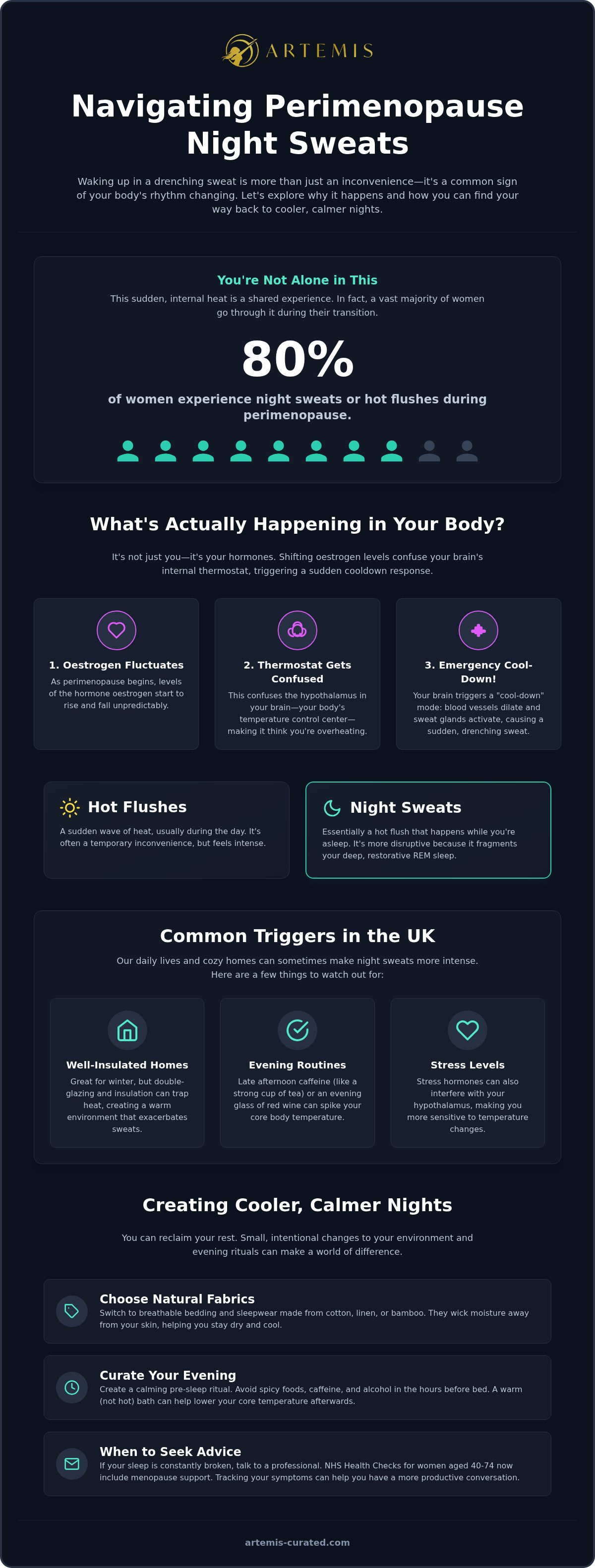
You wake at 3 AM to find the duvet feels like a heavy, damp weight, while the familiar chill of a British evening feels a world away. It's a jarring, humid heat that leaves you tangled in linen and wide awake. If you're struggling with perimenopause night sweats UK, you aren't alone. Recent data suggests that about 80% of women experience these sudden temperature spikes during their transition. It's more than just a physical symptom; it's a disruption of your personal sanctuary that leaves you feeling out of sync with your own natural rhythm.
We understand the chronic exhaustion that follows these broken hours and the confusion of weighing up different paths to find relief. You deserve to feel at home in your body again. This guide will help you understand why these shifts happen and show you how to reclaim your rest through gentle, holistic rituals. We'll look at the latest 2026 health updates and explore how to curate an evening routine that restores a sense of harmony and control to your nights.
Key Takeaways
- Learn the difference between simply feeling warm and the drenching night sweats that signal a shift in your hormonal rhythm.
- Discover why perimenopause night sweats UK can be more intense due to our well-insulated homes and how your body's internal thermometer is reacting.
- Find out how to curate a cooler, more restful sleep environment by choosing natural fabrics and intentional evening rituals.
- Understand the role of progesterone in deep sleep and why falling levels might be leaving you feeling wide awake at 3 AM.
- Explore a holistic approach to managing your symptoms that focuses on restoring balance and reclaiming your sense of calm.
What Are Perimenopause Night Sweats?
Night sweats are more than just a restless night. They are what experts call vasomotor symptoms, which is a specific term for your body's temperature control system reacting to shifting hormones. For many women, experiencing perimenopause night sweats UK is the very first whisper that their internal rhythm is changing. It isn't just about feeling a bit too warm because the central heating is on. It's a deep, internal heat that can leave you feeling drenched and startled awake in the middle of the night. This isn't just a mild discomfort. It is a genuine physical event that can leave your sheets damp and your mind racing, making it hard to fall back into a peaceful slumber.
Validating this experience is the first step toward managing it. Many women feel "out of sync" or confused when these symptoms first appear, especially if they haven't reached the age they typically associate with menopause. In 2026, we've come to recognise that these early signs are a call to listen more closely to our bodies. The impact on your daily vitality is real. When your nights are fragmented, your mood, focus, and overall sense of well-being can feel strained. Recognising that this is a common, shared experience among a large majority of women helps shift the perspective from frustration to intentional care.
The Difference Between Night Sweats and Hot Flushes
While they come from the same place, night sweats have a unique way of interrupting your peace. A daytime hot flush might be a temporary inconvenience, but What are night sweats in the context of your rest? They are essentially hot flushes that occur during sleep, specifically targeting your REM cycle. You might feel a sudden, intense wave of heat that starts in your chest and moves upward, often followed by a lingering chill as your skin cools down. This cycle doesn't just wake you up. It prevents you from reaching the deep, restorative sleep that keeps you feeling vibrant. By 2026, there has been a much greater focus on how this lack of quality sleep affects our daily vitality and mental clarity.
When to Seek Advice from a Professional
Feeling out of sync with your body can be unsettling, but it's important to remember that this transition is a natural process. If your sleep is constantly broken or you're finding it hard to manage daily life, reaching out to a professional is a wise step. As of 2026, NHS Health Checks in England for women aged 40 to 74 now include menopause support as a standard part of the conversation. This is a landmark change that helps ensure you don't have to navigate these changes alone. Tracking your symptoms in a simple notebook can help you spot patterns and give you clear information to share with your GP. It allows you to see how your body is evolving over time. This isn't about being alarmist. It's about being an active participant in your own wellness journey. If you want to explore ways to support your body's natural rhythm, you can browse our curated collection of supplements designed to bring a sense of harmony back to your nights.
Why Night Sweats Peak During the UK Perimenopause
Understanding why your body feels like it's betraying you is the first step toward reclaiming your peace. In the UK, we often live in homes designed to keep heat in. This is wonderful for a damp January afternoon, but it becomes a challenge when your internal thermostat is on the blink. According to NHS guidance on perimenopause symptoms, hot flushes and night sweats are among the most frequent disruptions women face. This biological shift often makes you feel completely out of sync, as if your body is running on a different time zone than the world around you. It's a jarring experience that turns the sanctuary of your bedroom into a place of physical stress.
The Oestrogen and Hypothalamus Connection
The hypothalamus is a tiny but mighty part of your brain that acts as your internal thermometer. It regulates everything from thirst to body temperature. When oestrogen levels begin to fluctuate during perimenopause, it sends confusing signals to this control centre. Essentially, your brain gets tricked into thinking you are dangerously overheating when you aren't. In response, it triggers an emergency cooling plan. Your blood vessels dilate and your sweat glands go into overdrive to release heat, leading to that sudden, drenching sensation. You can learn more about how this hormone shapes your health in our guide to Oestrogen: Understanding the Architect of Female Vitality.
Common UK Triggers to Watch For
Our unique UK lifestyle and environment play a bigger role than you might think. British homes are famous for their high-spec insulation and double glazing. While this keeps us cosy, it also creates a stagnant, warm environment that exacerbates perimenopause night sweats UK. Then there are our daily rituals. A strong cup of tea in the late afternoon or that relaxing glass of red at "wine o'clock" can spike your core temperature just as you're trying to wind down. Alcohol, in particular, interferes with the brain's ability to regulate heat during sleep. Even the stress of a busy modern life increases cortisol, which keeps your system in a state of high alert. Small shifts in your evening habits can make a significant difference. If you are looking to bring your system back into a state of balance, exploring The art of harmony can be a helpful way to support your foundational hormonal health through this transition.
Practical Rituals for Cooler, Calmer Nights
Reclaiming your sleep is an act of curation. It's about looking at your evening routine with fresh eyes and deciding which elements truly serve your rest. When you're dealing with perimenopause night sweats UK, your environment plays a starring role in how you feel. Instead of viewing these changes as chores, try to see them as a way to honour your body's new rhythm. Consistency is key here. By repeating these gentle rituals every night, you signal to your nervous system that it's safe to unwind and stay cool.
Layering and Breathable Fabrics
While we often focus on oestrogen, progesterone is the quiet hero of a restful night. It acts as a natural sedative, a calming presence that helps the mind settle and the body drift into deep, restorative cycles. When progesterone levels begin to dip during the perimenopausal years, that sense of internal quietude often vanishes with them. This hormonal decline is a major reason why perimenopause night sweats UK feel so disruptive. Without enough progesterone to anchor your sleep, you become more susceptible to every shift in temperature and every flicker of thought, leading to a much lighter and more fragmented rest.
This fragmentation isn't just about being awake; it's about the "Cortisol Spike" that often follows. When your body experiences a sudden heat event, it perceives it as a stressor. In response, your system releases cortisol to help you manage the perceived "emergency." This creates a jarring cycle where you aren't just warm, but suddenly wide alert. You can explore how to manage these internal surges in our guide on Cortisol: Curating the Rhythm of Inner Harmony. Understanding this dance between your hormones helps you move away from frustration and toward a more intentional way of caring for your rest.
Why You Wake Up Drenched and Alert
When a night sweat occurs, it often triggers a subtle adrenaline surge. This is your body’s primitive way of waking you up to deal with a change in your environment. Once that adrenaline hits your system, your heart rate increases and your mind starts to race, making it incredibly difficult to simply roll over and go back to sleep. To calm your nervous system in these moments, try to stay in the dark and focus on slow, rhythmic breathing. The 3 am wake-up call is a physiological response to a spike in cortisol, often triggered by the body’s attempt to regulate its temperature after a sudden heat event. By 2026, we have a much clearer understanding that this alertness is a biological signal, not a personal failing.
Restoring the Sleep Rhythm
Reclaiming your nights involves looking at your wellness as a complete picture. Mineral support is a vital piece of this puzzle. Magnesium, for instance, is essential for muscular relaxation and helping the nervous system transition into a state of rest. When you provide your body with the right foundational elements, you make it easier for your system to navigate the fluctuations of perimenopause. Our targeted support, The art of sleep, is designed to work with your body’s natural rest cycles rather than forcing them. It's about selecting tools with purpose to bridge the gap during this transition. Viewing sleep as a pillar of your overall vitality allows you to curate a life that feels balanced and harmonious, even when your hormones are in flux. If you're ready to find your rhythm again, you can explore our Full Curated collection for comprehensive support.
A Curated Approach to Menopause Harmony
Managing the shifts in your body requires a shift in perspective. Instead of seeing symptoms as something to simply fix, we invite you to see them as a call to curate a more intentional way of living. Our philosophy is rooted in selection with purpose. We believe that every choice you make for your wellness should be deeply meaningful and reflect a respect for your body's evolving narrative. When you're dealing with perimenopause night sweats UK, finding that sense of internal quietude is essential for reclaiming your daily vitality. It's about moving away from the frantic energy of searching for a quick cure and toward a more soulful appreciation of what your body needs right now.
Targeted supplements offer a gentle way to bridge the gap during these fluctuating years. They provide the foundational support your system needs to find its rhythm again without feeling forced. The art of harmony is specifically designed to support this balance, helping to soothe the internal surges that disrupt your nights and leave you feeling out of sync. For those seeking a more holistic approach to their entire lifestyle, the Full Curated collection offers a comprehensive way to surround yourself with quality and care. It's a method of collecting the right tools to support your health journey with grace and intention.
Selecting the Right Support for Your Journey
Finding the right path starts with listening to your own story. Every woman's experience is unique, so your support should align with your specific symptoms rather than a one size fits all approach. We prioritise quality and craftsmanship in every formulation, ensuring that each piece of our collection possesses a distinct voice and a clear purpose. This isn't about mere consumption. It's about making an educated choice for your well-being and trusting in the human element behind the products you use. You can explore our full range of options at the Artemis Curated Shop to find the pieces that truly resonate with your needs.
Building Your Personal Wellness Story
Perimenopause is a time for soulful self-reflection. It's an opportunity to slow down and consider how you want to feel in this next chapter of your life. While sleep is a major pillar of your wellness, your confidence and sense of self matter just as much. The art of radiance supports your skin, hair, and nails, helping you maintain your glow even when your internal environment feels like it's shifting. Remember that harmony is a journey, not a final destination. It's a daily practice of listening, adjusting, and choosing what brings you peace. By curating your wellness with intention, you reclaim control over your symptoms and, ultimately, your own story.
Reclaiming Your Restful Rhythm
Managing perimenopause night sweats UK is a transition that invites you to listen more closely to your body's needs. By choosing breathable natural fabrics and supporting your internal thermostat, you can transform your nights from a source of stress into a space of restoration. Understanding the delicate balance of your hormones helps you move through this change with confidence and ease. These small, intentional shifts in your evening rituals create a foundation for lasting vitality. Harmony is within your reach.
Artemis Curated was co-founded by women for women to provide holistic, high-quality collections that support your unique story. Our founders, Milly and Sarah, believe in the power of purposeful selection to bridge the gap during these changing years. We offer UK-based national shipping to ensure your support arrives exactly when you need it. You deserve to feel at home in your skin and in your sanctuary once more. We are here to guide you toward a more peaceful, balanced life.
Explore "The Art of Harmony" and curate your own path to wellness.
Frequently Asked Questions
Is it normal to have night sweats every night during perimenopause?
Yes, it's very common to experience these symptoms nightly. Around 80% of women deal with hot flushes or night sweats during their transition. While the frequency varies, many find they happen every single night for a period of time. This is usually due to the significant fluctuations in oestrogen levels that affect your body's temperature control. If they're disrupting your life, it's worth looking at holistic ways to support your natural rhythm.
How long do perimenopause night sweats typically last?
Each individual episode usually lasts between one and five minutes. However, the phase of life where you experience them can span several years. On average, women might deal with these symptoms for around seven years, though every journey is unique. Some women find they pass quickly, while others require longer-term support to manage the impact on their sleep. Consistency with gentle evening rituals can help make this time much more manageable.
Can dietary changes in the UK help reduce night sweats?
Making small adjustments to your diet can have a noticeable impact. In the UK, common triggers include late-afternoon tea, spicy evening meals, and the habitual glass of wine. Alcohol and caffeine both interfere with your brain's ability to regulate heat. Trying to finish your last meal three hours before bed helps reduce digestive heat. Focus on cooling, whole foods and staying hydrated throughout the day to help your system stay in balance.
What is the best way to cool down quickly after a night sweat?
The most effective way to cool down is to have a glass of cold water by your bed for small sips. You can also use a cooling mist or a damp cloth on your pulse points, such as your wrists or neck. Since perimenopause night sweats UK are often followed by a chill, having layers of natural bedding like linen or silk allows you to adjust your temperature quickly without fully waking up.
Are there natural alternatives to HRT for night sweats in the UK?
Many women look for holistic ways to support their bodies alongside or instead of medical treatments. Targeted supplements like those in our collections can help bridge the gap by providing foundational support for hormonal harmony. Combining these with lifestyle changes, such as wearing breathable fabrics and practicing relaxation techniques, offers a comprehensive approach. It's about curating a personal wellness routine that feels right for your body and respects your natural cycles.
Can stress make my perimenopause night sweats worse?
Stress plays a significant role in how intensely you experience these symptoms. High levels of cortisol, the stress hormone, can trigger the hypothalamus and make your internal thermometer even more sensitive. When you're under pressure, your nervous system stays in a state of high alert, which often leads to more frequent disruptions. Incorporating simple breathing exercises or a lukewarm bath into your evening can help lower your heart rate and prepare your system for rest.
Should I see a GP for night sweats even if I feel fine otherwise?
It's always a good idea to speak with a professional if you notice changes in your health. As of 2026, NHS Health Checks for women aged 40 to 74 now specifically include questions about menopause to offer better support. Tracking your symptoms in a diary for a few weeks gives your GP clear information to work with. This helps ensure that your symptoms are indeed related to perimenopause and not another underlying issue.
0 comments