

You reach for the same cream you've used for years, the one that always left your face feeling supple and bright, but today it just sits there. Instead of a glow, you see a stranger in the mirror with sudden breakouts or dry patches that feel tight and itchy. It's a quiet, frustrating shift that many of the 13 million women in the UK currently navigating perimenopause skin changes know all too well. It feels as though your skin has changed its language overnight, leaving you wondering why your trusted products no longer seem to listen.
We understand that this isn't just about surface level beauty; it's about feeling comfortable in your own skin again. This guide will help you uncover the science behind these shifts, specifically how changing oestrogen levels impact your collagen and moisture. We'll move away from the frantic search for a quick fix and instead embrace a soulful, holistic approach to nourishment. You'll discover a simple, elegant routine that works with your body's new rhythm to restore your natural radiance from the inside out.
Key Takeaways
- Understand how shifting hormones affect your skin's thickness and why your usual products don't seem to work like they used to.
- Learn the science behind why a drop in oestrogen causes sudden dryness and how you can protect your skin's natural moisture barrier.
- Discover effective ways to manage perimenopause skin changes, including those frustrating breakouts and the "itchy skin" feeling that often comes with this transition.
- Find out which specific nutrients, like Vitamin C and Biotin, are essential for supporting your skin's resilience and natural glow from the inside.
- Learn how to create a simple, soulful ritual that focuses on internal harmony to help you feel comfortable and radiant again.
Understanding the Shift: Why Your Skin Feels Different in Perimenopause
Perimenopause skin changes are more than just a series of new cosmetic concerns; they represent a fundamental transition in your body's hormonal architecture. For many women, this period feels like a quiet rewriting of the rules they've lived by for decades. You might look in the mirror and feel a sense of disconnect, as if the reflection no longer matches the person you know yourself to be. This feeling is completely valid. It's a time of significant physical and emotional evolution. Your skin acts as an external map of your internal health, reflecting the profound shifts happening deep beneath the surface. Understanding this connection is the first step toward reclaiming your glow.
The Role of Oestrogen in Skin Vitality
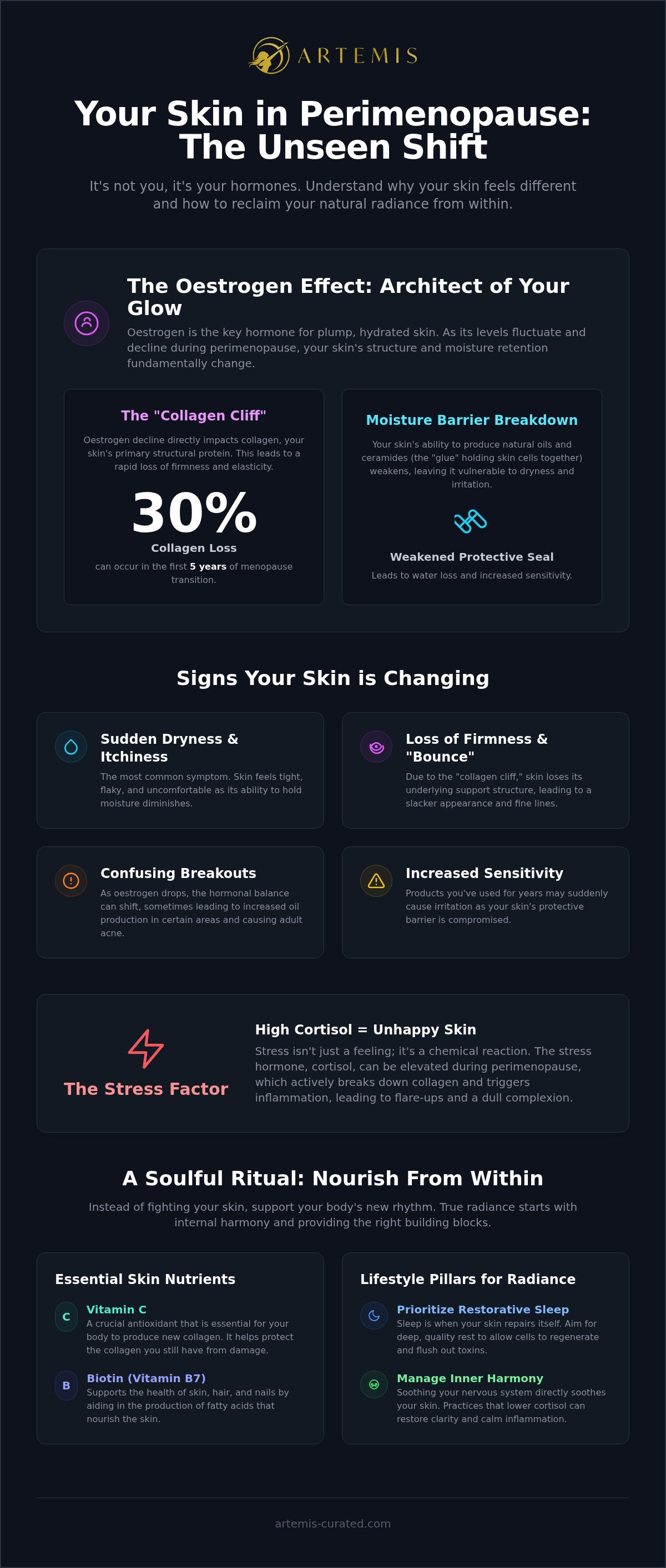
Oestrogen is the architect of skin suppleness. It works behind the scenes to support collagen production and keep moisture locked within the dermis, ensuring your skin remains plump and resilient. As levels begin to fluctuate, we encounter what experts often call the "collagen cliff." Research indicates that women can lose up to 30% of their skin's collagen in the first five years of this transition. This isn't a failure of your skincare routine. It's a direct result of the hormonal shifts during perimenopause. Without this foundational support, the skin loses its structural integrity. This leads to a noticeable change in how it feels, moves, and responds to the world around it.
Signs Your Skin is Entering Perimenopause
Identifying the early signs of perimenopause skin changes requires a mindful eye. You might notice a subtle loss of "bounce" when you press your cheek, or perhaps a newfound sensitivity to products that once felt like old friends. Dryness is the most common hallmark, yet many women experience a confusing mix of oily patches and adult acne. This happens because as oestrogen declines, the balance of other hormones changes. This can lead to increased sebum in specific areas while the rest of the face feels parched and tight.
Recognising these signs early allows you to adjust your approach with intention and grace. Instead of fighting against these changes with harsh, stripping treatments, we can choose to nourish the body through this natural evolution. If you're looking for ways to support your body's internal harmony, exploring a focused approach to hormonal health can be a transformative first step. It's about moving away from a place of frustration and toward a ritual of purposeful care.
The Science of Softness: How Hormones Shape Your Glow
Your skin's ability to hold onto its glow depends on a delicate dance of hormones. It isn't just about what you put on your face; it's about what's happening within the deeper layers. When oestrogen starts to decline, your skin loses its natural ability to produce ceramides and essential oils. These are the fatty lipids that act as a protective seal, keeping hydration in and irritants out. Without them, you might notice perimenopause skin changes like a parched texture that no amount of heavy cream seems to fix. It's as if the skin's internal reservoir is running low, requiring a more intentional approach to replenishment.
Collagen and Elastin: The Foundations of Radiance
Collagen and elastin are the two pillars of a healthy complexion. Collagen provides the sturdy structure, while elastin gives your skin its "snap" and flexibility. Imagine a trampoline; collagen is the frame, and elastin is the spring. As these proteins naturally break down during this transition, the skin can appear "slack" or develop fine lines. Supporting these foundations of radiance is a vital part of your new ritual. It's about giving your body the building blocks it needs to maintain its strength from the inside out.
The Impact of High Cortisol on Skin Clarity
Stress is more than just a feeling; it's a biological event that shows up on your face. Cortisol, often called the stress hormone, can be particularly high during this life stage. This surge acts like a slow leak, breaking down your skin's vital proteins and triggering inflammation. This often leads to sudden flare-ups or a dull, tired appearance. Finding ways of curating inner harmony can help lower these levels and restore clarity. When you soothe your nervous system, you're also soothing your skin.
Never underestimate the power of a good night's rest. Sleep is the time when your skin does its heavy lifting, repairing cells and flushing out toxins. If you are struggling to find rest, The art of sleep is designed to help you reach those deep, restorative stages. When you sleep well, your skin has the chance to heal itself. It's a simple truth that the most effective skin treatment often happens while you're dreaming. For a total wellness reset, you might consider exploring the Full Curated collection to support your journey from every angle.
Navigating Common Changes: From Sudden Dryness to Adult Acne
Living through perimenopause skin changes often feels like a confusing regression. One day you're dealing with dryness that makes your face feel two sizes too small, and the next, a breakout appears that reminds you of your teenage years. It's a frustrating paradox. Your skin is becoming more delicate, yet it's behaving with a volatility you haven't seen in decades. Understanding these common shifts helps remove the mystery and allows you to respond with the kindness your body deserves.
The Mystery of Itchy and Sensitive Skin
As oestrogen levels dip, the skin loses its ability to hold onto water, making the protective barrier thinner and more permeable. This often leads to heightened sensitivity; products you've used for years might suddenly cause redness or stinging. You might also experience formication, a specific type of itch that feels like tiny insects crawling on or under the skin. It's a strange sensation, but it's a direct result of nerve endings reacting to the thinning dermis. To calm this, focus on intentional, gentle cleansing and avoid hot water, which strips away precious natural oils.
Adult Acne: Why Breakouts Return in Your 40s
Many women are surprised by the arrival of "second puberty" in their 40s. This happens because while oestrogen is dropping, your androgen levels stay relatively stable. This creates a temporary imbalance that tells your pores to produce more oil. However, perimenopausal acne is different from teen spots. Your skin is thinner now, so harsh, drying treatments designed for teenagers will only cause more inflammation. The key is to manage congestion while deeply nourishing the skin barrier. The art of radiance provides the internal support needed to balance these external shifts without causing further irritation.
| The Change | The Solution |
|---|---|
| Sudden sensitivity or redness | Switch to fragrance-free, creamy cleansers and simplified routines. |
| The "perimenopause itch" (formication) | Cool compresses and internal hydration to soothe nerve endings. |
| Hormonal breakouts on the jawline | Focus on anti-inflammatory nutrients and barrier-safe ingredients. |
| Deep, persistent dryness | Layering moisture and supporting skin health from within. |
Finding your way through these changes is a journey of trial and error. It's about listening to what your skin is telling you in this new season. It takes time to adjust. If you feel overwhelmed by the number of changes happening at once, the Full Curated collection offers a comprehensive way to reset your wellness and find your rhythm again.
A Curated Ritual: Nourishing Your Skin from the Inside Out
Addressing perimenopause skin changes requires a shift in perspective. It is no longer enough to simply apply a cream and hope for the best. True radiance comes from a conversation between your internal health and your outer glow. This is an invitation to move away from the frantic search for a quick fix and instead embrace a more intentional, holistic approach. Consistency and a few well-chosen steps often yield better results than a shelf full of expensive, complex products that feel like a chore to use. By building a sanctuary ritual, you can lower your stress levels and give your skin the space it needs to breathe.
Specific nutrients act as the silent workers in this transition. Zinc is vital for supporting the healing of unexpected breakouts, while Vitamin C remains essential for collagen synthesis. Biotin provides the structural integrity your skin needs to feel resilient. Instead of chasing every new trend, focus on these foundational elements that truly resonate with your body's changing needs.
Internal Support: The Art of Radiance
When we nourish from within, we provide the body with the raw materials it needs for repair and renewal. The art of radiance is designed to support this process by delivering targeted nutrients directly where they are needed most. It doesn't just address the face; it brings a sense of vitality to your hair and nails too. By selecting supplements with purpose, you're building strength into your daily rhythm and supporting your body's natural ability to restore itself.
External Habits for Lasting Vitality
Your daily habits are the threads that weave your wellness ritual together. Incorporating healthy fats like Omega-3s into your diet helps maintain that elusive moisture barrier from the inside. You might also try a simple, slow facial massage in the evening to encourage lymphatic drainage and release the tension we often hold in our jaw. It's about choosing products with soul and history rather than fleeting trends that lack substance. These small, mindful actions help you feel like yourself again.
Creating a space for quiet care allows your nervous system to settle, which in turn helps your skin reflect a deeper sense of calm. If you're ready for a total wellness reset, exploring the Full Curated collection offers a path toward true harmony across all areas of your life.
Finding Your Rhythm: How Artemis Curated Supports Your Transition
Perimenopause skin changes don't have to feel like a loss of control or a fading of your natural beauty. Instead, you can view this season as a meaningful opportunity for deeper self-care and a soulful evolution of how you nurture yourself. It's a time to listen more closely to what your body needs and to respond with intention. By shifting the focus from fixing a problem to supporting a transition, you can find a new rhythm that feels both elegant and sustainable. Your radiance isn't disappearing; it's simply changing shape, requiring a different kind of nourishment to remain vibrant.
At the heart of this support is The art of harmony. While we've discussed external rituals and specific skin nutrients, this foundational tool addresses the root hormonal shifts that drive these changes. It's designed to help you navigate the fluctuations of this period with more ease, providing a sense of balance that reflects on your face. For those who feel they need a total wellness reset, the Full Curated collection offers a comprehensive approach. It brings together support for sleep, skin, and hormonal balance, ensuring every aspect of your well-being is tended to with the same level of care and respect.
Curating Your Personal Wellness Collection
Choosing the right support for your specific needs is an act of intentional selection. Your journey through perimenopause is unique, and your daily routine should reflect that. Whether you're primarily focused on soothing sensitive skin or managing the emotional weight of hormonal shifts, the goal is to collect tools that possess a distinct purpose. This philosophy of choosing quality over quantity helps you move away from the noise of mass-produced trends. If you're looking for guidance on where to start, you can explore our guide to the best supplements for women to help you build a routine that truly resonates.
A Conversation with Artemis
Artemis Curated was founded with a deep respect for the artistic process of living well. We believe in quiet authority and refined elegance, moving away from the frantic energy of traditional retail to offer a more serene approach to wellness. Our commitment is to act as a knowledgeable guide, helping you find objects and rituals that contribute to your personal story. We see the human element in everything we do, valuing the soulful over the fleeting.
As you move forward, remember that your radiance is evolving. You deserve to surround yourself with support that values your history and your future equally. We invite you to visit our shop for the full range of support and discover how a curated approach can help you feel like yourself again. This is your time to bloom in a new way, with a glow that comes from a place of deep, internal harmony.
Embracing Your Evolving Glow
Navigating perimenopause skin changes is a journey of rediscovery rather than a battle to be won. You've learned that these shifts are deeply connected to your internal hormonal architecture. It's a time to move toward a holistic approach that prioritises nourishment from within to restore your skin's natural resilience. Consistency and intention in your daily rituals matter far more than a complex shelf of products. Simple, soulful care is the key to feeling like yourself again.
Artemis Curated acts as your knowledgeable guide through this transition. Our offerings, like The art of radiance, provide targeted support for your skin, hair, and nails. Expertly curated for women by women, our collection focuses on purposeful selection to help you find your rhythm. We invite you to explore our curated collection of supplements for skin and hormonal harmony and see how a thoughtful approach to wellness can transform your experience. You're not just changing; you're evolving into a more intentional version of yourself. Your radiance is still there, waiting to be nurtured with grace.
Frequently Asked Questions
Why is my skin so dry and itchy during perimenopause?
Your skin feels dry and itchy because declining oestrogen levels reduce your body's ability to produce natural oils and ceramides. These lipids are essential for sealing in moisture and preventing perimenopause skin changes that lead to discomfort. As the skin barrier thins, it becomes more prone to irritation and that specific "crawling" sensation known as formication. Focusing on internal hydration and gentle, creamy cleansers can help soothe this discomfort and restore a sense of ease.
Can perimenopause cause sudden adult acne?
Yes, sudden adult acne is a common symptom of the hormonal shifts during this transition. While oestrogen levels fall, androgen levels often remain stable, creating an imbalance that triggers excess oil production. This "second puberty" usually appears along the jawline. It's important to treat these breakouts gently; traditional teen treatments are often too harsh for the more delicate skin you have now. Nourishing your skin barrier is key to managing these flare-ups and restoring clarity.
What are the best supplements for perimenopause skin changes?
The best supplements for perimenopause skin changes include those that provide the building blocks for repair, such as Zinc, Vitamin C, and Biotin. Zinc helps manage inflammation and breakouts, while Vitamin C is essential for collagen production. We recommend The art of radiance, which is specifically designed to support your skin, hair, and nails from the inside out. This holistic approach ensures your body has the nutrients it needs to maintain its natural glow.
Does collagen really help with skin elasticity after 40?
Supporting your collagen levels can make a significant difference in skin elasticity as you move through your 40s. Since women can lose about 30% of their skin's collagen in the first five years of menopause, providing your body with the right nutrients is vital. While topical creams have limits, nourishing your system from within helps maintain the structural foundations of your skin. This internal support works to keep your complexion feeling firmer and more resilient over time.
How does stress affect my skin during the menopause transition?
Stress triggers the release of cortisol, a hormone that can break down the very proteins, like collagen, that keep your skin firm. High stress levels during this transition often lead to increased inflammation, which can manifest as redness, sensitivity, or sudden breakouts. Finding ways to lower your cortisol through restorative sleep and mindful rituals is just as important as your skincare routine. When your nervous system settles, your skin often follows suit, looking clearer and more rested.
Is it normal for my skin to feel thinner or bruise more easily?
It is completely normal for your skin to feel thinner and more fragile during this time. The loss of oestrogen directly impacts the thickness of the dermis and the strength of the tiny blood vessels underneath. This can make you more prone to bruising from minor bumps. Protecting your skin from the sun and using products that support the skin barrier can help, but the most effective support comes from nourishing your body's internal architecture and foundations.
Should I change my skincare routine when I reach perimenopause?
Changing your skincare routine is often necessary as your skin's needs evolve. You might find that the foaming cleansers you once loved now feel too stripping. Moving toward a simpler, more intentional routine is usually the best path. Consider these small shifts:
- Switch to creamy, fragrance-free cleansers.
- Incorporate facial oils for deeper hydration.
- Focus on barrier-repair ingredients.
Consistency with a few high-quality products is more effective than a complex, multi-step process.
How long do perimenopause skin changes typically last?
The duration of these changes varies for every woman, as the transition itself can last several years. Generally, your skin will begin to find a new equilibrium once your hormone levels stabilise after menopause. However, the habits and rituals you establish now will serve as a foundation for your skin health for years to come. By choosing a soulful, holistic approach to wellness today, you're ensuring your skin remains nurtured and radiant through every stage of your evolution.
0 comments