

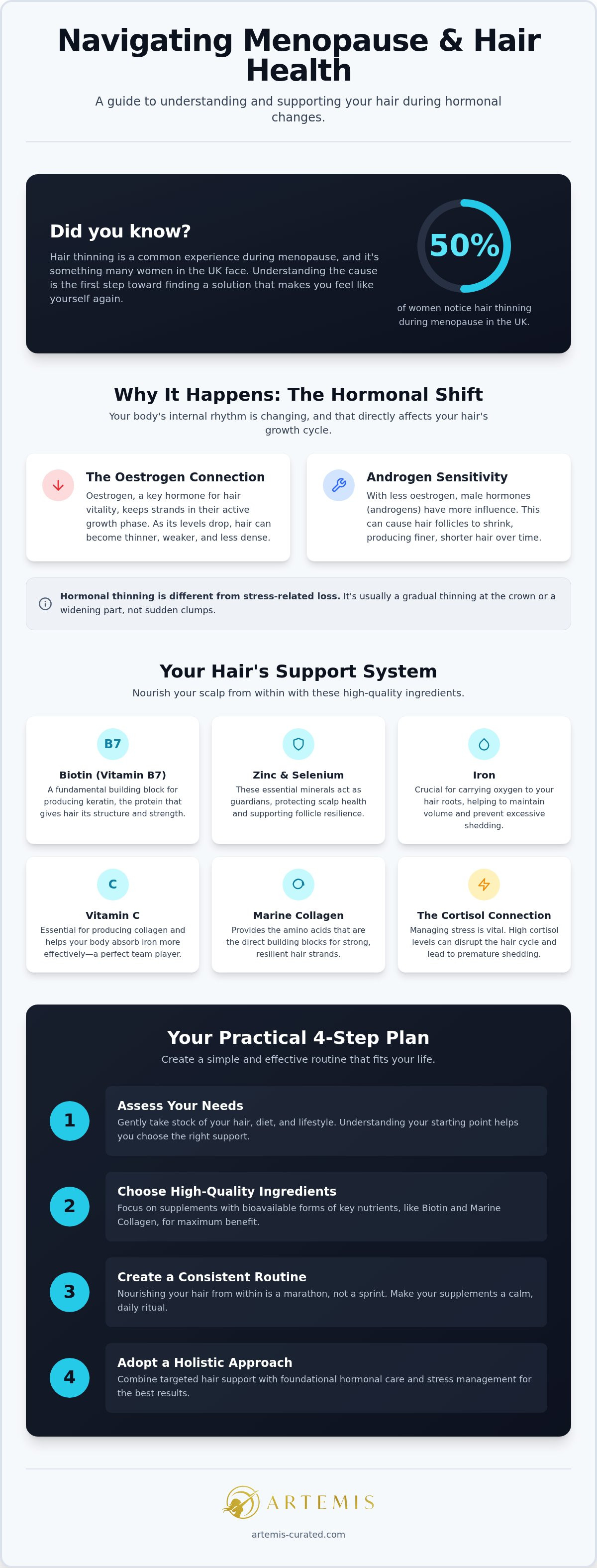
Did you know that around 50% of women in the UK notice their hair thinning as they move through menopause? It's a startling figure that highlights why so many are searching for the best supplements for menopause hair loss UK to reclaim their confidence. Seeing your hair lose its volume or finding more strands in your brush can feel like losing a piece of yourself. It's completely natural to feel a dip in confidence when your reflection doesn't quite match how you feel inside.
You've likely spent hours looking at a confusing array of bottles, wondering if any of them actually work or if this change is just permanent. It's overwhelming to filter through the noise, especially when you just want a curated path to feeling like yourself again. The good news is that thinning doesn't have to be your new normal. By understanding the link between your hormones and your scalp, you can find the right support to regain control.
We'll show you how to bridge those nutritional gaps and support your body's inner rhythm with a simple, effective routine. This 2026 guide explores how to choose high-quality ingredients that truly make a difference, helping you move toward thicker, healthier-looking hair with a sense of calm and clarity.
Key Takeaways
- Understand how shifting hormone levels impact your hair's growth cycle and why your scalp needs specific support during this transition.
- Discover the most effective supplements for menopause hair loss UK, focusing on high-quality ingredients like Biotin and Marine Collagen.
- Learn why managing stress and cortisol is a vital part of protecting your hair from premature thinning and shedding.
- Get a practical four-step plan to assess your nutritional needs and create a supplement routine that fits your lifestyle.
- Find out how a holistic approach, combining targeted hair support with foundational hormonal care, can help you achieve thicker, healthier-looking hair.
Why Menopause Causes Hair Thinning: The Hormonal Shift
The transition into menopause is a profound period of change, where the internal chemistry of your body begins a new chapter. While we often focus on the more visible symptoms, the impact on your hair is deeply connected to the hormonal changes during menopause. Oestrogen and progesterone are the quiet guardians of your hair's vitality. They work together to keep your strands in the growth phase for as long as possible. When these levels begin to ebb, the delicate balance that supports a full, healthy head of hair shifts, often leading many women to seek out targeted supplements for menopause hair loss UK to help restore what feels lost.
This biological change can lead to what clinicians call Female Pattern Hair Loss (FPHL). Unlike the sudden shedding associated with temporary stress, FPHL usually appears as a gradual thinning at the crown or a widening of your natural parting. It's a reflection of your body's internal environment adjusting to a new rhythm. Hormonal shifts cause the hair's growth phase to contract, which results in strands that are thinner, weaker, and more prone to early shedding.
The Oestrogen Connection
Oestrogen is essentially a life-force for your hair follicles. It encourages the anagen phase, which is the period when your hair is actively growing. When oestrogen is plentiful, your hair feels dense and strong. As these levels decline, the diameter of each individual hair shaft often decreases. You might notice that your ponytail feels slimmer or that your hair lacks the structural integrity it once had. This isn't just about the number of hairs on your head; it's about the quality and resilience of every single strand. Understanding this shift is the first step in choosing the right path for support.
Androgens and Follicle Sensitivity
As oestrogen and progesterone levels drop, the male hormones naturally present in your body, called androgens, can start to have a louder voice. For some women, hair follicles are particularly sensitive to these androgens. This sensitivity triggers a process called follicle miniaturisation. In simple terms, the hair follicle begins to shrink. Each time a hair falls out and a new one grows back, it returns slightly finer and shorter than the one before. Eventually, the follicle may become so small that the hair it produces is barely visible.
Distinguishing this from stress-related loss is important for your peace of mind. While stress often causes hair to fall out in clumps quite suddenly, hormonal thinning is a slower, more persistent narrative. It's a sign that your body is asking for a more curated approach to its nutritional and hormonal health.
The Best Supplements for Menopause Hair Loss in the UK
Moving from the "why" of hormonal shifts to the "how" of restoration is a gentle process of listening to your body's needs. While some consider NHS-approved treatments for hair loss, many of us seek a more holistic way to nourish the scalp from within. Finding the right supplements for menopause hair loss UK is about selecting ingredients that act as a quiet support system for your changing biology. It's about providing the specific nutrients that allow your hair to maintain its narrative of strength and beauty even as your internal environment evolves.
Biotin, or Vitamin B7, acts as a fundamental building block for keratin production. It provides the structural integrity your hair craves during this transition. Zinc and Selenium follow closely, acting as guardians for your scalp health and follicle resilience. In the UK, we often see a link between thinning hair and low iron or ferritin levels. Since iron is responsible for delivering oxygen to the hair root, keeping these levels steady is essential for maintaining hair volume and preventing thinning from taking hold.
Vitamins That Support the Hair Cycle
True restoration rarely comes from a single, isolated nutrient. It's about the synergy within a curated blend. Vitamin C is a perfect example; it's necessary for collagen synthesis and helps your body welcome iron more effectively. B-vitamins are equally important, supporting the intense metabolic energy required by your hair cells as they grow. This balanced approach is far more effective for those seeking supplements for menopause hair loss UK than high-dose products that can overwhelm the body's natural rhythm.
The Role of Collagen and Amino Acids
Amino acids are the essential components that build the very structure of your hair. Using marine collagen is often the most effective choice because of its high bioavailability. It's easily absorbed, providing the specific proteins needed to reinforce thinning strands. Generic options often lack this focus, whereas a targeted hair support routine ensures your body has the exact materials it needs to thrive. You can find these intentional ingredients in our Full Curated collection, designed to support your journey with elegance and ease.
The Cortisol Connection: Stress, Sleep, and Hair Vitality
While we've explored the biological shifts of oestrogen and androgens, there's another player in the narrative of your hair health: cortisol. Often called the stress hormone, cortisol is your body's survival signal. During menopause, your body becomes more sensitive to stress, and when cortisol levels remain elevated, it can signal your hair follicles to stop growing. This pushes your hair into the 'resting phase' prematurely, long before it's ready to shed. It's a protective mechanism by the body, but it often results in the thinning we're trying to prevent.
This phenomenon is known as telogen effluvium. It's a temporary but distressing form of hair loss triggered by the emotional and physical stressors of the menopause transition. When you're searching for effective supplements for menopause hair loss UK, it's essential to look beyond just the vitamins and minerals. You need to address the underlying tension that keeps your body in a state of high alert. Achieving a sense of inner harmony isn't just about feeling better; it's a prerequisite for the external radiance you're looking for.
Managing the Stress Response
Effective cortisol management is a vital part of protecting your hair follicles from the inside out. Menopause often brings a heightened sense of anxiety, which can create a cycle of physical symptoms, including hair thinning. To break this cycle, consider small evening rituals that lower your cortisol levels. Simple acts like dimming the lights, stepping away from screens, or a few minutes of quiet contemplation can signal to your body that it's safe to transition into repair mode. This creates a calmer environment where your hair can thrive.
Sleep as a Beauty Ritual
Restorative sleep is perhaps the most important beauty ritual you have. It's the prime time for cellular repair and hair growth. During deep sleep cycles, your body releases growth hormones that are essential for regenerating tissues, including your hair. If your sleep quality is poor, your hair follicles don't get the recovery time they need. This is why we created 'The art of sleep' to support your body's natural nocturnal repair processes. By improving the depth of your rest, you're giving your body the foundation it needs to support healthy hair growth. You can explore this and other targeted solutions in our Full Curated collection, ensuring every part of your wellbeing is nurtured.
Curating Your Hair Care Routine: A Practical 4-Step Guide
Building a routine that supports your hair's vitality is a deliberate act of care. It's about moving away from the frantic search for a quick fix and toward a more intentional, curated approach. By combining internal nourishment with gentle external care, you can create the ideal environment for your hair to regain its strength and volume. This process isn't about overnight miracles; it's about the steady, soulful work of nurturing your body through a significant life transition.
Step 1: Assess your baseline. Before introducing new elements, it's wise to understand your body's current state. A comprehensive blood test can reveal specific nutritional gaps, such as low iron or Vitamin D, that might be contributing to thinning. Knowing your numbers allows you to be precise in your selection rather than relying on guesswork.
Step 2: Select high-quality support. Once you know what's missing, introduce a blend designed for radiance. When choosing supplements for menopause hair loss UK, look for formulations that prioritise bioavailability and high-quality ingredients. This ensures your body can actually use the nutrients you're providing to support the hair's natural growth cycle.
Step 3: Be gentle with your scalp. Your scalp is the foundation of your hair's health. Adopt gentle stimulation and avoid high-heat styling, which can further weaken fragile strands. Treating your hair with kindness during this time is essential for preserving the hair you have while encouraging new growth.
Step 4: Prioritise hormonal balance. Hair health is a reflection of your overall wellbeing. Focus on a diet rich in proteins and healthy fats, and keep your stress levels in check. This holistic focus supports your body's natural rhythm and helps maintain a calm internal environment.
Scalp Health and External Care
Consistency is Key
Patience is perhaps the most important ingredient in any hair care routine. It's important to manage expectations; because of the hair's natural growth cycle, it often takes between 3 and 6 months to see visible changes. The daily ritual of taking your supplements and caring for your scalp is what leads to long-term results. You might find it helpful to track your progress with monthly photos. This allows you to see the gradual improvement in volume and texture without becoming overwhelmed by daily checks. To start your journey with a routine designed for your specific needs, explore our Full Curated collection today.
Discover 'The Art of Radiance': Artemis Curated Solutions
Finding the right supplements for menopause hair loss UK shouldn't feel like a chore. It's an opportunity to check in with yourself and choose products that truly align with your needs. At Artemis Curated, we've developed 'The art of radiance' as a targeted solution for your skin, hair, and nails. It focuses on the specific amino acids and vitamins we discussed earlier, like marine collagen and biotin, to help you reclaim that feeling of volume and strength. When you're looking for the best supplements for menopause hair loss UK, you deserve a solution that feels as intentional as the rest of your life.
While 'The art of radiance' works on the surface, 'The art of harmony' addresses the foundational shifts happening inside. By supporting your body through the hormonal changes of menopause, it helps create the calm environment your hair needs to grow. For those who are ready for a complete shift in their wellness routine, our Full Curated collection brings all these elements together in one simple, intentional package. Each ingredient is selected with a focus on quality and purpose, ensuring your body receives the support it truly needs.
Why Artemis Curated is Different
We believe that every woman's journey is a story worth telling. Instead of offering the same mass-produced bottles you'll find on high street shelves, we focus on the narrative of the ingredients and the quality of the selection. Each component is chosen with deep intentionality, ensuring that you're only putting the best into your body. This philosophy of living well moves away from mere consumption. It's about collecting the right tools for your health with purpose and care. Our approach is rooted in the idea that quality always triumphs over fleeting trends, focusing on the human element behind our formulations.
Starting Your Journey
Choosing the right path for your health is a personal decision. You might find that starting with 'The art of radiance' is the perfect first step for your hair. Others prefer the comprehensive support of our full collection to address sleep, harmony, and vitality all at once. Whichever you choose, we've made the process as smooth as possible with national UK delivery for all your wellness essentials. We invite you to view your new supplement routine as a quiet moment of self-care. It's a small, daily ritual that signals your commitment to your own wellbeing. By choosing products that are carefully selected and deeply meaningful, you're supporting your body's natural ability to shine.
Take the First Step Toward Healthier Hair
The changes you notice in your hair during menopause are part of a larger story your body is telling. It's a signal that your internal rhythm is shifting and needs a bit more focused care. By combining high-quality nutrition with a mindful approach to sleep and stress, you can support your follicles and regain the volume you've been missing. This isn't just about appearance; it's about feeling empowered and informed about your own hormonal health.
When you're searching for the right supplements for menopause hair loss UK, look for intentionality and expertise. Our formulas are designed by women who understand this journey, ensuring every ingredient serves a purpose. Whether you start with a single product or choose the Full Curated collection with free UK shipping, you're making a choice to prioritise your radiance. It's a daily ritual that celebrates your vitality and strength.
Explore 'The Art of Radiance' and begin your hair restoration journey
Frequently Asked Questions
Will my hair grow back after menopause?
Yes, it's certainly possible for hair to regain its density with the right care. Menopausal thinning is often a result of a shortened growth cycle rather than permanent loss. By addressing nutritional gaps and supporting your hormonal health, you can encourage follicles to return to their active phase. It's about creating the right internal environment to help your hair find its strength again.
How long does it take for menopause hair supplements to work?
You should generally expect to wait between three and six months to see a visible difference. Hair grows slowly, usually about half an inch each month, so it takes time for new, stronger strands to emerge. Consistency is vital when using supplements for menopause hair loss UK. Sticking to your daily ritual ensures your follicles have a steady supply of the nutrients they need.
Can I take hair supplements if I am also on HRT?
Most women find they can safely take supplements alongside Hormone Replacement Therapy. While HRT focuses on balancing your systemic hormones, supplements provide the specific raw materials, like amino acids and minerals, that follicles use to build hair. It's a dual approach that supports your body from different angles. Just be sure to mention any new supplements to your GP during your regular checkups.
What is the single most important vitamin for menopausal hair loss?
Biotin, also known as Vitamin B7, is widely considered the most important for hair structure. It plays a fundamental role in producing keratin, which is the primary protein found in your hair strands. While it's a heavy hitter, it works most effectively when part of a curated blend. Combining it with iron and zinc ensures your scalp has everything required for healthy growth.
Is marine collagen better than bovine collagen for hair?
Marine collagen is often the preferred choice because of its superior absorption rate. It has a smaller particle size, which means your body can break it down and use the amino acids more efficiently. This high bioavailability makes it particularly effective for reinforcing the structure of thinning hair. It's an excellent way to provide the specific proteins your hair needs during the menopause transition.
Does stress make menopause hair loss worse?
Stress absolutely plays a role in the health of your hair. When your cortisol levels stay high, it can signal your hair follicles to enter a resting phase earlier than they should. This often leads to more noticeable shedding several weeks later. Managing your stress through better sleep and calming rituals is a crucial part of any holistic hair care routine.
How often should I wash my hair if it is thinning during menopause?
You should wash your hair whenever your scalp feels like it needs a refresh, typically two or three times a week. A clean scalp is the best foundation for growth because it prevents follicles from becoming blocked by oils or product buildup. Use a gentle, sulphate-free shampoo to keep your hair clean without stripping away the natural moisture that keeps thinning strands resilient.
Are there any side effects to taking menopause hair vitamins?
Most women take these vitamins without any issues at all. Occasionally, some might notice a bit of a rumbly stomach if they take them without food, so having them with a meal is usually best. It's worth noting that high levels of biotin can sometimes affect certain laboratory blood tests. Always let your doctor know which supplements you're taking before you have any medical tests done.
0 comments