

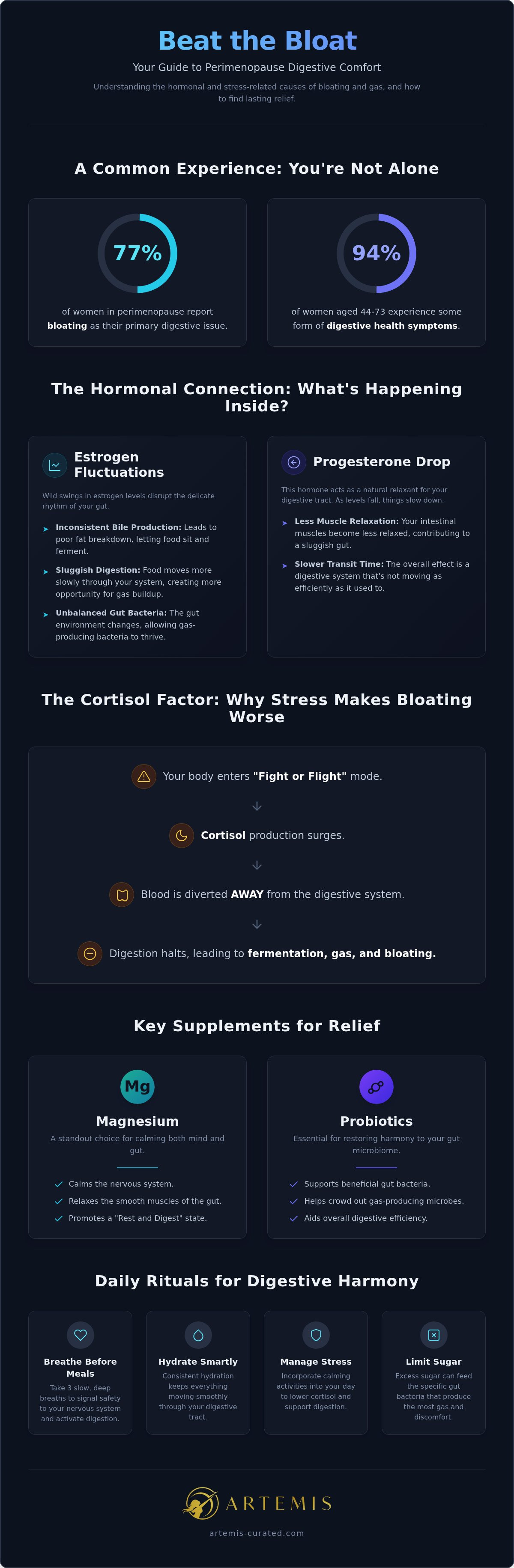
You’ve likely felt that subtle, frustrating shift as the clock strikes mid-afternoon. It’s the sudden, uncomfortable tightness of a waistband that felt perfectly comfortable just hours ago. It isn't a lack of discipline or a change in your diet. It is a physiological rhythm that often feels entirely out of your control. If you are searching for effective supplements for perimenopause bloating and gas, you aren't alone. Recent research from 2025 shows that a staggering 77% of women navigating this life stage experience bloating as their primary digestive hurdle. It is draining to deal with the social anxiety of unpredictable gas or the feeling that your body is no longer responding to the healthy habits that used to work.
We believe that understanding the link between your hormones and your gut is the first step toward reclaiming your comfort. This guide explores how shifts in estrogen and cortisol disrupt your internal flow and identifies the natural ingredients that can help you feel like yourself again. You will learn how to build a simple daily routine that prioritizes balance. By focusing on the art of harmony within your body, you can move away from the frustration of the afternoon swell and toward a flatter, more comfortable stomach that lasts all day.
Key Takeaways
- Get to the bottom of why hormonal shifts cause that mid-afternoon tightness and how estrogen affects your digestion.
- See how managing your stress levels can break the cycle of cortisol-driven bloating that often hits during your busiest hours.
- Identify the most effective supplements for perimenopause bloating and gas, including how magnesium and probiotics support your gut bacteria.
- Learn to create a calming daily ritual that combines proper hydration with mindful eating to keep your stomach feeling flat and comfortable.
- Discover how a holistic, curated collection can help you manage multiple symptoms at once for total body harmony.
Why Does Perimenopause Cause Bloating and Gas?
Understanding why your body feels so different starts with looking at the biological shifts happening behind the scenes. During Perimenopause, your hormones don't just affect your mood; they're deeply involved in how you process every meal. Digestion isn't just about what you eat. It's about how your body receives it. In your 20s and 30s, your hormonal cycle was likely a steady, predictable tide. Now, that rhythm has changed. A 2025 study presented to The Menopause Society found that 94% of women aged 44 to 73 experience digestive health symptoms. This makes it clear that what you're feeling is a very common shared experience.
Oestrogen helps your body produce bile, which is necessary for breaking down fats and keeping things moving. When oestrogen levels start to swing wildly, bile production can become inconsistent. This leaves food to sit longer in your gut, leading to fermentation and that familiar, uncomfortable gas. At the same time, progesterone levels are dropping. Progesterone acts as a natural relaxant for your digestive tract. Without it, your gut becomes sluggish. It's a significant change from your younger years when these hormones worked in a more synchronized cycle.
The Oestrogen Connection to Your Gut
Your gut has a delicate mucosal lining that relies on steady oestrogen levels to stay healthy and resilient. When these levels fluctuate, it changes the internal environment for your gut bacteria. Some bacteria that produce gas might start to overgrow while beneficial ones struggle. The oestrogen-gut axis acts as the primary regulator of your digestive rhythm. When this axis is out of balance, it can lead to the "bloat" that feels so different from regular weight gain.
Is It Water Weight or Gas?
It's helpful to distinguish between hormonal puffiness and actual digestive air. Water retention often feels like a general heaviness in your limbs or face. You might notice your rings feel tight or your ankles swell. In contrast, gas causes a distinct, localized pressure in your abdomen. You might notice this peaks in the evening. As your digestion slows down during the day, gas accumulates, making your clothes feel much tighter by dinner time. Even foods you've always enjoyed can suddenly become triggers as your system becomes more sensitive. Finding the right supplements for perimenopause bloating and gas can help bridge this gap by supporting your body's natural processes and restoring a sense of internal comfort.
The Cortisol Factor: Why Stress Makes Bloating Worse
You’ve likely noticed that on your most frantic days, your stomach feels the tightest. It isn't just the meal you ate in a hurry. When your body is under pressure, it produces cortisol, a hormone that signals a state of high alert. This physiological response shunts blood flow away from your digestive system and toward your limbs, preparing you for action. Essentially, your body prioritizes survival over processing your lunch. For many women in their 40s, this stress-bloat cycle becomes a daily occurrence as they manage heavy workloads and the physical shifts of midlife. Understanding Cortisol: Curating the Rhythm of Inner Harmony and Vitality is essential for breaking this exhausting pattern.
The nervous system operates in two primary states: "fight or flight" or "rest and digest." When cortisol stays high, you remain stuck in the former, leaving your gut unable to move food along efficiently. This stagnation leads to the fermentation that causes gas. By acknowledging how stress impacts your physical comfort, you can begin to make choices that support your internal rhythm rather than working against it.
Sleep, Stress, and Your Stomach
A restless night does more than just leave you reaching for extra coffee. It disrupts the hormones that control hunger and fullness, often leading to next-day sugar cravings. Sugar, unfortunately, feeds the specific bacteria in your gut that produce excessive air. When looking for effective supplements for perimenopause bloating and gas, magnesium is often a standout choice. It helps calm the nervous system and relaxes the smooth muscles of the digestive tract, making it easier for your body to stay in a peaceful, digestive state. Taking even three slow, deep breaths before you pick up your fork can signal to your brain that the "threat" has passed and it is safe to focus on nourishment.
Managing the Midlife Mental Load
Slowing down isn't a luxury; it's a physiological necessity for hormonal health. The mental load of midlife can keep your nervous system in a constant state of low-level alarm, which is why The art of sleep is just as vital for your gut health as it is for your mental clarity. Creating a serene evening routine helps lower cortisol levels before you head to bed. You might try dimming the lights, putting away screens, or enjoying a quiet ritual that signals the end of the day's demands. These small acts of intentionality help your body find the peace it needs to function properly. For more comprehensive Menopause symptoms and relief, focusing on restorative rest is a powerful starting point for lasting comfort.
Best Supplements for Perimenopause Bloating: What Actually Works?
Finding the right support for your body feels like a quiet, intentional choice rather than a rushed transaction. It’s about understanding that your biology is shifting and responding with care. When you’re searching for effective Supplements for Menopause Bloating, the goal is to find ingredients that work in harmony with your internal rhythms. It isn't just about masking a symptom; it's about providing the specific tools your system needs to function with ease again. Taking a targeted approach helps you move away from the frustration of unpredictable discomfort and toward a more predictable sense of wellbeing.
Targeting the Estrobolome
The estrobolome is a term that might sound technical, but it’s actually quite simple. It refers to the specific collection of bacteria in your gut that are tasked with processing and recycling oestrogen. You can think of these bacteria as the gatekeepers of your hormonal health. When this bacterial community is out of balance, oestrogen can be reabsorbed into your system, which often leads to increased water retention and that heavy, bloated feeling. When selecting a probiotic, don't be swayed by high "CFU" counts alone. It is far more important to choose specific, high-quality strains that have a proven record of supporting the gut-hormone connection. A healthy gut is the architect of hormonal balance.
The Role of Magnesium and B Vitamins
Magnesium is a true multi-tasker during perimenopause. We often recommend magnesium glycinate because it is highly absorbable and incredibly gentle on the digestive system. It helps relax the smooth muscles of the gut, which encourages regularity and prevents the build-up of air that leads to discomfort. Beyond the physical, it also helps quiet the evening anxiety that can often keep you awake. B vitamins are equally essential. They act as the metabolic spark that helps your body convert food into energy efficiently. Without enough B vitamins, your digestion can become sluggish, leading to the fermentation that causes gas. Our Best Supplements for Women in 2026 guide offers a deeper look at how these nutrients support a woman's changing needs.
As natural enzyme production begins to slow, your body might need a little extra help breaking down complex meals. Digestive enzymes can bridge this gap, ensuring that proteins and fats are processed fully. For those moments when you need immediate relief, herbal supports like peppermint and ginger offer a soothing touch. They help calm the lining of the digestive tract and reduce the spasming that causes pain. These are foundational supplements for perimenopause bloating and gas that belong in any thoughtfully curated daily routine.
Creating a Daily Ritual for Digestive Harmony
Creating a daily ritual is about more than just remembering a pill. It’s about building a rhythm that your body can rely on. Think of your routine as a gentle flow rather than a rigid schedule. Start your morning with a large glass of water to provide foundational support for your system. When you sit down to eat, focus on the simple act of chewing. It sounds basic, but slowing down reduces the amount of air you swallow, which helps prevent that uncomfortable mid-afternoon swell. By the time evening arrives, your focus should shift to winding down. Calming your cortisol levels before bed allows your body to enter a state of repair, ensuring you wake up feeling lighter.
Patience is a key part of this journey. While you might feel some relief quickly, most supplements for perimenopause bloating and gas take between 4 and 8 weeks to show their full results. Your body needs time to adjust to these new inputs and find its balance again. Consistency isn't about being perfect; it's about showing up for yourself daily with intentionality and care.
When to Take Your Supplements
Timing can make a significant difference in how your body absorbs nutrients. Probiotics are often best taken in the morning, either on an empty stomach or with a light breakfast, to help them reach your gut effectively. In contrast, magnesium is a wonderful addition to your evening routine, as it helps relax your muscles and prepare your mind for rest. Taking your supplements with food can also help if you have a sensitive stomach. A simple daily wellness rhythm might look like this:
- Morning: Hydration and your foundational probiotic support.
- Mealtimes: Mindful chewing and digestive enzymes if needed.
- Evening: Magnesium to calm the nervous system and support overnight repair.
Lifestyle Tweaks to Support Your Supplements
Small lifestyle adjustments can amplify the benefits of your supplements. A 10-minute gentle walk after dinner isn't just good for your mood; it physically aids the passage of gas through your system. You might also notice "new" sensitivities to foods you used to enjoy, like dairy or certain grains. Paying attention to these shifts helps you curate a diet that works for your current needs. Finally, stay hydrated. Water helps flush out excess oestrogen and sodium, which are often the hidden culprits behind hormonal puffiness. To begin your journey toward better balance, explore The art of harmony and find the support your body deserves.
The Artemis Approach: Curating Your Perimenopause Journey
Artemis Curated was founded by co-founders Milly and Sarah with a clear vision: to move away from the frantic energy of mass-produced supplements and toward a more soulful, intentional way of living. We believe that your body isn't a project to be fixed, but a sanctuary that deserves respect and high-quality care. As a UK-based brand, we focus on the art of selection. We don't believe in overwhelming you with endless options or fleeting trends. Instead, we offer carefully chosen collections that respect the history and craftsmanship of natural ingredients. Every piece in our collection is there because it serves a meaningful purpose in your wellness story.
When you are searching for effective supplements for perimenopause bloating and gas, you need a solution that understands the complexity of your hormonal landscape. Our approach is about finding the right balance between science and the functional reality of your daily life. We prioritize quality over quantity, ensuring that each supplement works in harmony with your body’s natural rhythms. This intentionality allows you to move away from the noise of traditional retail and toward a more serene, professional experience that values your long-term health.
The Art of Harmony: Beyond Just Vitamins
We designed The art of harmony to be the primary support for those navigating the shifts of perimenopause. It goes beyond providing simple vitamins; it seeks to restore the emotional and physical balance that can feel so elusive during this time. By addressing the underlying hormonal triggers of digestive discomfort, this collection helps you reclaim your sense of comfort and vitality. We invite you to view your health as a narrative worth telling with care. When your internal environment is in balance, you can focus on the beauty of your everyday life without the distraction of physical unease.
Finding Your Personal Rhythm
Every woman’s journey is distinct, and finding your personal rhythm is a process of discovery. You might start with a single focus, or you may find that The Full Curated collection offers the comprehensive support your body is asking for. If the stress-bloat cycle has been a significant part of your experience, combining our harmony support with "The art of sleep" can help address both the hormonal and cortisol-driven aspects of your symptoms. Our goal is to act as a knowledgeable guide, helping you surround yourself with the support you need to feel like yourself again. Rediscovering your vitality is possible when you choose to listen to your body’s unique voice.
Explore our curated collections for hormonal harmony and begin your journey toward a more comfortable, balanced self.
Reclaiming Your Comfort and Harmony
Navigating the shifts of midlife doesn't have to mean living with constant discomfort. By understanding how fluctuating oestrogen and rising cortisol impact your digestion, you can begin to make choices that support your body’s natural flow. We’ve explored how targeted ingredients like magnesium and probiotics can rebalance your internal environment, helping you move away from the frustration of unpredictable gas and mid-afternoon bloating. Selecting effective supplements for perimenopause bloating and gas is about more than just finding a quick fix; it’s about committing to a daily ritual that prioritizes your wellbeing.
At Artemis Curated, co-founders Milly and Sarah have meticulously selected every ingredient to ensure our holistic, high-quality formulations deliver real results. We are proud to offer UK-based national shipping to bring these curated solutions directly to your door. When you choose to support your body with intentionality, you aren't just managing symptoms; you are writing a new story of vitality and ease. You deserve to feel comfortable in your own skin again.
Shop The Art of Harmony for Menopause Support and take the first step toward a more balanced, serene you.
Frequently Asked Questions
Can perimenopause cause sudden, severe bloating?
Yes, sudden and sometimes severe bloating is a hallmark of the perimenopausal transition. These shifts are usually driven by the erratic rise and fall of oestrogen, which directly impacts how your body retains salt and water. If you experience bloating that lasts more than two weeks or is accompanied by sharp pain, it's a good idea to consult a professional to rule out other conditions. For most, it's a temporary but frustrating part of the hormonal shift.
How long does it take for supplements to help with perimenopause gas?
While some women feel a sense of relief within the first week, you should expect to wait 4 to 8 weeks for the full benefits. Your internal ecosystem, especially the bacteria in your gut, requires time to find a new balance. Consistency is the most important factor when taking supplements for perimenopause bloating and gas. Sticking to a daily ritual allows the ingredients to build up in your system and provide steady, reliable support.
Is magnesium good for menopause bloating and weight gain?
Magnesium is a powerful tool for relieving the physical pressure of bloating. It works by relaxing the muscles in your digestive tract, which helps move food along and prevents the stagnation that leads to gas. While it isn't a weight-loss pill, it helps reduce the puffiness caused by water retention. By lowering cortisol, it also helps prevent the accumulation of midsection weight often associated with high stress levels during this life stage.
What is the best probiotic for perimenopause digestive issues?
The best probiotic for this stage is one that contains strains specifically chosen to support your estrobolome. These are the bacteria that help metabolize and clear oestrogen from your body. Research from 2026 suggests that quality matters more than quantity; you don't need the highest CFU count, but you do need the right strains. Look for formulations that prioritize gut-hormone harmony to ensure your digestive system and your hormones are working together.
Why do I feel more bloated at night during perimenopause?
Evening bloating is often the result of a slow digestive process that has been struggling all day. As your metabolism naturally dips in the evening, any unprocessed food begins to ferment, creating air and pressure. If you've been under stress, your cortisol levels have likely stayed high, which further delays digestion. By the time you sit down to relax, your body is finally trying to catch up, often leading to that uncomfortable end-of-day swell.
Can I take these supplements if I am also considering HRT?
You can certainly use natural supplements while exploring other options, though it's essential to consult your doctor to ensure everything is compatible. While Artemis Curated focuses on holistic support and doesn't offer HRT, many women find that a curated supplement routine provides a helpful foundation. A medical professional can help you coordinate your approach, ensuring that your supplements for perimenopause bloating and gas work in harmony with any other treatments you choose.
Are there specific foods I should avoid to help the supplements work better?
Minimizing your intake of refined sugars and very salty foods can make a noticeable difference in your results. Sugar can feed the specific types of gut bacteria that produce excess gas, while high sodium levels encourage your body to hold onto water. Try to focus on fiber-rich vegetables and lean proteins to give your digestive system an easier task. This allows your supplements to focus on restoring balance rather than fighting off constant triggers.
0 comments