

Why does a missed train or a busy morning suddenly trigger a physical heatwave rising through your chest? It isn't just a coincidence. Understanding how stress affects menopause symptoms is the first step in quieting the internal noise that often feels so loud during this transition. When your body's natural rhythm shifts, your response to the world around you can feel heightened, leaving you overwhelmed by tasks that used to feel effortless.
You're likely familiar with that frustrating cycle where a demanding day leads to a racing heart at 3 am, making it impossible to switch off. It's a common experience, but it doesn't have to be your permanent reality. We'll explore the biological connection between rising cortisol and your daily comfort, offering you a sense of agency over your hormonal health. From the science of the stress response to soulful, practical ways to reclaim your inner calm, this guide will help you curate a more serene menopause experience.
Key Takeaways
- Discover how stress affects menopause symptoms by understanding the biological link between declining oestrogen and your body’s ability to stay calm.
- Learn why your adrenal glands become so important during this time and how they balance the production of cortisol with other essential hormones.
- See how cortisol can act like a volume dial, making physical symptoms like hot flushes feel more intense during busy or demanding moments.
- Explore simple, intentional rituals you can use at home to lower your cortisol levels and signal to your body that it's okay to rest.
- Understand how "The art of harmony" provides curated support to help you reclaim your sense of balance and rhythm throughout the day.
The Intertwined Narrative: Why Stress Feels Different During Menopause
Menopause is far more than a simple biological milestone. It's a profound shift in the narrative of how you interact with your surroundings. Things that once felt like background noise, a busy afternoon or a packed social calendar, can suddenly feel heavy. You might notice a change in your emotional landscape where everyday tasks start to feel like significant demands. This isn't a sign that you're less capable. Instead, it's an invitation to understand a new internal rhythm.
The Biological Sensitivity Shift
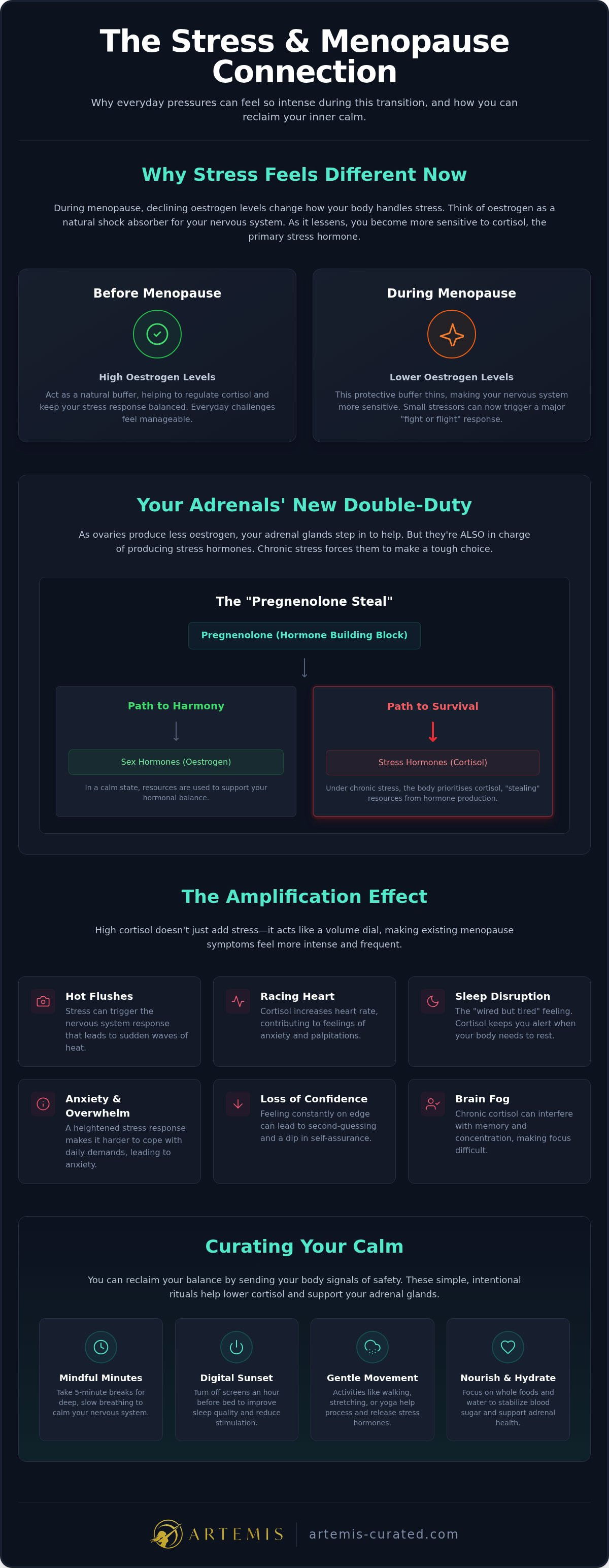
Oestrogen acts as a natural guardian for the female brain. It helps regulate our response to cortisol, the primary hormone our bodies release when we're under pressure. As oestrogen levels begin to decline, this protective buffer becomes thinner. This shift is a key factor in how stress affects menopause symptoms. Without that steady hormonal support, your nervous system can become more sensitive to the "fight or flight" response. Small, everyday stressors that you used to brush off might now feel like major hurdles. It's a biological sensitivity shift that changes how you process the world. For a comprehensive overview of menopause and its stages, understanding this link between the brain and hormones is vital. Your body is essentially relearning how to handle the highs and lows of daily life.
The Emotional Toll of the Transition
This phase often brings a quiet, unexpected loss of confidence. You might find yourself second-guessing decisions or feeling a prickle of anxiety in situations that used to feel comfortable. It's a period of "re-tuning" where the old ways of coping don't quite fit anymore. Acknowledging this emotional toll is the first step toward reclaiming your balance. It encourages a shift toward intentionality. Rather than rushing through the day, you begin to practice the art of selection. You learn to choose where your energy goes, focusing on what truly matters. This isn't about doing less; it's about doing things with more purpose and soul.
The Cortisol Shift: Understanding the Adrenal Glands’ New Role
As your ovaries begin to quieten, a remarkable transition occurs within your endocrine system. Your adrenal glands, those small but mighty caps sitting atop your kidneys, step into a new role as the secondary producers of oestrogen. This shift is a fundamental part of your body's wisdom, designed to maintain a gentle level of hormonal support during your later years. However, these glands are also your primary responders to stress. When life feels frantic, your adrenals are forced to choose between producing the hormones that keep you feeling balanced or the cortisol needed to keep you going. This competition is at the heart of how stress affects menopause symptoms, as your body prioritises survival over serenity.
When the Adrenals Take the Lead
The transition from ovarian to adrenal hormone production is a delicate process that requires a calm internal environment. If you're living in a state of chronic stress, your adrenals become distracted by the constant demand for cortisol. The 'Pregnenolone Steal' refers to the biological process where the body prioritises the production of cortisol over sex hormones, effectively diverting the essential building blocks needed for hormonal harmony. This means that instead of supporting your transition, your adrenals are stuck in survival mode. Chronic stress essentially hijacks the resources meant for your vitality, making the physical and emotional shifts of menopause feel more pronounced and harder to manage.
The HPA Axis: Your Internal Control Centre
Think of the HPA axis as the conductor of your body’s hormonal orchestra. It's a sophisticated feedback loop between your brain and your adrenal glands that determines exactly when to release stress hormones. In our modern, high-paced lives, this delicate loop is often under constant pressure, leading to a state of permanent alert. Cortisol works to manage glucose levels in the blood, providing the immediate surge of energy required to meet a perceived threat. When this system is always "on", it becomes incredibly difficult for your body to find its way back to a state of rest. Finding ways of managing menopause symptoms starts with quieting this internal alarm system and giving your HPA axis the chance to reset.
When you're ready to support this internal transition with intention, exploring a curated approach to balance can help settle the nervous system and provide the nourishment your adrenals need to thrive. By understanding the new role your body is asking your adrenal glands to play, you can move away from the frantic energy of "getting through the day" and toward a more soulful, supported experience of your hormonal health.
The Amplification Effect: How Stress Heightens Specific Menopause Symptoms
Stress isn't merely an emotional burden; it's a physical amplifier. Think of it as a volume dial for your body's internal signals. When you're under pressure, your system becomes louder and more reactive. This is a primary reason why understanding how stress affects menopause symptoms is so important for your daily comfort. High cortisol levels can cloud your cognitive function, creating a persistent "brain fog" that makes simple decisions feel heavy. It isn't that your mind is failing. It's that the chemical environment is too noisy for clear thought.
When cortisol remains high, it acts as a catalyst for several common experiences:
- Heightened sensitivity to noise and light
- A sudden, racing heart during minor tasks
- Difficulty finding the right words mid-sentence
- An inability to feel fully rested, regardless of sleep duration
The Midnight Spike: Why You Wake at 3 AM
Many women find themselves staring at the ceiling at 3 am, feeling suddenly alert for no apparent reason. This often happens because of a subtle dip in blood sugar. When your glucose levels drop during the night, your body perceives it as a minor emergency and releases cortisol to provide a quick energy boost. This surge acts as a natural alarm clock, signalling your brain to wake up. It also interferes with melatonin, the hormone that helps you drift into deep, restorative rest. Creating a refined evening ritual with The art of sleep - deep sleep support can help settle this nocturnal rhythm, allowing your body to remain in a state of quiet repose rather than waking in a panic.
Temperature and Temperament
There's a fascinating link between your emotional state and your body's thermostat. In the brain, there's a "thermoneutral zone," a small temperature range where you feel neither too hot nor too cold. During menopause, this zone narrows significantly. Stress makes it even smaller. This means even a tiny spike in cortisol can trigger a sudden, intense hot flush. It's why an awkward conversation or a tight deadline often leads to a physical heatwave. Your oestrogen levels actually dictate your stress threshold; as they decline, your tolerance for these triggers changes. Recent clinical research on cortisol and menopause has highlighted how these elevated hormone levels can have lasting impacts on long-term well-being. By choosing to lower the volume of stress, you aren't just feeling better in the moment. You're protecting your future vitality.
Curating Your Calm: Intentional Rituals to Lower Cortisol Naturally
The traditional idea of "managing" stress often feels like just another chore on an already long to-do list. Instead, try thinking of it as curating your life. It's about being selective with your time and energy. When you understand how stress affects menopause symptoms, you realise that your nervous system requires a much softer touch than it might have in the past. High-intensity workouts that once felt energising can now sometimes backfire, triggering the very cortisol spikes you're trying to avoid. Choosing gentle, rhythmic movement like a slow walk in nature or a focused Pilates session signals to your body that it's safe to settle and unwind.
Breathwork is perhaps the most direct dial we have to the nervous system. Taking just a few minutes for intentional, deep breathing can physically lower your heart rate and quiet a racing mind. It's a simple, portable tool that helps you navigate those moments when the "volume" of your physical symptoms starts to feel a little too loud. By making these small shifts, you move away from a state of constant reaction and toward a more balanced daily rhythm.
Rituals of Renewal and Restoration
Nutritional Foundations for the Adrenals
The nutrients you choose act as a vital buffer for your stress response. Magnesium is particularly essential during this transition, as it helps regulate the HPA axis and supports deep muscle relaxation. Vitamin C is another critical ally, as your adrenal glands consume it at a much higher rate during times of pressure. Keeping your blood sugar steady throughout the day is equally important, as it prevents the sudden glucose drops that can trigger unwanted cortisol surges. Adaptogenic herbs act as gentle regulators, supporting the body’s natural rhythm by helping the adrenal glands respond more gracefully to life's demands.
By focusing on these foundational elements, you can begin to build a personal wellness narrative that feels supportive rather than demanding. To explore a range of supplements designed with this level of intentionality, you can browse The Full Curated collection for a more balanced approach to your hormonal health.
Restoring the Rhythm: Sophisticated Support for Your Hormonal Journey
Finding balance isn't a destination you arrive at once and then forget. It's a continuous act of restoration. Throughout this guide, we've explored the biological reality of how stress affects menopause symptoms, from the midnight wake-up calls to the sudden heat of a hot flush. Now, the focus shifts toward the tools and philosophies that help you reclaim your sense of self. At Artemis Curated, we believe wellness should be an intentional choice; it's a soulful addition to your daily life that respects the complexity of your body's transition.
The Art of Harmony: A Curated Collection
Our approach to menopause support is built on the idea that physical relief and emotional calm are inseparable. The art of harmony - menopause support is designed to provide this targeted relief, acting as a steadying influence when your internal rhythm feels disrupted. It's particularly effective during the delicate perimenopause phase, where supporting the adrenal glands becomes a priority to prevent the "wired but tired" state we've discussed. For those seeking a deeper understanding of this transition, our Navigating Menopause: A Curated Guide to Holistic Harmony offers a more expansive look at finding your centre.
A Soulful Commitment to Vitality
There's a distinct value in knowing the origins of what you bring into your home and your body. We often speak about the "hand of the maker" in artisanal design, and we apply that same reverence to our supplement collections. We reject mass-produced, one-size-fits-all solutions. Instead, we favour the carefully selected and the deeply meaningful. Every element in our collection is chosen with a specific purpose, contributing to a larger personal story of health and vitality. It's about moving away from mere consumption and toward a practice of collecting with purpose. Your well-being is a narrative worth curating with care.
True hormonal health is a holistic tapestry. It's woven from the nutrients you ingest, the rituals you keep, and the quality of rest you allow yourself. By combining high-quality support with intentional moments of quiet, you give your body the space it needs to adapt and thrive. We invite you to explore the Full Curated collection to discover how these pieces work together to support your total vitality. This is your journey, and it deserves to be supported with the same care and elegance you bring to every other part of your life. Understanding how stress affects menopause symptoms is only the beginning; the real beauty lies in how you choose to respond.
Reclaiming Your Sense of Balance
You now have a clearer understanding of how stress affects menopause symptoms, from the biological demands placed on your adrenal glands to the way cortisol can amplify physical discomfort. By choosing to lower the volume of the world around you, you allow your body the space it needs to find its new rhythm. Every intentional choice, whether it's a quiet moment of breathwork or selecting the right nutritional support, helps restore your inner calm.
Founded by women for women, Artemis Curated offers sophisticated support for the discerning woman. Our collections are intentionally crafted for the menopause journey, ensuring you have the tools you need to feel like yourself again. Ready to start your own wellness narrative? Explore our curated collections for hormonal harmony and discover a more serene way to navigate this transition.
It's time to move away from the frantic and toward the meaningful. You have the agency to shape your experience, one soulful ritual at a time.
Frequently Asked Questions
Can stress make menopause symptoms worse?
Yes, stress acts as a direct volume dial for your physical and emotional experiences. When your body is flooded with cortisol, it heightens your sensitivity to hormonal shifts, making hot flushes more frequent and anxiety feel more intense. This is a primary example of how stress affects menopause symptoms by taxing an already sensitive nervous system that's trying to find a new equilibrium.
How can I lower my cortisol levels naturally during menopause?
You can lower cortisol naturally by adopting intentional daily rituals that signal safety to your brain. Practising slow, deep breathing for just five minutes or choosing a rhythmic walk in nature can significantly settle your nervous system. Prioritising magnesium-rich foods and maintaining steady blood sugar levels also prevents the sudden spikes that keep your body in a state of survival mode.
What does a "cortisol belly" look like?
A "cortisol belly" typically appears as a concentrated area of weight gain around the midsection and abdomen. This happens because high levels of stress hormones signal the body to store fat deep within the belly to protect vital organs during perceived emergencies. It often feels different from general weight gain, appearing more prominent even if other areas of your body remain unchanged.
Why do I wake up at 3 AM during menopause?
Waking up at 3 am is often caused by a subtle dip in blood sugar that triggers a protective cortisol surge. Your body perceives the low glucose as a minor crisis and releases stress hormones to wake you up and find energy. This nocturnal spike disrupts your natural melatonin production, making it difficult to drift back into a deep, restorative sleep without the right support.
Is it possible to test my cortisol levels at home?
Yes, you can monitor your levels using private at-home testing kits available in the UK, which typically use saliva or finger-prick blood samples. These tests often measure your cortisol at different points throughout the day to map your "cortisol curve." While these provide a helpful snapshot of your stress response, it's always wise to discuss the results with a healthcare professional for a complete picture of your health.
Can supplements help with stress-related menopause symptoms?
Supplements can be a powerful tool for navigating how stress affects menopause symptoms by providing the specific nutrients your adrenal glands need to function well. Ingredients like magnesium and Vitamin C act as a buffer against the physical impact of daily pressure. Curated collections, such as "The art of harmony", are designed to support this delicate transition by addressing both the physical heat and the emotional overwhelm.
How long does it take to balance cortisol levels?
Balancing your cortisol levels is a gradual process that usually takes between four to twelve weeks of consistent lifestyle changes. Your body needs time to unlearn the habit of being on high alert and to rebuild its natural resilience. With steady nutrition and daily restorative rituals, you'll likely notice a gentle shift in your energy and mood within the first month of practice.
What is the best time of day to take vitamins for stress support?
The best time depends on the specific nutrient you're using to support your nervous system. Energising vitamins like B-complex or Vitamin C are often best taken in the morning to support your daily energy requirements and adrenal function. Conversely, minerals like magnesium are most effective when taken in the evening, as they encourage muscle relaxation and prepare your body for a deeper, more peaceful sleep.
0 comments