

What if the distance between you isn’t a sign that your relationship is failing, but a signal that something needs understanding? The impact of menopause on marriage can show up in quiet, everyday ways: broken sleep that leaves little patience, mood changes that are hard to explain, or a shift in desire that one partner experiences as rejection. These changes can feel personal, even when they’re connected to symptoms neither of you chose.
If you’ve felt misunderstood, less close, or unsure how to talk about intimacy, it’s understandable to want clearer answers. Menopause affects couples differently, and it doesn’t have to define what comes next. Shared understanding can help you replace blame with curiosity and make room for both partners’ needs. This article looks at how symptoms may place strain on a relationship, offers practical ways to communicate and support each other, and explains when ongoing symptoms or relationship difficulties may call for additional help. The aim isn’t to find fault. It’s to face a changing season together, with care and honesty.
Key Takeaways
- The impact of menopause on marriage varies from couple to couple. Symptoms may add pressure, but they don’t determine a relationship’s future.
- Consider menopause alongside wider relationship patterns and other midlife pressures before drawing conclusions.
- Choose a calm moment to talk: describe what you’re experiencing, say what support would help, then make space to listen.
- Agree on small, practical ways to stay connected, without expecting one conversation to solve everything.
- Support can be personal and shared. The art of harmony is a menopause-support supplement that can be considered as part of an individual wellbeing routine.
How menopause can change the experience of marriage
Changes in a relationship can feel unsettling, especially when they arrive alongside changes in health, sleep or mood. Feeling less connected for a time doesn’t automatically mean a marriage is failing. The impact of menopause on marriage varies from couple to couple. Menopause may add strain, but it isn’t a diagnosis of a relationship or a prediction of what will happen next.
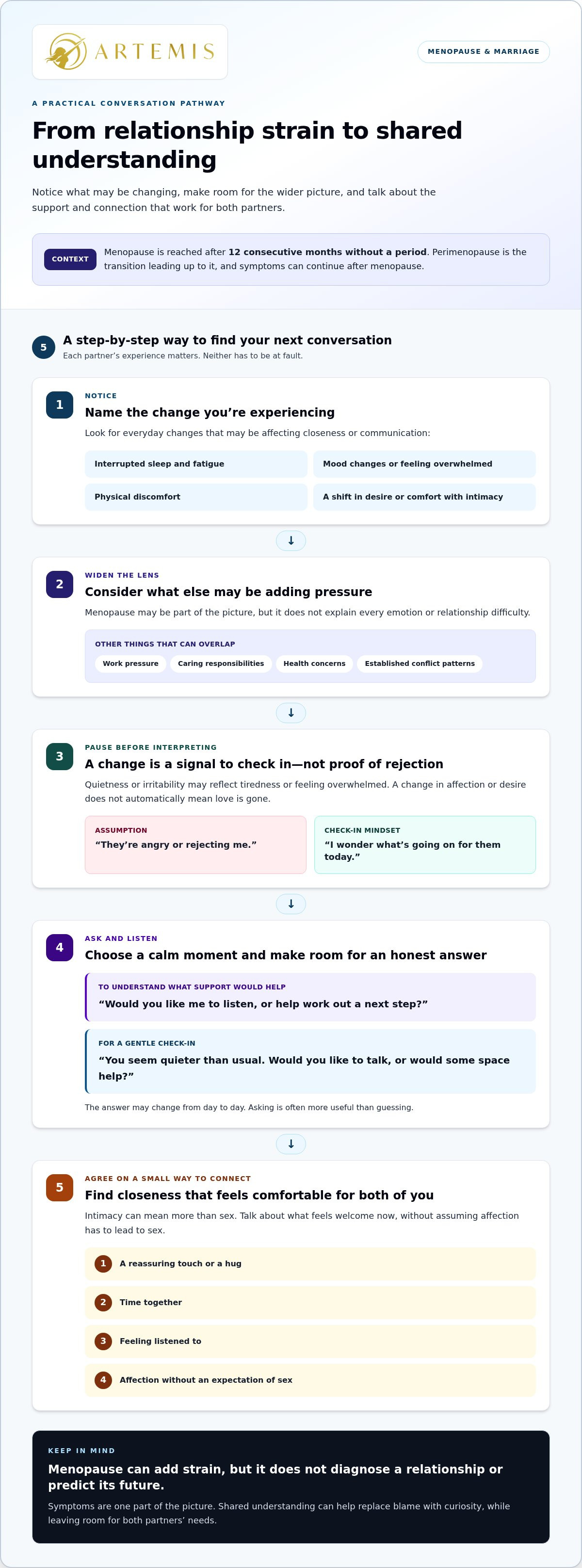
Menopause is the point reached after 12 consecutive months without a period. The menopausal transition, often called perimenopause, is the period leading up to it, when changes in menstrual cycles and symptoms may begin. Symptoms can also continue after menopause. For an overview of the stages and physical changes, see Menopause.
It can be difficult to separate what’s related to menopause from what’s happening elsewhere in life. Work pressure, caring responsibilities, health concerns and established ways of handling conflict may all overlap. Hormonal changes can be part of someone’s experience, but they don’t explain every emotion or relationship difficulty.
Why a life transition may affect both partners
Interrupted sleep can leave someone with less energy for conversation or shared plans. Changes in mood may make small misunderstandings feel sharper, while physical discomfort can affect how welcome closeness feels. The other partner may notice a change without knowing what’s behind it and feel uncertain or shut out. Both experiences can be real. Neither partner has to be at fault.
Partners may also have different ideas about what support looks like. One might want practical help; the other may offer advice when what’s needed is simply to be heard. Try asking, “Would you like me to listen, or help work out a next step?” That makes it easier to offer the kind of support your partner wants.
When feeling distant does not mean love is gone
Temporary strain, unmet needs and long-standing patterns aren’t the same thing. A couple might be out of step because one person has less energy for evening plans while the other sees that time together as essential. Or one may want affection without sex, while the other isn’t sure how to start a conversation about intimacy. Naming the mismatch gently can help both partners understand what’s missing without assuming rejection.
If distance continues, notice whether it began alongside symptoms, reflects a need that hasn’t been discussed, or connects with a pattern that existed earlier. These possibilities can overlap. Understanding the wider menopause experience can offer useful context while leaving room for each couple’s circumstances.
How menopause symptoms can affect communication, mood, and intimacy
Menopause symptoms don’t affect everyone in the same way, and their effects can be felt by both partners. One person may be dealing directly with disrupted sleep or physical discomfort; the other may feel the knock-on effect when plans change, conversations become harder, or affection shifts. These patterns can help explain some of the impact of menopause on marriage, but they can’t tell you exactly what’s happening in any one relationship.
Mood changes, stress, and misunderstandings
After a poor night’s sleep, fatigue can make it harder to concentrate, manage stress and respond patiently. Ordinary disagreements may then feel more difficult to navigate. If one partner becomes quieter or more irritable, the other might read it as anger or rejection, when the person may instead be tired or overwhelmed. That context can invite empathy, but it doesn’t make either partner’s feelings less important. Both deserve to be heard.
A gentle check-in can prevent assumptions from taking hold: “You seem quieter than usual. Would you like to talk, or would some space help?” The answer may change from day to day. Asking is often more useful than guessing.
Changing desire and physical intimacy
Desire and comfort can shift during menopause, but they’re also shaped by stress, health, medication, life changes and the quality of the relationship. Intimacy is broader than sex. It can include a reassuring touch, a hug, time together, feeling listened to, or knowing that affection doesn’t come with an expectation of sex.
Talk about what feels comfortable now, rather than comparing things with how they used to be. One partner might want closeness but not sexual touch; the other may need reassurance that a change in desire isn’t automatically a loss of love. Clear, kind conversations about boundaries and preferences can help you find forms of connection that work for both of you.
For background on hormones and their role in the body, explore this guide to oestrogen. If you’re considering personal wellbeing options, The art of passion is a supplement positioned to support libido. A supplement isn’t a treatment for menopause symptoms or relationship concerns, and it can’t replace open communication.
Menopause and marriage: what it can explain, and what it cannot
Menopause doesn’t inevitably lead to a marriage ending. The impact of menopause on marriage is different for every couple, and symptoms can’t predict a relationship’s future. They may help explain why someone feels more tired, less patient or less comfortable with intimacy, but they’re only one part of the picture.
Work pressure, caring responsibilities, financial worries, health concerns and familiar ways of handling disagreement can all add strain at the same time. A couple who are already struggling to share responsibilities, for example, may find that poor sleep leaves them with less energy to talk things through. The symptom may add pressure without being the source of the underlying disagreement.
Avoiding the “it’s only hormones” explanation
Blaming every disagreement on hormones can leave real concerns unheard. So can treating every change as proof that the relationship is in trouble. Experiences differ, and neither partner can assume they know the cause without talking about it. Try asking, “What feels different for you lately?” and “What would help right now?” Explanations can build understanding, but they don’t excuse hurtful behaviour or make unmet needs less important.
Look at patterns rather than reaching for a quick conclusion. These prompts can help you start a discussion, but they can’t diagnose the cause:
- Could be linked with changing symptoms: tiredness, less energy for social plans, or shifts in comfort and desire that seem to vary over time.
- May need separate attention: repeated arguments about responsibilities, feeling unheard over a long period, or conflict that continues regardless of how symptoms change.
Both may be present. A new difficulty can sit alongside an older concern, and a partner’s experience matters even when symptoms offer helpful context.
Recognising when difficulties need more support
If distress persists, conflict escalates, or a change in wellbeing feels significant, it’s reasonable to seek support rather than wait for things to resolve on their own. A GP or another qualified healthcare professional can discuss health symptoms that are troubling or disrupting daily life. Ongoing relationship strain may also benefit from appropriate relationship support. These steps aren’t a verdict on either person; they’re ways to get clearer guidance and help.
Menopause can be part of the explanation, but it doesn’t have to become the whole story. Making room for symptoms, individual needs and the relationship’s wider context gives both partners a fairer place to begin.
Practical ways to talk about menopause and protect connection
Talking about changes can feel vulnerable, especially if either of you is tired or worried about being misunderstood. You don’t need to solve everything in one conversation. A calmer, smaller start can help you understand what each person is experiencing and what support might feel useful.
How to start a conversation without blame
Choose a moment when you’re both relatively calm, rather than raising a sensitive subject in the middle of an argument or when one of you is rushing out. Speak from your own experience instead of guessing what your partner thinks or intends. For example: “I’ve been feeling a bit distant, and I miss spending time together. Could we talk about what’s been feeling different for both of us?”
Then name one need and invite your partner’s view. You could say, “I don’t need us to fix everything tonight, but I’d appreciate you listening,” or “What kind of support would help this week?” Give each other time to answer. If the conversation becomes overwhelming, agree to pause and return to it at a specific time. A pause isn’t a refusal to engage; it can help both people feel ready to listen.
Small routines that make room for connection
Try a brief check-in at a regular time. Ask, “What’s felt difficult this week?” and “What’s one thing that would make next week easier?” Listen before offering solutions. Support might mean sharing a practical task, making more room for rest, or simply acknowledging what your partner has told you. Review the arrangement later, since needs can change and a routine should be helpful to both of you.
Connection doesn’t have to depend on sex. You might take a short walk, sit together without phones, share a cup of tea or ask whether a hug would feel welcome. Small gestures can keep affection present without creating pressure.
For intimacy, make consent and comfort part of the conversation. Ask what kinds of touch feel good, what doesn’t, and whether either person wants to explore a different kind of closeness. Boundaries can change, and either partner can say no or change their mind. Curiosity and reassurance matter more than reaching a particular outcome.
Stress can make it harder to find the energy for these conversations and routines. If you’d like to explore general wellbeing alongside practical relationship support, browse the wellbeing collection. The impact of menopause on marriage isn’t something one person has to manage alone. Small, revisable acts of listening and support can help you find a way forward together.
Finding shared support through menopause and beyond
There isn’t one right way to handle menopause as a couple. Support may be personal, shared, or a mix of both, and what helps can change over time. The aim isn’t for one partner to manage everything. It’s to make space for each person’s needs and decide together what feels useful.
Building a support plan that respects both partners
It can help to separate practical needs, emotional needs and health questions, so they don’t all have to be solved in one conversation. For example, you might discuss:
- Practical support: Which daily tasks could be shared differently if sleep or energy is affected?
- Emotional support: Is listening, reassurance, time together or a little space most helpful right now?
- Health questions: Which symptoms feel troubling or disruptive, and what would you like to discuss with a GP or another qualified healthcare professional?
Revisit the plan as routines, symptoms and preferences change. One person can offer support, but they shouldn’t have to carry responsibility for the other’s health or wellbeing. Both partners can take part in conversations and decisions while respecting each other’s privacy and choices.
A thoughtful role for personal wellbeing
Clear communication and appropriate health guidance remain central. Supplements aren’t a substitute for medical advice or treatment, particularly if symptoms are troubling or affecting everyday life. They also shouldn’t be presented as a way to treat relationship concerns.
For those considering supplements as one optional part of personal self-care, Artemis Curated’s The art of harmony is designed for menopause support. It’s one consideration within a broader, individual approach to wellbeing, not a promise of a particular outcome.
The impact of menopause on marriage can feel difficult to make sense of, but seeking support is a constructive step, not a sign that either partner has failed. Keep talking, adjust your approach when needs change, and seek guidance for concerns that need more attention. Supplements can be one optional part of personal self-care.
Move forward with understanding and care
The impact of menopause on marriage isn’t the same for every couple, and symptoms don’t determine a relationship’s future. They may help explain changes in mood, energy or intimacy, but they’re only part of a wider picture. Honest, blame-free conversations can help both partners express what they need, listen with care and adjust their support as life changes.
If symptoms are troubling or disrupting daily life, discussing them with a qualified healthcare professional is a constructive step. For personal wellbeing, Artemis Curated offers The art of harmony for menopause support, alongside supplements focused on sleep and libido. These are optional wellbeing products, not treatments for symptoms or relationship concerns.
Understanding grows one conversation at a time. Explore Artemis Curated’s menopause support as one possible part of your personal wellbeing, and keep making space for patience, connection and support as a couple.
Frequently Asked Questions
Can menopause affect a marriage?
Yes, menopause can affect a marriage, though the experience is different for every couple. Symptoms such as disrupted sleep, changes in mood or physical discomfort may influence energy, communication and closeness. The impact of menopause on marriage isn’t automatic or the same for everyone. Work, caring responsibilities and existing relationship patterns can also shape how this life transition feels at home.
Can menopause cause relationship problems?
Menopause may add pressure to a relationship, but it doesn’t inevitably cause relationship problems or predict that a marriage will end. For example, tiredness may leave one partner with less energy to talk, while the other feels shut out. Try discussing what has changed without assuming the cause. Menopause symptoms can be part of the picture, alongside unmet needs, established disagreements and other life stresses.
How does menopause affect intimacy in a marriage?
Menopause may affect sexual desire or comfort, and this can influence physical intimacy. Intimacy also includes affection, touch, shared time and feeling understood. Partners may have different preferences, so talk without pressure about what feels welcome, what doesn’t and whether boundaries have changed. A hug or time together can be meaningful forms of closeness, but ask first and respect either person’s answer.
Can menopause make you feel distant from your partner?
It can contribute to feeling distant, but it isn’t the only possible reason. Poor sleep, feeling overwhelmed or changes in comfort may make conversation and connection harder. Distance can also reflect needs that haven’t been discussed or other pressures in life. Rather than deciding what it means straight away, tell your partner how you feel and ask what they’ve noticed. You can explore the change together without assigning blame.
How can I support my wife or partner during menopause?
Start by asking what support would help, then listen before offering solutions. You might say, “Would you like me to listen, or help with something practical?” Share everyday responsibilities where possible, and check in again as needs change. Avoid treating every feeling as a symptom or assuming you know what your partner wants. Respect their choices about health, comfort and intimacy, and share relevant health questions with a qualified professional.
Does menopause always lower libido?
No, menopause doesn’t lower libido for everyone. Desire varies between individuals and can change over time. Menopause-related symptoms or physical discomfort may play a part for some people, while stress, health, medication, life circumstances and relationship factors can also affect desire. A change in libido doesn’t automatically mean a loss of love or attraction. If it’s troubling, consider discussing it openly with your partner and a qualified healthcare professional.
When should couples seek help for menopause-related relationship strain?
Consider seeking support if distress continues, conflict is escalating, or health symptoms are troubling or disrupting daily life. A qualified healthcare professional, such as a GP, can discuss health concerns. Couples may also choose appropriate relationship support if conversations feel stuck. You don’t need to wait until things reach a crisis point. Asking for help is a practical step towards understanding what’s going on and finding support that suits you both.
0 comments