

What if the "grin and bear it" approach to menopause is actually a quiet thief of your future vitality? You might find yourself feeling not quite right, perhaps waking in the small hours with a racing heart or noticing a sudden, sharp edge of anxiety. It's easy to assume these shifts are just a temporary storm to be weathered. However, you are likely wondering what happens if you don't treat menopause symptoms and simply wait for the years to pass. It's a valid question, especially when you're looking for a path that feels more personal than a clinical prescription.
Leaving these changes unsupported isn't just about enduring a few uncomfortable months. It can have a lasting impact on your heart health and bone strength. In this guide, we'll explore how to nurture your body through this transition with quiet intention. You'll discover the physical and emotional risks of leaving symptoms unaddressed and learn how to reclaim your sense of harmony. We'll look at the vital role of deep rest and how a holistic approach can help you feel like yourself again, ensuring you move through this season with grace and strength.
Key Takeaways
- Recognise that menopause is a significant transition that deserves intentional care rather than a strategy of quiet endurance.
- Find out what happens if you don't treat menopause symptoms, especially the hidden impact on your future mobility and heart health.
- Understand why prioritising deep rest and mental clarity is essential for avoiding the emotional toll of untreated symptoms.
- Learn how to move away from simply "getting through it" by using nutrition and phytoestrogens to support your body's changing needs.
- Discover how "The art of harmony" can act as a foundational tool for your transition, helping you find a sense of physical ease.
Beyond the Hot Flush: Why Ignoring Menopause Symptoms Matters
Many women view menopause as a brief storm to be weathered, a collection of inconveniences like hot flushes or night sweats that will eventually pass on their own. While it is true that this is a natural transition, the idea that "natural" means we must suffer in silence is a persistent and unhelpful myth. There is a profound difference between simply getting through these years and choosing to thrive with intentional support. When you start to wonder what happens if you don't treat menopause symptoms, it's often because you feel a subtle shift in your internal rhythm that you can't quite name. You might feel less vibrant or find your usual patience wearing thin, sensing that your body is asking for a different kind of care.
The Protective Role of Hormones
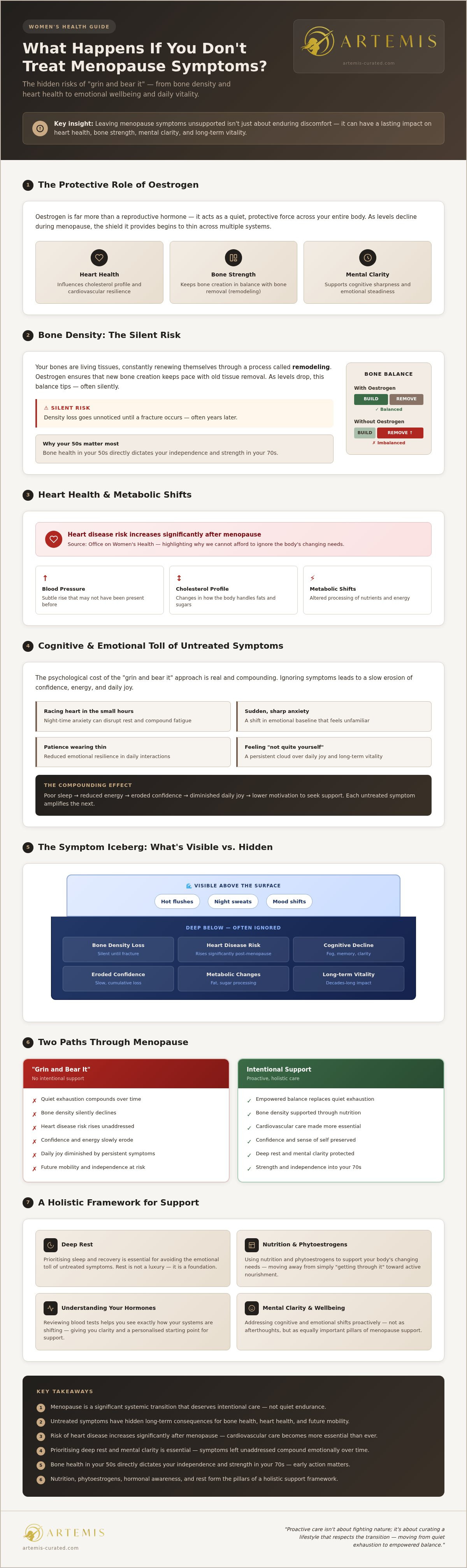
Oestrogen is far more than a reproductive hormone; it acts as a quiet, protective force for your entire body. It influences the health of your heart, the strength of your bones, and even the clarity of your thoughts. Menopause is a systemic shift in female physiology that reaches into every corner of your wellbeing. When levels decline, the protective shield it provides begins to thin, affecting the very rhythm of your daily life. Understanding menopause and its long-term health effects helps us see that these changes aren't just about comfort; they're about maintaining the integrity of our physical selves. Without support, the body's daily functions can lose their harmonious balance, leading to risks that extend far beyond the final period. It is about preserving the quality of your movement and the resilience of your heart.
The 'Grin and Bear It' Myth
Societal pressure often encourages women to place their own needs at the bottom of a very long list. We are taught to be resilient, to carry on, and to dismiss our discomfort as a minor price for ageing. This "grin and bear it" mentality comes with a heavy psychological cost. If you ignore the signs, you might find that what happens if you don't treat menopause symptoms is a slow erosion of your confidence and energy. Ignoring your symptoms can lead to a persistent sense of being "not quite yourself," a feeling that can cloud your daily joy and sap your long-term vitality. Proactive care isn't about fighting nature; it's about curating a lifestyle that respects the transition. By seeking support early, you can change the trajectory of your health. You move from a place of quiet exhaustion to one of empowered balance, ensuring your body remains a sanctuary of strength for the decades ahead. Exploring a curated collection of support can be the first step in reclaiming that internal harmony, allowing you to inhabit your space with confidence once more.
The Physiological Ripple Effect: Bone and Heart Health
The internal shifts of menopause often begin quietly, away from the visible surface of daily life. While hot flushes are the most discussed, the deeper physiological changes to your bone and heart health are perhaps the most significant. When considering what happens if you don't treat menopause symptoms, it's vital to look at how the decline of oestrogen alters the very architecture of your body. Proactive management isn't just about comfort today; it's about curating a future where your mobility and heart health remain as resilient as they are now.
Bone Density and the 'Silent' Risk
Your bones are living tissues, constantly renewing themselves through a process called remodeling. Oestrogen plays a key role here, ensuring that the creation of new bone keeps pace with the removal of old tissue. As levels drop, this delicate balance tips, often leading to a gradual loss of density that goes unnoticed until a fracture occurs. This is why bone health in your 50s is so critical; it dictates your independence and strength in your 70s. Independence matters. Strength endures. Understanding your current hormonal landscape is a powerful first step, and many women find clarity by reviewing Blood Tests for Women to see exactly how their systems are shifting.
Heart Health and Metabolic Shifts
The heart also feels the absence of oestrogen's protective influence. You might notice subtle changes in how your body handles fats and sugars, or perhaps a slight rise in blood pressure that wasn't there before. These metabolic shifts can alter your cholesterol profile, making cardiovascular care more essential than ever. According to Office on Women's Health menopause resources, the risk of heart disease increases significantly after menopause, highlighting why we cannot afford to ignore the body's changing needs. A steady pulse. A resilient heart. Nurturing your heart involves more than just observation. It requires a thoughtful approach to nutrition and movement that supports your circulation and metabolic health. By addressing these shifts now, you ensure that what happens if you don't treat menopause symptoms isn't a decline in vitality, but a transition into a well-supported chapter of life. For those seeking a foundational way to support these internal rhythms, exploring targeted wellness collections can provide the balance your body craves.
The Cognitive and Emotional Toll of Untreated Symptoms
There is a quiet, often unspoken tax that menopause levies on the mind. It begins with a misplaced word or a sudden, unexplained lapse in focus. This cognitive haze, often called brain fog, is frequently dismissed as a personal failing or a sign of being simply overwhelmed. However, it is a physiological reality. When considering what happens if you don't treat menopause symptoms, we must look at the slow erosion of our mental sharpness and emotional steady ground. It is not just about feeling slightly forgetful; it is about the integrity of your daily experience.
Navigating the Fog
Hormones are the conductors of our neurotransmitters. They dictate the clarity of our thoughts and the stability of our moods. When oestrogen and progesterone fluctuate without support, the music of the mind becomes discordant. Many women try to power through, yet this often leads to a hollowed-out state of burnout. Managing your internal stress response is vital for maintaining your edge. You can learn more about finding your steady state in our guide to Cortisol and Inner Harmony. Clarity is a choice. Focus is a practice.
The Sleep-Mood Connection
Rest is the foundation of resilience. Night sweats do more than just disrupt your comfort; they fragment your sleep-wake cycle, leaving you emotionally fragile by morning. Chronic sleep deprivation heightens irritability and anxiety, making daily tasks feel like monumental hurdles. This isn't just about feeling tired. It's about how your brain processes the world. According to the NHS, understanding menopause symptoms and long-term health risks is essential for preserving your quality of life. If left unaddressed, these emotional shifts can strain the most cherished relationships and stall career momentum. Restoring that balance is an act of self-respect. Tools like The art of sleep are designed to help you reclaim those lost hours of deep rest, allowing your mind to recover its natural poise.
The long-term impact of untreated mood swings shouldn't be underestimated. What happens if you don't treat menopause symptoms is that these temporary fluctuations can become ingrained patterns of anxiety or low mood. By choosing to support your system holistically, you are not just managing a symptom. You are curating a more harmonious way of being for the years ahead, ensuring you remain the author of your own story.
Cultivating Balance: A Holistic Framework for Support
We often speak of "treating" symptoms as if they were a temporary illness to be cured. However, menopause is a long-term evolution that invites us to curate our environment with more intention. If you've been wondering what happens if you don't treat menopause symptoms, the answer isn't just about avoiding medical intervention. It's about ensuring your body has the raw materials it needs to thrive in this new phase. When we move away from a reactive mindset, we can begin to build a framework of support that feels both natural and sophisticated. It's a shift from merely surviving to intentionally living.
Nourishing the Hormonal Landscape
Your body's nutritional requirements change during this time. Phytoestrogens, found in plants like flaxseeds and fermented soy, can gently support your system as natural oestrogen levels decline. Magnesium is another essential ally; it calms the nervous system and supports bone health, which is a silent priority for long-term mobility. Vitamin D is equally vital, ensuring calcium is effectively absorbed. Bridging the gap between a modern diet and these specific needs is where high-quality selection becomes powerful. For a deeper look at these essentials, you might find our guide on the Best Supplements for Women in 2026 particularly helpful. Quality matters. Purity is paramount.
Intentional Lifestyle Rhythms
The pace of your life plays a significant role in your hormonal harmony. High-intensity exercise can sometimes spike cortisol levels too sharply during menopause, leading to increased anxiety and fatigue. Shifting toward soulful movement, such as restorative yoga or brisk walks in the fresh air, helps lower systemic inflammation. Your home should also reflect this need for calm. Creating a cooling sanctuary with breathable fabrics and steady ventilation can significantly reduce the impact of night sweats. It's about crafting a life that respects your current rhythm. Stress management isn't a luxury; it's the cornerstone of your wellbeing. When you choose to support yourself holistically, you aren't just waiting for symptoms to pass. You're actively investing in your future vitality. To begin your journey toward a more balanced state, consider exploring The art of harmony as a foundational tool for your daily ritual.
Ignoring the body's signals can lead to a slow decline in bone density and heart health. This is why understanding what happens if you don't treat menopause symptoms is the first step toward a more proactive lifestyle. By selecting the right tools and rhythms, you can navigate this transition with a sense of grace and physical ease.
Choosing to support your body during menopause is an act of soulful intentionality. It's about recognising that your needs have shifted and that the old ways of "just getting on with it" no longer serve the person you are becoming. When you look at what happens if you don't treat menopause symptoms, it becomes clear that a lack of support isn't just about enduring discomfort. It is about the long-term story of your health. At Artemis Curated, we believe this transition is an opportunity to refine your wellness ritual, moving away from generic solutions toward a more considered, personal approach.
A Curated Path to Vitality
"The art of harmony" was created to simplify this journey. It provides a gentle, holistic foundation that respects the complexity of your physiology. Rather than focusing on a single symptom, this approach acknowledges the deep synergy between your hormonal balance, the quality of your sleep, and the radiance of your skin. When one element is out of rhythm, the others often follow. By choosing a Full Curated collection, you're not just buying supplements; you're selecting a set of tools designed to work in concert. This intentional selection helps you reclaim your sense of self, ensuring that the years ahead are defined by vitality rather than exhaustion.
Your Future Self Will Thank You
It's helpful to reframe the investment in your wellness as a gift to your future self. Taking proactive, natural steps today provides a sense of peace of mind that is truly luxurious. You aren't simply waiting for the storm to pass. You're building a sanctuary of health that will support your mobility and heart for decades. Understanding what happens if you don't treat menopause symptoms allows you to make informed, graceful choices. It's a rejection of the idea that women must simply endure. Instead, we invite you to embrace this transition with the support you deserve. This isn't about fleeting trends; it's about the enduring quality of your life. By choosing quality and soul over the mass-produced, you ensure your body remains a place of strength and harmony. Your transition is a story still being written. Make sure it is one of grace, support, and profound self-respect.
Reclaiming Your Sense of Harmony
Choosing to support your body through menopause is more than a lifestyle shift; it is a profound act of self-respect. We have explored the silent risks to bone and heart health, as well as the heavy toll that fragmented sleep and brain fog can take on your daily joy. Understanding what happens if you don't treat menopause symptoms allows you to move beyond the myth of "powering through" and toward a more intentional way of living. By selecting high-quality, targeted support, you ensure that this transition becomes a chapter of growth rather than a season of quiet endurance. A steady pulse. A clear mind. A resilient spirit.
Artemis Curated was founded by Milly and Sarah with a vision for the modern, discerning woman who values soul and quality. Our collection is expertly designed to provide the physical and emotional steady ground you deserve. We invite you to Explore The Art of Harmony: Holistic Menopause Support and discover how a curated approach can restore your internal rhythm. Your future vitality is a story worth telling. Embrace this new phase with the grace, strength, and expert care your body has been asking for.
Frequently Asked Questions
Can menopause symptoms cause long-term health problems if left alone?
Yes, ignoring the body's signals can lead to significant long-term health issues. When considering what happens if you don't treat menopause symptoms, the primary concerns are bone density loss and an increased risk of heart disease. Oestrogen acts as a protective shield for these systems. Without support, the decline in this hormone can leave your skeleton more fragile and your cardiovascular system less resilient, affecting your mobility and vitality in the decades to come.
Is it ever too late to start supporting menopause symptoms?
It is never too late to begin a journey toward better balance. Whether you are in the early stages of perimenopause or have been post-menopausal for years, your body responds to intentional, soulful care. Starting a supportive ritual like "The art of harmony" can help manage ongoing symptoms and protect your future wellbeing. Every small step toward holistic wellness contributes to a larger story of health, helping you feel more like yourself at any age.
What are the most common risks of untreated oestrogen deficiency?
The most common risks of untreated oestrogen deficiency are osteoporosis and cardiovascular changes. As oestrogen levels drop, your bones may lose density more quickly than they can rebuild, which increases the chance of fractures. Your heart health is also affected as the body's ability to manage cholesterol and maintain healthy blood vessels shifts. Proactive management helps preserve these essential systems, ensuring you maintain your independence and physical strength as you age.
Can I manage menopause symptoms naturally without HRT?
Many women find that a holistic framework provides the balance they need without clinical intervention. While we don't offer HRT, we focus on how targeted nutrition, lifestyle rhythms, and high-quality supplements can support your system. Phytoestrogens and minerals like magnesium play a vital role in managing the transition. Choosing "The art of harmony" allows you to nurture your body naturally, bridging the gap in modern nutrition and helping you find a sense of physical ease.
How long do menopause symptoms typically last if you don't treat them?
The duration of symptoms is deeply personal and varies for every woman. While hot flushes might eventually subside for some, the underlying physiological changes, such as bone density loss, continue. If you don't treat menopause symptoms, you might find that certain emotional or cognitive shifts become more ingrained over time. Supporting your body early can change the trajectory of these years, moving you from a place of enduring discomfort to one of long-term wellness and harmony.
What happens to my skin and hair if I don't support my hormones?
Your skin and hair are often the visible narrators of your internal hormonal shifts. Without support, the drop in oestrogen can lead to a noticeable loss of collagen, resulting in dryness and a loss of elasticity. You might also notice your hair becoming thinner or losing its natural lustre. To support your hair from the outside, you can discover Urban Care and their range of specialized products. Targeted support like "The art of radiance" is also designed to provide the specific nutrients your body needs to maintain its natural glow and strength through this transition.
Untreated symptoms can indeed have a lasting impact on your cognitive wellbeing. Chronic sleep deprivation from night sweats and the physiological reality of brain fog can erode your mental clarity and emotional resilience. Over time, this can lead to persistent anxiety or a sense of being disconnected from your surroundings. Supporting your brain health through rest and targeted supplements helps protect your focus and ensures you remain present and engaged in your own life story.
0 comments