

What if the end of your period wasn't the closing of a chapter, but the quiet beginning of your most intentional era yet? Many of us spend years bracing for the change, only to find ourselves on the other side wondering why the heat hasn't fully faded or why our bodies feel so unfamiliar. Truly understanding what to expect after menopause involves more than just tracking symptoms. It's about learning the language of your body's new hormonal baseline and realizing that this phase is a recalibration, not a fading out.
It’s common to feel a sense of unease when persistent hot flushes linger or when you start to worry about your bone density and heart health. You want to feel at home in your skin again, but the shift in weight and energy can make that feel like a distant goal. This guide will show you how to curate a lifestyle that supports long-term harmony and vitality. We'll explore the latest 2026 health updates, from new non-hormonal options like elinzanetant to essential screening rituals, helping you move forward with a clear and soulful plan for your well-being.
Key Takeaways
- Understand the official milestone of postmenopause, which begins exactly 12 months after your final period, and how your new hormonal baseline affects your daily life.
- Get a clear picture of what to expect after menopause, from why certain symptoms like hot flushes might linger to how your body's needs change over time.
- Learn practical ways to protect your bone density and heart health as your body adjusts to naturally lower levels of oestrogen and progesterone.
- Shift your mindset from just managing symptoms to creating a daily routine that prioritises your long-term vitality and peace of mind.
- Discover how holistic support, such as "The art of harmony," can help you find a sense of balance and calm during this new life stage.
Understanding the Postmenopausal Milestone: Life After the Transition
The transition into postmenopause is often whispered about as a finish line. In reality, it's more of a threshold into a steadier, more intentional way of living. Reaching the twelve-month mark without a period is a significant milestone. It marks the official close of your reproductive years. For many, there is an undeniable sense of relief in this stillness. The unpredictable cycles of perimenopause have finally ceased. Yet, this new chapter requires its own unique form of attention. It’s a common misconception that every symptom will vanish the moment you hit that one-year anniversary. Understanding the nuances of Understanding Menopause is essential for navigating this 'new normal' with grace.
When considering what to expect after menopause, it's helpful to view your body as a space that has been cleared of old clutter. You aren't just "getting older"; you're recalibrating. This phase is less about the frantic management of change and more about the soulful appreciation of a body that has found its steady state. While the hormonal fluctuations of the past were loud and demanding, the postmenopausal years offer a quieter, more consistent rhythm that allows for deep health curation.
The 12-Month Mark: Why It Matters
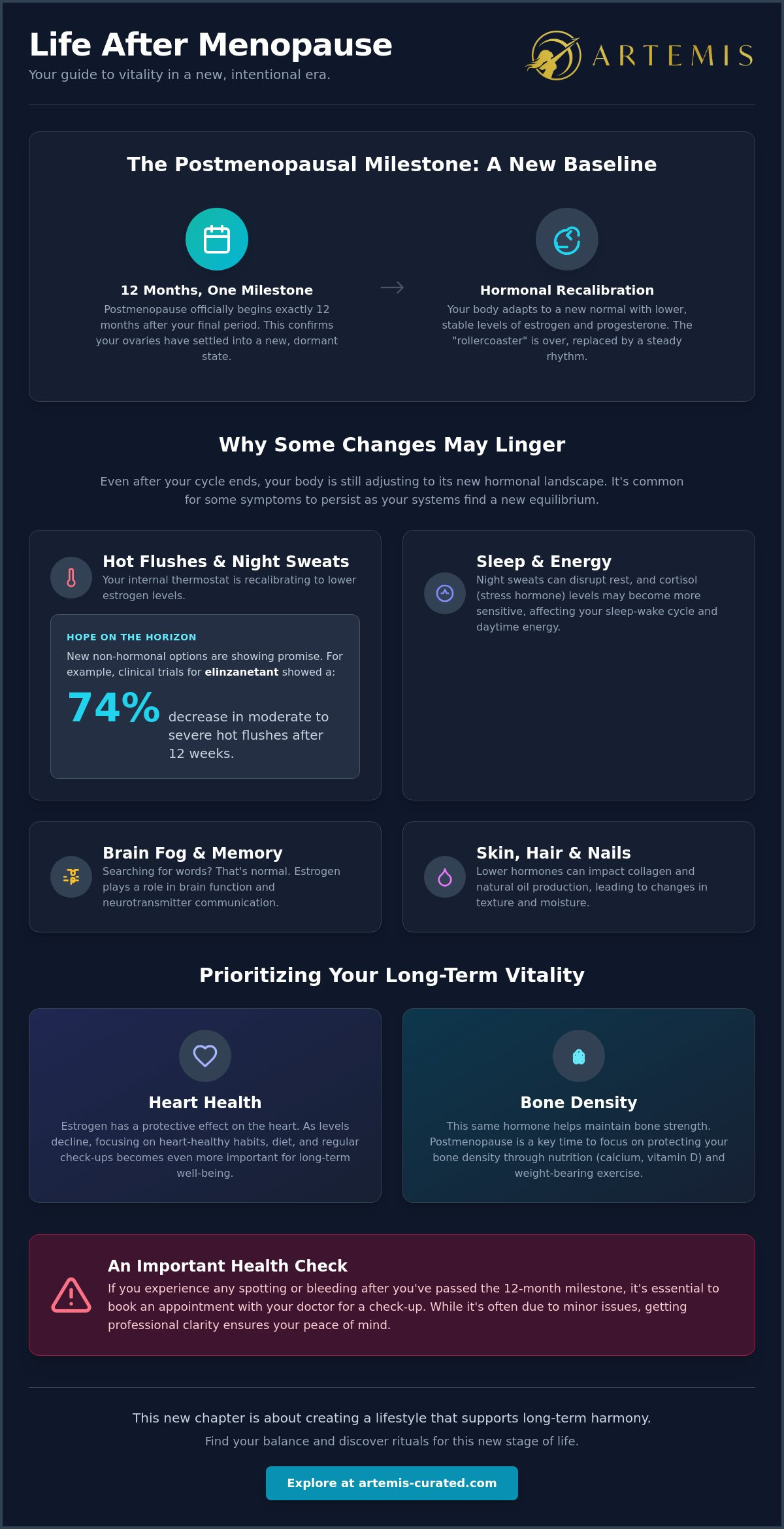
The one-year anniversary of your last period isn't just a date on the calendar. It’s a clinical boundary. This duration is necessary to ensure the ovaries have truly transitioned into a dormant state. Tracking your body remains vital during this first year of postmenopause. While you won't be tracking cycles, you should be observant of your overall well-being. If you experience any spotting or bleeding after this 365-day milestone, you should book an appointment with your GP. While often linked to minor issues, professional clarity ensures your path forward remains serene and secure.
Hormonal Recalibration and Its Effects
Your body is now adapting to a permanent baseline where oestrogen and progesterone remain at lower, stable levels. The "rollercoaster" effect is over, replaced by a hormonal landscape that is consistent rather than cyclical. This shift affects everything from your skin’s texture to your bone density. Postmenopause is a lifelong phase of refined health management. It isn't a temporary state to "get through" but a lasting environment to nurture. As you learn what to expect after menopause, you'll find that your needs become more about long-term preservation and finding harmony in this new, steady state. You can explore our Full Curated collection to find rituals that support this intentional way of living.
Persistent Symptoms: Why Some Changes Stay with You
While the monthly cycle has ended, your body is still finding its footing. It’s a common surprise for many to realize that symptoms like hot flushes and night sweats don’t always vanish overnight. When you look at what to expect after menopause, it’s helpful to understand that your internal thermostat and cognitive clarity are adjusting to a new, lower level of oestrogen. This isn't a failure of your body. It's a shift in how your systems communicate. While many rely on traditional methods, 2026 has brought new non-hormonal options into the light. Clinical trials for treatments like elinzanetant, for instance, have shown a 74% decrease in moderate to severe hot flashes after 12 weeks of use, offering fresh hope for those seeking alternatives.
The Continued Challenge of Sleep and Energy
Sleep often feels elusive in the postmenopausal years. Night sweats are a primary culprit, leading to fragmented rest that leaves you feeling drained by mid-morning. There is also a deeper biological layer at play. Your cortisol levels, the hormones that manage stress and your wake-sleep cycle, can become more sensitive now. Learning about Cortisol: Curating the Rhythm of Inner Harmony is a great way to understand how to settle your nervous system for better rest. When your energy is balanced, you’re better equipped to manage the other post-menopause health risks that come with this stage of life.
Intimacy and Libido in the Postmenopausal Phase
Intimacy is another area where many women notice a significant shift. Lower oestrogen can lead to vaginal dryness and a natural dip in sexual desire, which can feel like a loss of a part of yourself. These changes are completely normal, yet they are rarely discussed with the openness they deserve. It helps to approach these shifts with kindness toward your body. Having honest, relaxed conversations with your partner can take the pressure off and help you both adapt. Supporting your body through holistic wellness can also play a role in reclaiming your sense of passion and connection.
Finding balance during this time is about more than just managing symptoms. It’s about choosing rituals that help you feel at home in your skin again. If you’re looking for a way to support your body's new rhythm, you might find comfort in The art of harmony, which is designed to bring a sense of calm and hormonal support to your daily routine.
Prioritising Long-Term Vitality: Bone and Heart Health
Once the immediate symptoms like hot flushes settle into the background, your focus naturally shifts toward the long-term structure of your health. Understanding what to expect after menopause means looking beneath the surface at the systems that keep you moving and thriving. Oestrogen once acted as a protective shield for your bones and heart. With its levels now lower, your body requires a more intentional approach to maintenance. This isn't about bracing for decline. It’s about curating a lifestyle that respects your body's new requirements for health after menopause. By focusing on these core areas, you ensure that your postmenopausal years are defined by vitality rather than limitation.
Protecting Your Framework: Bone Density
Your bones are a living framework that constantly renews itself. Oestrogen plays a lead role in this process by keeping bone-destroying cells in check. When oestrogen drops, bone density can decrease more rapidly, which increases the risk of osteoporosis. Bone health is a 'silent' priority in postmenopause because you often don't feel the changes until a fracture occurs. It's a subtle shift that happens away from the spotlight. To support your strength, prioritise weight-bearing exercises like walking, tennis, or light resistance training. These activities signal to your body that your bones need to stay dense and strong. Minerals like calcium and magnesium also become more important than ever. The U.S. Preventive Services Task Force recommends regular bone mineral density testing, particularly for those 65 and older, to track these changes. You might also consider Understanding Your Hormones and Vitality through regular monitoring to stay ahead of these shifts.
Heart Health and Metabolic Shifts
Your heart also feels the shift in hormonal rhythm. Oestrogen helps keep your blood vessels flexible and manages 'bad' cholesterol levels. As these levels change, your cardiovascular system needs extra support through mindful nutrition and consistent movement. It's common to see a rise in LDL cholesterol during this time, so choosing heart-healthy fats becomes a vital daily ritual. You might also notice a shift in weight distribution, often called the 'menopause middle.' This happens because lower oestrogen prompts the body to store fat around the abdomen rather than the hips. This isn't just about aesthetics; it's a metabolic change that affects how your body processes energy. By Understanding the Architect of Female Vitality, you can adapt your daily rituals to support your heart and metabolism effectively. Small, thoughtful choices in your diet and activity levels can create a significant impact on your long-term wellness.
Curating Your Daily Ritual for Postmenopausal Harmony
Moving beyond the initial transition allows you to shift your focus from merely surviving symptoms to actively curating your vitality. For many women, the years following the change offer a unique opportunity to listen more closely to the body's needs. Understanding what to expect after menopause means recognizing that your daily rituals now serve a different purpose. They aren't just about maintenance. They're about creating a sense of balance that feels both sustainable and deeply nourishing. By choosing high-quality, intentional habits, you can transform your routine into a soulful practice that supports your long-term health and peace of mind.
This phase of life isn't a time for frantic effort. Instead, it's an invitation to move with purpose. Whether it's the food you choose or the way you rest, every decision contributes to the larger narrative of your well-being. Focusing on quality over quantity allows you to simplify your life while deepening the impact of your choices. This curated approach ensures that you aren't just adding tasks to your day, but rather selecting the rituals that truly resonate with your body's new rhythm.
Nutrition and Supplementation for the New Normal
Your nutritional needs evolve as your hormonal baseline settles. To support your bones and nervous system, certain nutrients become essential. Magnesium is a wonderful ally for both muscle relaxation and steady sleep. Vitamin D remains crucial for bone density, while collagen supports the integrity of your skin and joints. When selecting these additions, it's best to adopt a philosophy of intentionality. Rather than a cabinet full of generic options, look for a Best Supplements for Women in 2026 guide to help you find high-quality formulations. Choosing well-sourced, effective nutrients ensures your body receives exactly what it needs without unnecessary fillers.
Mindful Movement and Rest
Exercise in your postmenopausal years should feel like a celebration of what your body can do, not a punishment. For some, high-intensity workouts can trigger a sensitive cortisol response, leading to fatigue rather than energy. You might find that "less is more" when it comes to exertion. Gentle strength training, restorative yoga, or long walks in nature provide the stimulus your bones need while keeping your nervous system calm. Rest is the other half of this equation. Creating a sleep environment that feels like a quiet sanctuary is vital for your cognitive function and mood. When you prioritise deep, restorative rest, you give your brain the space it needs to stay sharp and clear.
If you're ready to bring more balance to your daily life, you can explore the Full Curated collection to find support that aligns with your new rhythm.
Finding Your Balance with Artemis Curated
Postmenopause is a long-term phase of life. It’s not just a single moment of change. When you’re learning what to expect after menopause, you start to see that your body is asking for a different kind of care. It’s a shift from the loud, cyclical changes of the past to a quieter, more stable rhythm. At Artemis, our philosophy is built on this idea of holistic support. We don't believe in one-size-fits-all solutions. Instead, we offer a curated approach that respects the history of your body and the intentionality of your future. We see health as an ongoing practice of selection, where every choice you make contributes to a larger sense of harmony.
For many women, "The art of harmony" becomes a foundational ritual in this new era. It’s specifically designed to support that steady hormonal baseline we’ve discussed, helping you feel balanced and calm throughout the day. If night-time disruptions or sensitive cortisol levels are still part of your story, "The art of sleep" provides a gentle way to quiet the mind and body for deeper, more restorative rest. We also recognize that the drop in oestrogen affects your outer glow. "The art of radiance" is our answer for those looking to support their skin, hair, and nails with the specific nutrients they need to feel vibrant and refreshed.
Support for Every Aspect of Postmenopause
Finding the right support shouldn't feel like a chore. The Artemis Shop is a space where you can create a wellness routine that is entirely your own. Perhaps you’re looking to focus on intimacy and connection. "The art of passion" is there to support your libido and sense of desire with sensitivity and grace. We focus on the "hand of the maker" in everything we offer. This means we prioritize the human element and the quality of small-batch care over mass-produced alternatives. It’s about choosing products that have a clear purpose and a soulful origin, ensuring that your wellness rituals feel as meaningful as they are effective.
Your Journey to Harmony
You can move through these postmenopausal years with a sense of grace and quiet strength. This phase is a powerful era of recalibration. It’s a time to surround yourself with rituals that make you feel at home in your skin again. Whether you are focused on protecting your bone density, supporting your heart, or simply finding a moment of calm in a busy world, the right support makes all the difference. We hope this guide has given you a clear path forward and the confidence to embrace your new hormonal baseline. If you're ready to start your own practice of curated wellness, we invite you to see what we've gathered for you.
Curate your postmenopausal wellness ritual at Artemis Curated
Embracing Your Era of Harmony
You’ve moved through the transition and reached a place of quiet consistency. Understanding what to expect after menopause is really about learning to listen to this new, steadier version of yourself. It’s about protecting your bone density with intentional movement and supporting your heart through mindful nutrition. It’s also about realizing that lingering symptoms don't have to define your days. You can choose rituals that bring you back to a state of balance and help you feel like yourself again.
Explore The Art of Harmony for Postmenopausal Support
Frequently Asked Questions
Is it normal to still have hot flushes in postmenopause?
Yes, it is quite normal for hot flushes to continue into your postmenopausal years. While many expect them to stop once periods cease, the body's internal thermostat can take quite some time to adjust to lower oestrogen levels. Research indicates that for some women, these symptoms can linger for seven to ten years or even longer. Finding a gentle rhythm and supporting your nervous system can help manage the intensity of these shifts.
How long does the postmenopausal phase last?
Postmenopause is a lifelong phase that begins exactly twelve months after your final menstrual period. Once you reach this milestone, you remain in this stage for the rest of your life. It is helpful to view this not as a temporary state to get through, but as a new, steady hormonal baseline. This long-term perspective allows you to focus on sustainable health rituals that support your bone density and heart health over the coming decades.
Can I still get pregnant once I am postmenopausal?
No, you cannot naturally become pregnant once you are confirmed as postmenopausal. By definition, this stage means your ovaries have stopped releasing eggs and your reproductive years have come to an official close. While the transition of perimenopause still carries a small risk of pregnancy, the twelve-month milestone without a period provides clinical certainty. This change often brings a sense of freedom and a shift in how you relate to your body’s natural cycles.
What are the most important vitamins to take after menopause?
Prioritizing Vitamin D and Magnesium is essential when considering what to expect after menopause. Vitamin D is vital for helping your body absorb calcium to protect your bone density, while magnesium supports a calm nervous system and better sleep quality. You might also look into B vitamins for energy and collagen to support your joints and skin. Choosing high-quality, targeted nutrients ensures your body gets exactly what it needs for long-term vitality.
Why has my skin changed so much since my periods stopped?
Your skin changes because the drop in oestrogen reduces the production of collagen and natural oils that keep it firm and hydrated. You might notice increased dryness, thinner skin, or a loss of elasticity. This is a natural part of your body's recalibration process. Focusing on deep hydration and specific nutrients can help maintain a sense of radiance. It’s about adapting your wellness routine to meet the needs of your body’s new, steady state.
Is postmenopausal bleeding something I should worry about?
Any vaginal bleeding after you have gone twelve months without a period should be discussed with your GP as soon as possible. While it is often caused by something minor, such as thinning of the vaginal lining or non-cancerous polyps, it is important to get a professional check-up to rule out anything more serious. Being proactive about these changes is a key part of managing your health with confidence and clarity during the postmenopausal years.
What is the "menopause middle" and can I manage it naturally?
The "menopause middle" refers to the way your body redistributes fat toward the abdomen due to lower oestrogen levels. You can manage this naturally by focusing on a diet rich in whole foods and incorporating regular strength training. These habits help maintain your metabolism and muscle mass. It is a common part of what to expect after menopause, and approaching it with patience and intentionality can help you feel more comfortable and energized in your body.
0 comments